Ford’s leadership on the Rehabilitation Act of 1973
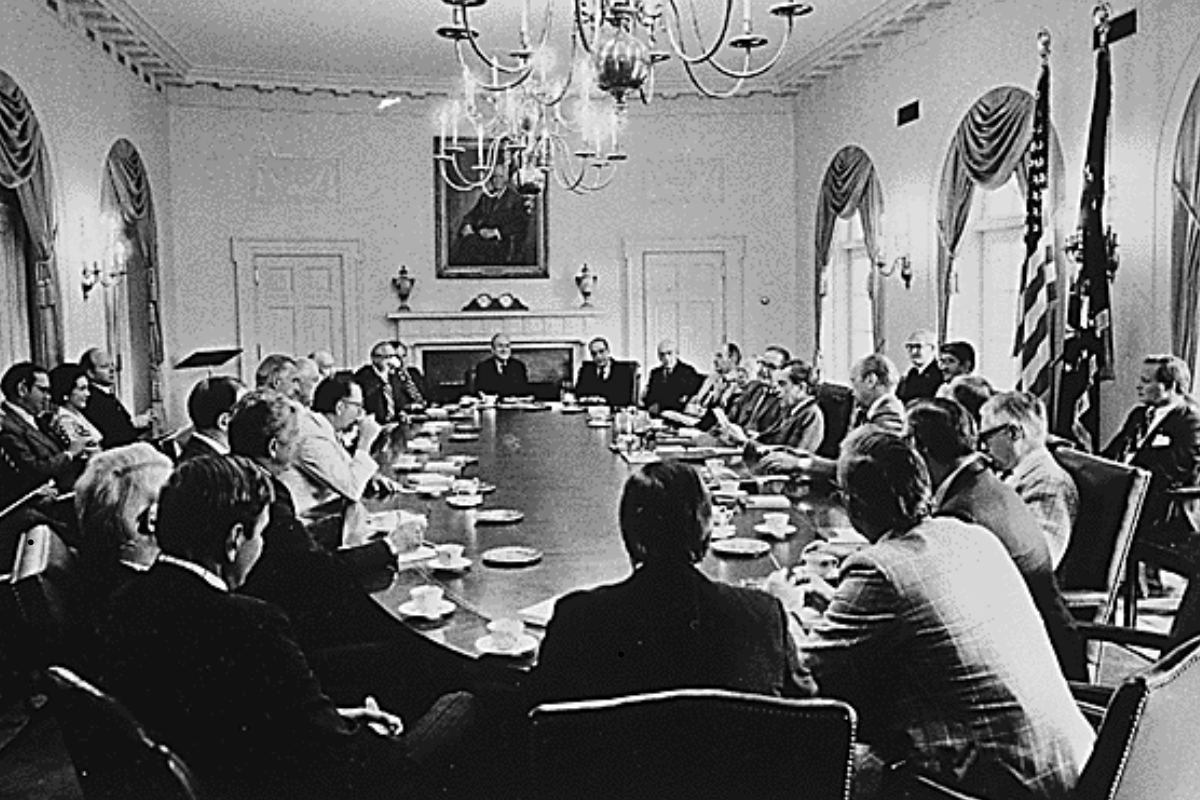
Legislation crafted by Rep. Gerald R. Ford in the early 1970s continues to provide essential employment protections for disabled American workers. As the minority leader in the U.S. House of Representatives, Congressman Ford utilized his masterful political skills to facilitate the successful passage of the Rehabilitation Act of 1973.
As a member of Congress from 1948 to 1973, Ford strongly supported federal assistance for people with disabilities, especially veterans with disabilities. In a 1954 address to the 33rd national convention of the Disabled American Veterans in Miami Beach, Ford said: “[O]ur disabled veterans richly deserve every opportunity to make or remake their lives so that they may contribute the full measure toward a better America in accordance with the Declaration of Independence and the Constitution of the United States.”
Based on a review of Michigan newspaper articles, Mr. Ford assisted disabled constituents and those with disabled family members in navigating the complex federal bureaucracy to access necessary health and employment benefits. In 1959, Rep. Ford helped a Grand Rapids man, disabled in the Army, recover over $20,000 in back pay.
By the time the Rehabilitation Act came before Congress, Rep. Ford and others knew the federal bureaucracy created difficulties for disabled workers and servicemembers. Legislation was needed.
An early version of H.R. 17, the Vocational Rehabilitation Act of 1973, lacked bipartisan support. On March 8, 1973, Ford was among 50 House Republicans who voted against a version of the legislation. Seven Democrats also voted against it.
After the bill passed the House and Senate, President Nixon vetoed it. The Senate, by a 60-36 vote, failed to override the veto. Kansas Republican Senator Bob Dole, physically disabled in World War II, was among those voting to sustain the veto.
Dole, President Ford’s 1976 vice presidential running mate, explained his vote in an article for The Wichita Eagle. He said the bill would have created more social programs for bureaucrats to administer and less actual training for disabled workers. “We must separate politics from what we want to do for the disabled,” Dole said.
On September 18, 1973, Ford was among 400 House members who voted for the Rehabilitation Act of 1973. Thirty-four members did not vote. Ford’s leadership as minority leader produced a bill that was also successful in the Senate. President Nixon was ready to sign the bill into law.
In his signing statement, President Nixon acknowledged the difficult work that Congress had done on the Rehabilitation Act. “The process of hammering out a compromise on this matter was long and difficult,” he said.
Nixon, a World War II veteran and a member of the House and Senate from 1948 to 1953, also knew about the employment and healthcare difficulties of disabled Americans. “The Rehabilitation Act of 1973 provides a strong charter for continued improvement in the quality and quantity of federally financed vocational rehabilitation services to physically and mentally handicapped Americans,” the President said.
Amendments to the Rehabilitation Act of 1973 both broadened and complicated the law. While the Rehabilitation Act of 1973 was a significant legislative milestone in advancing civil rights for people with disabilities, further legislation was necessary.
On July 26, 1990, President George H.W. Bush, a former member of the Ford administration and father of a disabled child, signed the Americans with Disabilities Act (ADA) into law. Later, Congress combined the Rehabilitation Act of 1973 into the ADA. Congress made the ADA applicable to federal agencies.
On a personal note, the Rehabilitation Act of 1973 was a great help to my family and me. After I was denied a Foreign Service posting due to my minor daughter’s disability, my attorneys invoked the Rehabilitation Act of 1973’s prohibition against associational discrimination. We successfully argued that I could not be denied employment due to my parental association with my disabled daughter.
My family story was in the Sunday Business Section of The New York Times, January 22, 1995. I was appointed to the Foreign Service the following day.
I held an interagency position with the U.S. Departments of Agriculture, Commerce, and State. In a May 25, 1995, letter to the heads of the federal foreign affairs agencies, Tex Harris, President of the American Foreign Service Association, wrote: “For too long, the Foreign Affairs agencies have disregarded the prohibitions in the Rehabilitation Act, and the Americans With Disabilities Act against discrimination on the basis of an employee’s disability, or the disability of a person with whom the employee has a relationship or association, by refusing to offer a reasonable accommodation to these individuals.”
My discrimination was identified as 921203 against the U.S. Department of Agriculture. It is also called “The Patterson Case.” Harris concluded his letter by stating that the agency decision in my case, “provides a much-needed precedent in this important area of civil rights law.”
I am grateful for the political leadership of Presidents Nixon, Ford, and Bush for enacting civil rights laws that directly affected my family. I was glad to present a case that provided “a much-needed precedent” in civil rights for the disabled. My daughter lived to be 17.
During his political career, President Ford helped many Americans with disabilities. His critical work on the Rehabilitation Act of 1973, which was later amended and combined into the ADA, helped my family and continues to help disabled Americans and their families pursue the American Dream.

Former U.S. diplomat, life member of the American Foreign Service Association, and worked for the President Ford Committee at the 1976 Republican National Convention in Kansas City.
Related Essays