Beauty in the Wreck of Time: Donna Tartt’s The Goldfinch
Note: this article is the second entry in a series on American Literature at the 250th Anniversary of the Constitution.
Introduction
September 23, 2023 marked the ten-year anniversary of Donna Tartt’s Pulitzer Prize–winning novel The Goldfinch. Released after an eleven-year silence since The Little Friend (2002), Tartt’s book appeared to rapturous acclaim, praised for its Dickensian ambition, intricate plot, and luminous prose. I remember vividly being swept away by its psychological depth, its tragic humor, and its haunting meditation on the meaning of beauty in a fractured world.
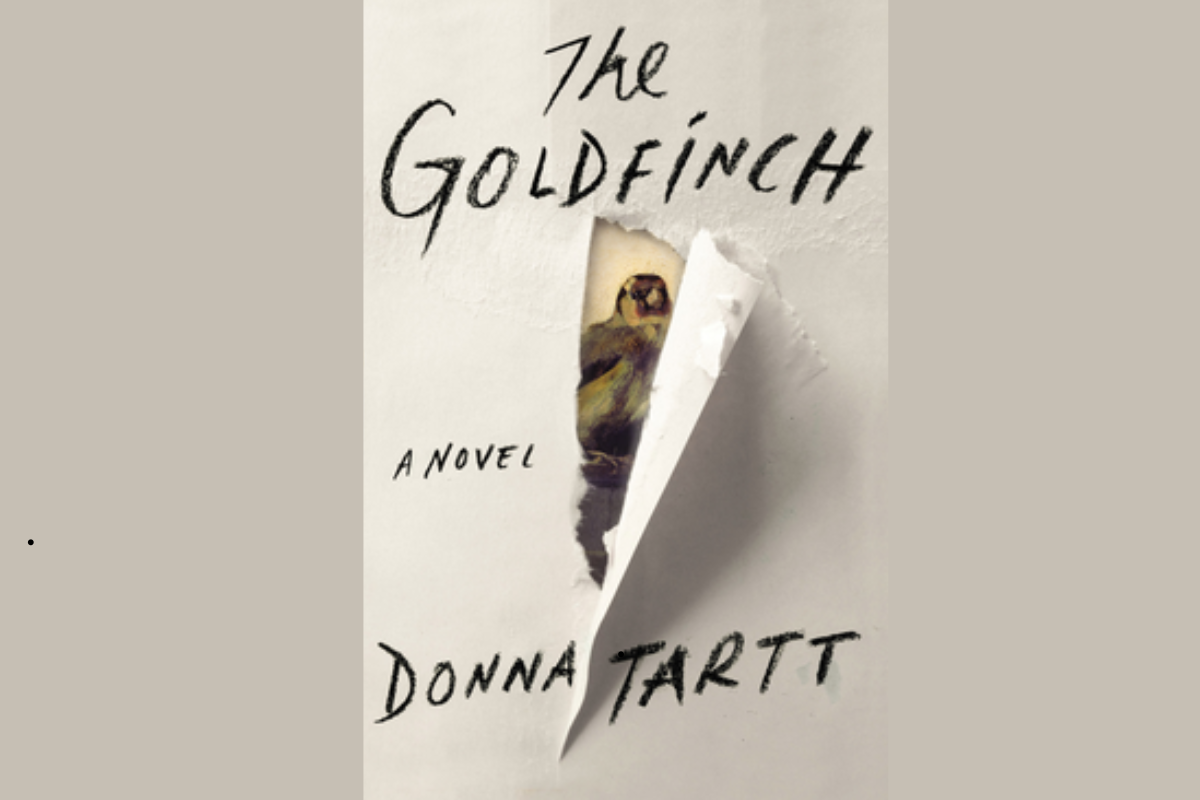
At its simplest, the novel recounts the story of Theodore “Theo” Decker, a boy who survives a terrorist bombing at the Metropolitan Museum of Art in New York but who loses his mother in the explosion. In the chaos, Theo impulsively takes her favorite painting—Carel Fabritius’s The Goldfinch—a theft that shadows him through adolescence and adulthood. The painting becomes a secret talisman, connecting him to his mother but also ensnaring him in the underworld of stolen art. Along the way, he is taken in by the wealthy Barbour family, dragged to Las Vegas by his estranged father, bound in a destructive friendship with the charismatic Boris, and eventually entangled in a European art heist.
It is, in one sense, a coming-of-age tale along the lines of Dickens’ Great Expectations. But it is also a meditation on memory, suffering, fate, and the search for transcendence. Rereading it twelve years on, I am convinced it deserves recognition not merely as a modern classic but as a novel that speaks directly to the human soul in an age tempted by nihilism. At its core, The Goldfinch is an existential novel, animated by themes of providence, memory, and the redemptive power of beauty for those otherwise unwilling to receive it.
Memory and the Immortality of Loss
From its opening pages, The Goldfinch insists on memory’s power to shape us, even against our will. Theo narrates from Amsterdam, looking back on the previous twelve years of his life. The bombing scene is framed through recollection: “While I was still in Amsterdam, I dreamed about my mother for the first time in years.” The novel begins, then, as an act of remembering, though not a simple retrieval of facts.
Long ago, St. Augustine observed that memory is not a static recording but a dynamic re-creation. We “re-remember” events, casting them in the light of our present. Tartt illustrates this truth in Theo’s narration. He admits he does not rely solely on memory but on old journals and fragments he wrote as a teenager—scraps of grief and longing addressed to his absent mother. His story becomes a memory of memories, an ongoing attempt to keep the dead alive.
In this way, Tartt aligns her novel with an ancient tradition. Homer began both the Iliad and the Odyssey by invoking the muse—Memory’s daughter—to help recall the past. Like Homer’s epics, Theo’s account is less about historical fact than existential truth. His writing is not an objective chronicle but a desperate attempt at preservation: to hold onto his mother, to make meaning from tragedy, to claim some immortality in a world bent toward loss.
Here Tartt shows how fiction itself can surpass history in conveying reality. The philosopher José Ortega y Gasset once remarked that epics do not depict the past as it happened but as an idealized memory. The Goldfinch does something similar. Theo’s recollections are not factually reliable, but they capture the sorrow, longing, and occasional glimmers of hope that define lived experience.
Clinging to Beauty
Theo clings to The Goldfinch because it embodies his mother’s presence. The painting, like the Tiffany lamps and antiques he later restores with Hobie, is more than an object. It is a vessel of beauty that dialogues with our memories and points us away from the phenomenal world toward the meaning found only in the Sublime. As Hobie remarks, certain objects act like fate—they “snag” us, connect us to something larger than ourselves.
This raises a pivotal question: why do beautiful things matter? Tartt suggests that beauty whispers to us, as if addressed personally—“psst, hey you”—and in so doing, opens our hearts to a transcendent reality. Hobie, half in jest, quotes the old saying that coincidence is God’s way of remaining anonymous. Beauty, then, is something like Providence in disguise.
And yet Theo is a failed Platonist. Like Alcibiades in Plato’s Symposium, he cannot ascend from material beauty to Beauty itself. He clings to the painting, to Pippa (the red-haired girl he glimpsed in the museum), to drugs and possessions—mistaking these fragile things for the eternal. He is intoxicated by beauty but never transcends it. His obsession with Pippa is particularly telling: she becomes his “morphine lollipop,” a soothing illusion rather than a reality he can embrace responsibly.
Tartt’s Catholic imagination emerges here. Beauty is never enough on its own; it must be united to love. Detached from love, beauty becomes an idol, breeding obsession or despair. Theo’s inability to rise from possession to self-gift is what traps him in a destructive nihilism.
Fate and the Limits of Choice
If memory and beauty dominate the novel’s first half, fate emerges as its darker thread in its second half. Boris, Theo’s companion in delinquency during his youth, embodies this theme most vividly. Reckless though charismatic and magnetic, he pulls Theo into drugs, theft, and ultimately an art heist. Yet Boris is no tragic figure lamenting corruption. He accepts his nature with shrugging fatalism: some people are born saints, others criminals. He is simply living out his fate, staring into the abyss of his life and screaming at his past: “Again, again!”
This echoes Tartt’s first novel, The Secret History, where characters are destroyed by what they cannot escape: their own natures. Fate, in Tartt’s vision, is not an external force but an internal disposition—what Freud would call the unconscious, what the Greeks called destiny, what modern psychology reframes as pathology.
Theo wrestles with this conundrum. What if our hearts are untrustworthy? What if “being yourself” means following desires that lead only to ruin? As he reflects: “We don’t get to choose our own hearts. We can’t make ourselves want what’s good for us or what’s good for other people.”
This is Tartt’s most unsettling insight. Freedom is real, but it is bound by our given desires, our memories, our wounds. Fate and freedom intertwine in ways we rarely master.
Beauty in the Wreck of Time
Yet the novel does not end in despair. In its final soliloquy, Theo acknowledges the futility of clinging to possessions, the unreliability of desire, and the brokenness of the world. And yet he affirms one truth: beauty endures.
“For if disaster and oblivion have followed this painting down through time,” Theo writes, “so too has love. Insofar as it is immortal (and it is) I have a small, bright, immutable part in that immortality.”
This is the paradox of The Goldfinch. Theo never fully sheds his nihilism. He remains suspicious of hope, skeptical of redemption. Yet he cannot deny that beauty—embodied in Fabritius’s fragile little bird chained to its perch—has carried love across centuries. By loving it, Theo joins a communion of souls, including his mother, who cherished the same fragile thing.
Here Tartt reveals her deepest theme: that art allows the living and the dead to speak to one another across time. Memory, mediated by beauty, forms a fellowship stronger than death. In this sense, the novel is profoundly American. Like O’Connor or Faulkner, Tartt confronts the grotesque without flinching, but insists that grace flickers even there.
Conclusion
Now twelve years after its release, The Goldfinch deserves recognition as one of the great novels of our time. It is Dickensian in scope, classical in its reflections on beauty and fate, and groundedly hopeful in its quiet insistence that providence glimmers even in ruin.
For a fractured, skeptical age, Tartt offers a radical reminder: beauty still sings. And if we join our love to the love of others across generations, we participate in a communion no wreck of time can erase.
The novel’s last line captures this truth with unmatched poignancy:
And I add my own love to the history of people who have loved beautiful things, and looked out for them, and pulled them from the fire, and sought them when they were lost, and tried to preserve them and save them while passing them along…singing out brilliantly from the wreck of time to the next generation of lovers, and the next.
It is, finally, this shared love of beauty that makes life worth living.