Youngstown Sheet & Tube Company v. Sawyer (1952)
Post-New Deal War Powers and the Hint of Congressional Resurgence
In times of national and international crisis, executive power tends to expand and legislative power contracts. Legislative power is designed to be slow and deliberate. Its virtue is that it can build a consensus based on compromise, reflection, and careful study. But legislative consensus takes time that is typically in short supply during a political crisis. Executive power, however, is designed to deal with crisis in a quick and efficient manner. All executive power rests in one person, the president, who is advised by many but is the sole decision maker.
When the Second Continental Congress created the Articles of Confederation, it created a one-branch national government that was purely legislative. Not surprisingly, one of the central criticisms of the Articles made by Federalists, including Publius, was that it created a government that was ill-equipped to conduct foreign affairs and provide for national security. The new constitution enumerated in its preamble a prime objective, to “provide for the common defense.” No doubt, the addition of an executive branch to the proposed constitution was intended, among other things, to serve this objective. Alexander Hamilton remarked in Federalist 70 that “[e]nergy in the executive is a leading character in the definition of good government.” First on his list of supports for the claim was national security.
Yet, like the framers of the Articles of Confederation, the framers of the Constitution were republicans. They constructed a constitution that was representative and that relied on the separation of powers and checks and balances to safeguard power. The new government under the Constitution was more powerful than the one that existed under the Articles, but the former was also subject to the mediating effects of separated powers and checks and balances that were absent from the latter. In theory, such institutional safeguards would prevent the concentration of power into any one branch of government. In practice, preventing the concentration of power would be most difficult in times of crisis when power was drawn into an executive vortex. If the framers’ theoretical system of checks and balances was to protect against executive tyranny, it would have to prove effective in times of national and international crisis. At the same time, it would have to equip the executive with sufficient energy and means to provide for the common defense. Youngstown Sheet & Tube Company v. Sawyer (1952) is a good illustration of the American constitutional system of separated powers and checks and balances working as designed to prevent a president from usurping legislative power under the guise of national security.
It is noteworthy that the case was decided in the wake of FDR’s accumulation of executive power during the Great Depression and WWII. Hirabayashi v. U.S. (1943) and Korematsu v. U.S. (1944) were decided just nine and eight years respectively before Youngstown Sheet & Tube Company v. Sawyer. U.S. v. Curtiss-Wright (1936) was, in some sense, the prelude to these WWII-era cases. They all expanded executive power in ways that strained the viability of the framers’ constitutional system. Given that Youngstown Sheet & Tube Company v. Sawyer was decided during the Korean War and in the aftermath of judicial precedents that expanded executive power, it would be reasonable to expect that the U.S. Supreme Court would continue the trend. It did not. The reasons why Youngstown Sheet & Tube Company v. Sawyer diverges from these earlier precedents reveal both the wisdom of the framers’ constitutional design and the prudence of the Court’s ruling.
The Legal Issues in Youngstown Sheet & Tube Company v. Sawyer
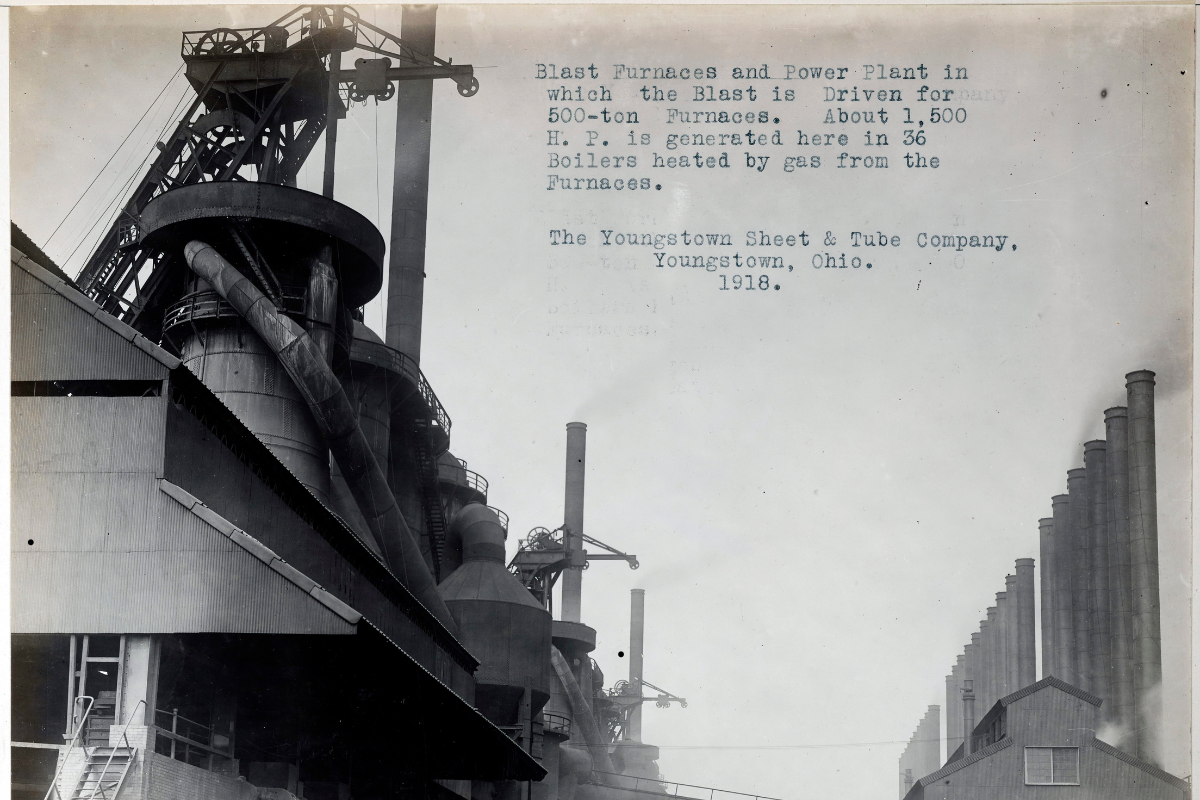
The paramount legal issue in Youngstown Sheet & Tube Company v. Sawyer is whether President Harry Truman had the constitutional authority to issue Executive Order 10340 that authorized Secretary of Commerce Charles Sawyer to seize most American steel mills and operate them. The president believed that the government takeover of the steel mills was justified because the United Steelworkers of America expressed its intent to strike, and in doing so shut down the nation’s steel mills until their labor demands were met. Truman was concerned that closing the steel mills would hamper the military’s efforts in the Korean War while igniting inflation and suppressing economic growth. He argued in his April 8, 1952, speech to the nation that
If steel production stops, we will have to stop making the shells and bombs that are going directly to our soldiers at the front in Korea. If steel production stops, we will have to cut down and delay the atomic energy program. If steel production stops, it won't be long before we have to stop making engines for the Air Force planes.
These would be the immediate effects if the steel mills close down. A prolonged shutdown would bring defense production to a halt and throw our domestic economy into chaos.
These are not normal times. These are times of crisis. We have been working and fighting to prevent the outbreak of world war. So far we have succeeded. The most important element in this successful struggle has been our defense program. If that is stopped, the situation can change overnight.
Truman’s decision to seize the steel mills was an alternative to invoking the Taft-Hartley Act that empowered the president to declare a cooling off period for eighty days during which the steel mills would have remained open and operating. Invoking the law would be a far less drastic measure and consistent with the way Congress thought labor disputes should be addressed. Truman thought otherwise. He vetoed the Taft-Hartley bill in 1947, but his veto was overridden by Congress. Although it was law in 1952, the president claimed to have the power to seize and operate the nation’s steel mills. The law did not explicitly prohibit the president from seizing private property.
The Court had to decide if Truman’s seizure was justified by inherent or plenary power derived from the Constitution or a violation of the Constitution and the Taft-Hartley Act.
The Court’s Ruling in Youngstown Sheet & Tube Company v. Sawyer
The Court ruled 6-3 for Youngstown Sheet and Tube Company and against the president. Two of the Justices who voted with the majority, Tom Clark and Harlod Burton, were appointed by President Truman. Clark served as Truman’s attorney general and at the time advised him that presidents have the inherent power to seize private property in instances of national emergency including economic disruption caused by labor strikes. The Court’s majority argued that during debate in Congress over the Taft-Hartley Act, Congress specifically rejected a seizure provision that the Court interpreted as Congress refusing to sanction unilateral executive seizure power. Writing for the majority, Justice Black stated the crux of the case. “The President’s power, if any, to issue the order must stem from an act of Congress or from the Constitution itself.” Justice Black argued that Congress could have legally authorized seizure of the steel mills, but the president was not unilaterally empowered to do so by the Constitution. According to the Court, the power to seize a steel mill was a legislative power. Truman’s action was, therefore, a violation of the separation of powers.
Seizure, Justice William Douglas concurred, was a legislative power that requires compensation under the Fifth Amendment that only Congress can provide. Justice Jackson argued in concurrence that without congressional approval the action was outside the president’s constitutional powers. Arguably the most important and lasting opinion was Justice Jackson’s concurrence. He created a framework that was by his own admission “over-simplified.” It has, however, proven useful as a starting point for determining the constitutional boundaries of executive power. It divided instances of presidential action into three groups with corresponding categories of constitutional validity. In the first and most constitutionally clear category, the president acts with explicit Congressional approval. In the second category, the so-called twilight zone, the president acts and Congress is silent. In the third category, the president acts against the expressed will of Congress. The president’s power is at its constitutional pinnacle in the first category and at its constitutional nadir in the third category. President Truman acted against the specific wishes of Congress as expressed in the Taft-Hartley Act and, thus, was operating in Justice Jackson’s third category of dubious executive power.
Chief Justice Vinson dissented, arguing that “if the President has any power under the Constitution to meet a critical situation in the absence of express statutory authorization, there is no basis whatever for criticizing the exercise of such power in this case.” There is no law prohibiting the president from seizing private property as a method for exercising his constitutional power to execute the laws. The extreme measures taken by the president were justified by the extreme circumstances. Nothing less than preventing another world war was at stake. The president has taken an oath of office to “protect and defend the Constitution” and that is what he is doing. The president is the nation’s sole organ in foreign affairs, and he is acting as such. The survival of the nation is at stake. Congress and the courts should not hamper his ability to fulfill his constitutional duties. The Chief Justice quoted John Marshall’s statement from his opinion in McCulloch v. Maryland (1819) that the Constitution’s “means are adequate to its ends,” suggesting that President Truman seized the steel mills as a means of fulfilling his duties as commander-in-chief and as the nation’s chief law enforcement officer.
Youngstown Sheet & Tube Company v. Sawyer Legacy
Youngstown Sheet & Tube Company v. Sawyer has been cited in several subsequent Supreme Court opinions. Justices have found Justice Jackson’s framework for understanding executive power to be useful. Like him they recognize that the categories are somewhat crude and not intended as ridged and formulaic. What they do is provide a rough approximation of the boundaries of presidential power as a starting point for determining the constitutionality of executive action.
The case is also important because it applied the Court’s constitutional brakes to the proliferation of executive power in the aftermath of two world wars and the Great Depression. In doing so, the Court, intentionally or not, contributed to a resurgence of Congressional power and reminded the nation that the separation of powers and checks and balances are vital to the proper functioning of the American constitutional system.

Professor of Political Science at Middle Tennessee State University
Related Essays