The Enduring Relevance of the Bicentennial in the Vision of Gerald Ford and Rafael Hernández-Colón
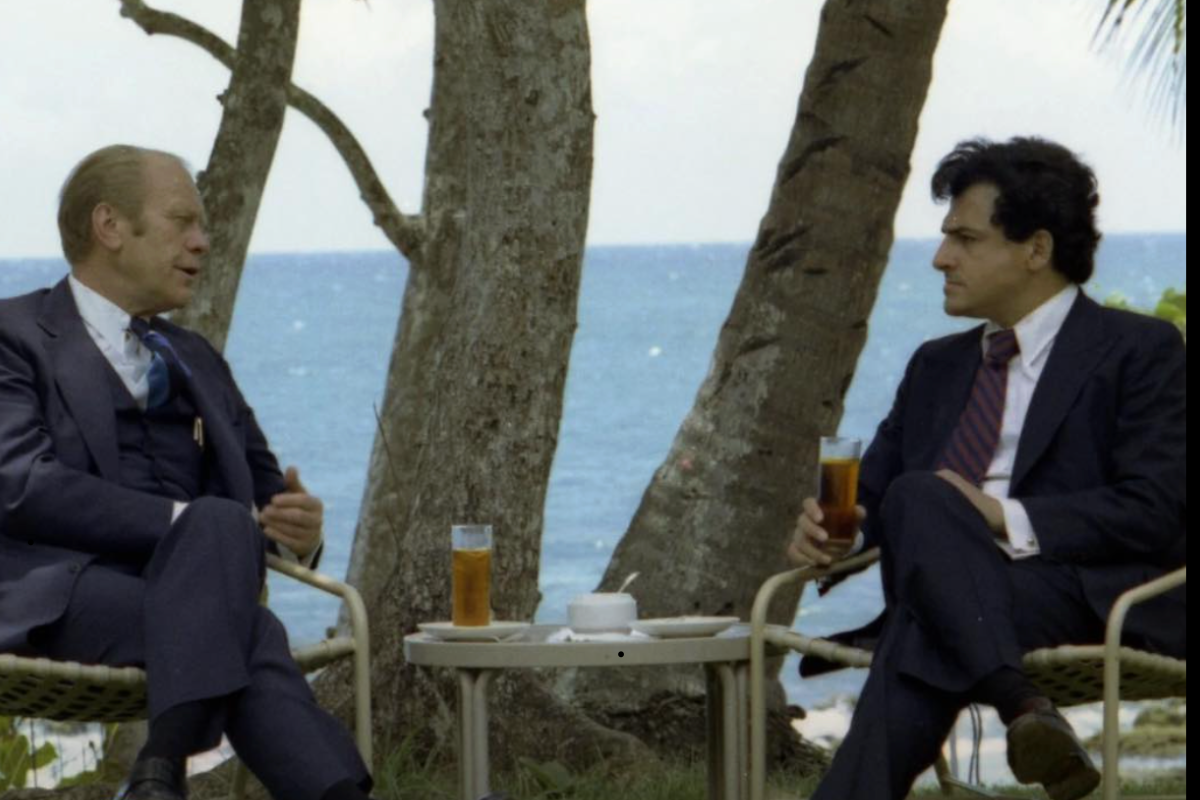
This historic image captures U.S. President Gerald Ford with Puerto Rico Governor Rafael Hernández Colón during the 1976 G7 Summit held at Dorado Beach.
Nineteen seventy-six was the year of the United States Bicentennial celebration. Historically, July 4, 1776, marked the adoption of the Declaration of Independence and the founding of the 13 colonies.
The celebration was not limited to the United States, as it is a nation that stands as a beacon of freedom and opportunities for progress in an imperfect world. The nation that emerged from the migration route, seeking to live by the fruits of their labor and dedicate their new life to the eternal, is the world power that brings honor to the Americas.
A good example of how the celebration was not limited to the United States is the creation of the Puerto Rico Bicentennial Commission. In the 1973 letters appointing the members of that Commission, Governor Rafael Hernández-Colón wrote, in part:
“I want this celebration in Puerto Rico to acquire a special meaning, highlighting our values and traditions, our contribution to the nation, and the unique position that the Commonwealth occupies within the American Union.”1
In a 1974 Memorandum addressed to the heads of agencies, instrumentalities, and public corporations, and a version addressed to the mayors, Governor Hernández-Colón wrote:
“During the year 1976, the 200th Anniversary of the American Revolution will be celebrated. From this year until the end of 1976, Puerto Rico will join with the states of the Union and other countries of the world to celebrate the founding of the United States of America. It is important to celebrate this event with a spirit of renewal and improvement in all our communities.”2
In the history of individuals and nations, there are no coincidences. The four-year period from 1973 to 1976 was marked by serious challenges due to the global economic crisis caused by the exorbitant increase in the price of oil. After a turbulent journey, the Bicentennial celebration provided the perfect historical juncture to highlight the signs of recovery in the United States and Puerto Rico.
As if by divine design, two leaders of great faith, humanity, and character coincided at the Bicentennial: President Gerald Ford and Governor Rafael Hernández-Colón.
In his commemorative message on July 4, 1976, President Ford stated: “As we begin our third century, there is still so much to be done. We must increase the independence of the individual and the opportunity of all Americans to attain their full potential. We must ensure each citizen’s right to privacy. We must create a more beautiful America, making human works conform to the harmony of nature. We must develop a safer society, so ordered that happiness may be pursued without fear of crime or manmade hazards. We must build a more stable international order, politically, economically, and legally. We must match the great breakthroughs of the past century by improving health and conquering disease. We must continue to unlock the secrets of the universe beyond our planet as well as within ourselves. We must work to enrich the quality of American life at work, at play, and in our homes.”3
In his commemorative message on July 4, 1976, Governor Rafael Hernández-Colón stated: “We Puerto Ricans have likewise subordinated our fascination with definitions to the necessary and appropriate answers to our problems. Our task has been to seek—and, since none existed, to invent—the formula for constitutional organization that would allow us self-governance in our lives as a people, in our health, education, housing, social development, and job creation, while simultaneously expanding the scope of our collective economic capabilities through a free market with the United States, a common currency, a common defense, and a common citizenship. This formula grants us the necessary fiscal autonomy from the federal government to increase our production and meet the needs of a larger population with growing expectations, all within a democratic political framework.”4
Both leaders succeeded in uniting the historical importance of the Declaration of Independence with creative inspiration for all peoples and generations. In fact, on September 20, 1974, Governor Hernández-Colón met with President Ford in the Oval Office, and in the second volume of his Memoirs, the Governor wrote: “Ford was a down-to-earth and likable man, with whom I easily established a rapport.”5
The good communication between the two leaders was perfectly logical and natural. Interestingly, both assumed legislative responsibilities and taught at the university level beyond their elected positions.
The Bicentennial enriched the world's cultures because the cause of freedom is best experienced in every corner of the globe through personal achievements that contribute to collective economic and social development. That is the complete freedom and inspiration of the American Dream that can have its own nature in each country. Thus, cultural heritage becomes the heritage of all humanity, and consequently, Gerald Ford and Rafael Hernández-Colón continue to bear witness to our humanity and our faith through our actions and experiences.
1 Letter from Governor Rafael Hernández Colón, February 14, 1973. Historical Archive Rafael Hernández Colón Foundation, Fund: Rafael Hernández Colón, Sub-Fund: Governorship 1973-1976, Section: La Fortaleza, Sub-section: Governor's Office, Bicentennial Commission, Series: Files, Box: 255.
2 Memorandum from Governor Rafael Hernández Colón, 1974. Historical Archive Rafael Hernández Colón
Foundation, Fund: Rafael Hernández Colón, Sub-Fund: Governorship 1973-1976, Section: La Fortaleza, Sub-section: Governor's Office, Bicentennial Commission, Series: Files, Box: 255.
3 Remarks of Gerald R. Ford, 4 de julio de 1976, https://www.fordforum.org/observer-essays/remarks-of-gerald-ford-in-philadelphia
4 Message from Governor Rafael Hernández Colón, July 4, 1976, file:///C:/Users/ArchivoHistorico/Downloads/07-04-1976-
Mensaje%2520con%2520motivo%2520de%2520la%2520celebracion%2520del%2520bicentenario%2520d e%2520los%2520Estados%2520Unidos%20(1).pdf
5 Rafael Hernández Colón, Contra Viento y marea: Memorias de Rafael Hernández Colón / 1973-1984
(Colombia: Editorial Nomos S.A., 2014), 135.
By Gerardo L. Berríos-Martínez
Director, Historical Archive, Rafael Hernández-Colón Foundation
Related Essays