Civics TV
One day back in college, I was working in the library until a fire drill kicked us all out for a short while. Outside, I ran into my friend and she asked me what I was working on. By sheer coincidence, I had been writing an article on Rousseau’s ‘good man/good citizen’ distinction. And, in an effort to poke fun at me, she said, “Phillip Pinell, such a good citizen,” in that sing-song voice that people use to rustle your feathers. That encounter still haunts me, in part because of the dastardly implication that she thought citizenship was somehow uncool or otherwise worthy of denigration. To heal the wound that struck my heart all those years ago, I want to reflect upon a medium that has finally begun to take citizenship seriously: the TV mockumentary.
That’s right. The medium that gave us The Office, Parks & Recreation, and so many other beloved sitcoms, has never really been known for propagating the love of country. Not to say that it hasn’t promoted discussions of political controversies in one way or another—the hysterical “Jail” scene from Parks & Rec immediately comes to mind. But entertainment sometimes functions as exactly what it is: entertainment. It seeks to please, not to educate; and if it does educate, that is only a happy accident. The one show whose major consequence is good citizenship is the not-all-that-recent series Jury Duty (2023).
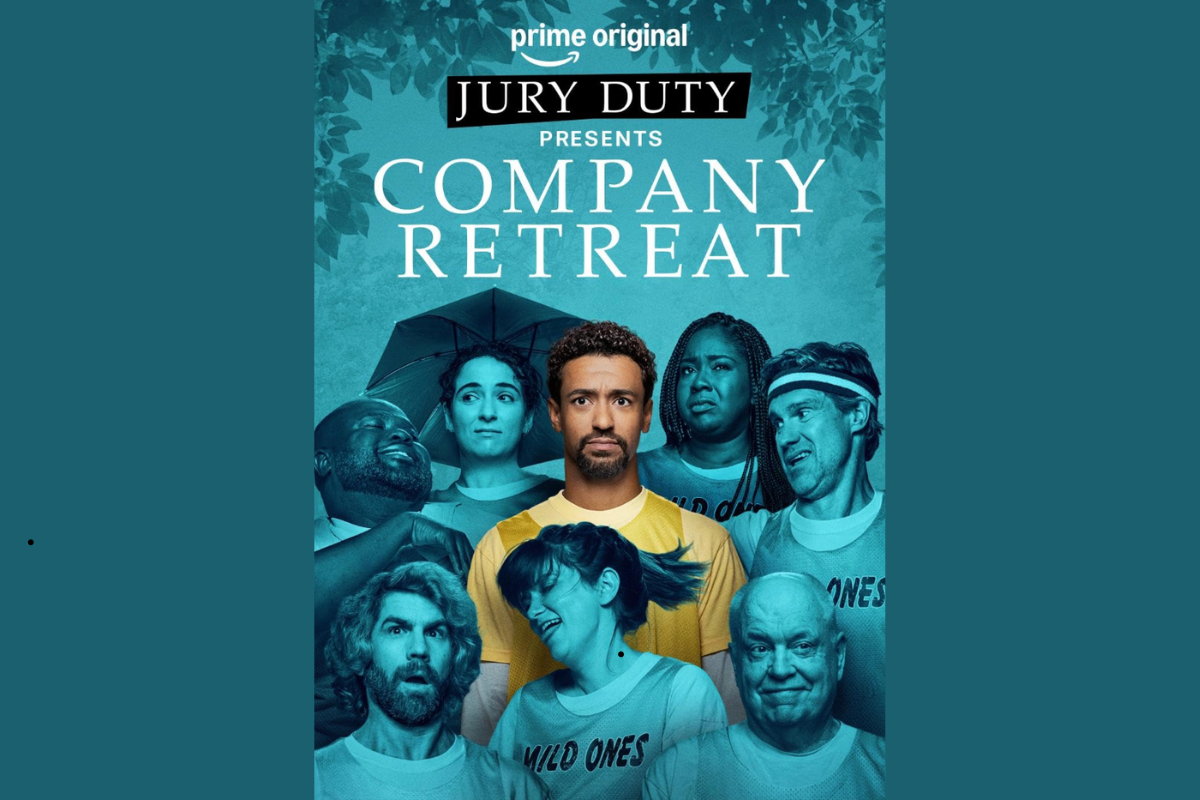
Ronald Gladden, a solar contractor from San Diego, applies to serve on a jury in Los Angeles as part of a documentary on jury duty. The catch is that none of it is real. The trial, the witnesses, the jurors, and even the judge are all paid actors who are in on the joke. Except for Ronald. Ronald believes the whole case and all the eccentric jurors with him on the jury are real. Members of the jury include Noah Price, a socially awkward religious fundamentalist who misses a long-planned vacation with his girlfriend to attend the trial; Jeannie Abruzzo, a boisterous, low-class juror who openly shares her mission to “corrupt” Noah’s innocence during their time on the trial; Todd Gregory, an awkward inventor of odd panacea’s to problems in everyday life (chair-paints, for instance); and the actor James Marsden (known for his roles in Sonic the Hedgehog, X-Men, Enchanted and countless other blockbuster) playing an over-the-top version of himself as a vain, out-of-touch actor whose obligation as a back-up juror interferes with his audition for a big movie role. After James stages a paparazzi ambush of the courtroom in an attempt to be released from the trial, the Judge decides to sequester the jury for the two weeks that the trial unfolds. The Judge then selects Ronald as the lead juror (as scripted by the writers) and he is forced to lead an eccentric and often-uncooperative team of misfits to decide on a torts ruling.
The premise makes for a humorous, though potentially mean-spirited show, if the cast were to direct their efforts at upsetting Ronald. There’s the twist: they don’t. The writers wrote the other jurors to create situations that allow Ronald to become the hero. When the socially-awkward Todd wears his chair pants in the court room (which were just crutches crudely sewn into his clothing), Ronald doesn’t mock him; he supports his projects by showing him Pixar’s A Bug’s Life, whose lead character also makes inventions and people don’t understand him. In another case, an Asian juror, who pretends to speak at half the speed of the average person, plays a (fake) game of cards and says that Ronald won $20 from him; but Ronald insists that he keep the money. In this lies the charm of this show: Ronald is a man with a heart of gold. He is kind, caring, and puts others first. And more than just a nice guy in a passive way, he actively observes what the scenario needs and gives it, even when he doesn’t particularly want the responsibility.
Ronald’s genteel attitude towards his jurors allows him to guide them competently, with full knowledge of the complexities of the case. The case involved a ritzy Los Angeles business woman suing her employee for negligence on the job. At first, her case seemed reasonable: the employee came into work seemingly inebriated, then he fainted and, in so doing, ruined one of the factory’s machines. As the trial went on, however, the jury sees that the defendant, while admitting to being a thrifty, lazy worker, reveals that he had been exposed to potent chemicals in the factory that caused him to faint. Now, we as viewers have to learn this by piecing together the details, because the defendant’s attorney fails miserably in presenting this case himself.
In an interview about his appearance on the show, Ronald tells the interviewer that his mission while on the jury was just to be kind to other people and treat them well. For our pluralistic liberal democracy with people from all walks of life, this attitude is at the very least a good starting point for good citizenship. If you’re looking for something to watch that both entertains and inspires, I’d recommend giving Jury Duty a try.