Loving v. Virginia (1967)
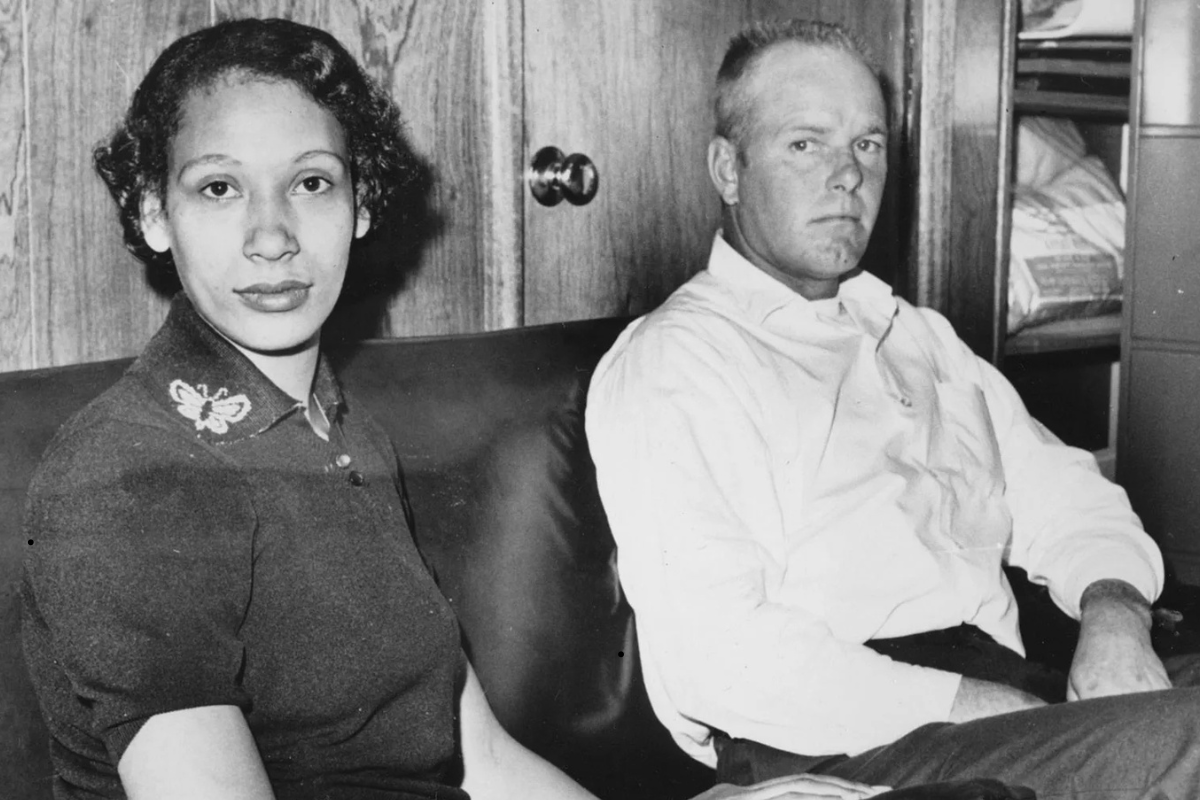
Mildred and Richard Loving
Encyclopædia Britannica, AP Images
Introduction
State laws proscribing marriage between two people of different races were the last vestige of Jim Crow to endure. Not until its landmark 1967 decision in Loving v. Virginia did the Court drive the final nail into the coffin of de jure segregation. The legacy of Loving would ultimately extend well beyond racial equality, however, as the Court’s partial reliance on the doctrine of substantive due process would play a central role in the constitutional debates over same sex marriage nearly a half century later.
The Historical and Legal Context
The law that the Supreme Court confronted in Loving v. Virginia had origins as far back as colonial America. In 1691, Virginia became the first of the colonies to regulate marriage and sexual relations between white colonists and people of any color. While Virginia did not legally prohibit interracial marriages outright, it threatened all interracial couples with permanent exile from the colony. Eventually all but a handful of states would adopt laws against interracial marriage. The matter of interracial marriage was very much bound up in the politics of slavery. A few states, such as Vermont, never legally countenanced slavery nor did it ever implement bans on interracial marriage. Pennsylvania was the first state to repeal its ban on interracial marriage as part of its passage of the Abolition Act of 1780. Other states, mostly former southern slave states, continued to regulate marriage by race well into the 20th Century.
In the immediate wake of the Civil War southern states imposed Black Codes making interracial marriage illegal, in some cases subject to punishment as severe as life imprisonment. With the establishment of federally enforced Reconstruction in the south, newly installed Republican legislatures repealed the anti-interracial marriage laws. But once the Democratic Party regained control of the South, reinstituted bans on interracial marriage became a central pillar of Jim Crow efforts to cordon off freed slaves, literally and figuratively, from white society. Lurking behind the formal laws of states were what people in the Jim Crow South came to call the “lynch-law.” Extra-judicial violence in the form of lynching served as retribution in hundreds, if not thousands, of instances involving interracial contact, sex, and marriage.
Hostility toward interracial marriage carried into the 20th Century, with 30 states having laws on the books that banned the practice. A 1913 proposed amendment to the U.S. Constitution to outlaw interracial marriage captured the deep animus many harbored toward racial intermarriage. In introducing the amendment, Georgia Congressman Seaborn Roddenbery’s sentiments undoubtedly reflected those of many in the south (and likely in the north) regarding the very idea of Blacks and Whites marrying: “Intermarriage between whites and blacks is repulsive and averse to every sentiment of pure American spirit. It is abhorrent and repugnant. It is subversive to social peace.”
The resistance to interracial marriage was further bolstered in the 1920s by the rise of a eugenics movement which advanced notions of racial purity and superiority that aligned with anti-miscegenation laws. For example, Virginia’s Racial Integrity Act of 1924, the law that would ultimately be challenged in Loving, reaffirmed the state’s Reconstruction-era ban on interracial marriage. But its enactment was paired with the Sterilization Act, which mandated the sterilization of patients institutionalized in state psychiatric hospitals who were "afflicted with hereditary forms of insanity that are recurrent, idiocy, imbecility, feeble-mindedness or epilepsy.” Virginia’s authority to sterilize those in its care was affirmed by the Supreme Court in Buck v. Bell (1927), which surely belongs to the anti-canon of decisions later determined to be grievously in error both in reasoning and impact. In the aftermath of Buck v. Bell, over 30 states adopted and actively enforced compulsory sterilization programs. (The decision would not be repealed until 1974, by which time tens of thousands of sterilizations had occurred in the U.S.)
Perhaps unsurprising in light of Buck v. Bell, the Supreme Court was slow to come to the issue of interracial marriage, even as it grew more forceful on voiding racial segregation in other contexts. The laws of marriage had always been predominantly for the states. Following the passage of the Fourteenth Amendment, the Court began to rule on equal protection matters as applied to interracial marriage and sexual relations. The most notable of these, and the biggest obstacle to the 20th Century Court, was its 1883 decision in Pace v. Alabama upholding a state law that criminalized interracial sex. In a principle that would come to be known as “equal discrimination” or “equal application,” the Court in Pace determined that since the punishment under Alabama state law for both parties to a mixed-race sexual relationship was the same, there was no equal protection violation.
Following the seminal decision in Brown v. Board of Education in 1954, the Court struck down formal de jure racial segregation in a variety of circumstances beyond that of education, including employment, public accommodations, and government. But marriage was a subject around which there existed a special intensity of resistance among segregationists. As a result, marriage restrictions were the last Jim Crow laws to fall; the Court studiously avoided challenges to interracial marriage prohibitions lest they provide fuel for the flames of societal fear fanned by segregationists who conjured up evils of “miscegenation” and “race-mixing.” In the realm of interracial marriage, the Court was more a follower than a leader. By 1967, sixteen states still statutorily prohibited marriage between people of different races. But a discernible trend existed in the opposite direction, with over a dozen states repealing their miscegenation laws after Brown.
The Story of Mildred and Richard Loving
It would take an interracial couple growing up in the modest town of Central Point, Virginia to nudge the Court to action. Richard Loving, who was White, and Mildred Jeter, who identified as Black and Native American, were teenage friends who, although six years apart in age, began dating sometime in the mid-1950s. They fell in love and Mildred soon was pregnant, prompting them to decide to marry. Given Virginia’s ban on interracial marriage, the couple drove into Washington D.C., where such marriages were permitted. The couple married on June 2, 1958, returned to Virginia and moved in with Mildred’s parents. In the middle of the night some five weeks into the Lovings’ marriage, police barged into their bedroom where they lay sleeping. They were taken into custody and charged with violating the Virginia anti-miscegenation law, which made it a felony for “any white person [to] intermarry with a colored person, or any colored person intermarry with a white person” punishable by up to five years in prison. Mrs. Loving was five months pregnant at the time they were jailed.
In January of 1959, the Lovings appeared before Virginia state trial court judge Leon Bazile. They subsequently pled guilty to "cohabiting as man and wife, against the peace and dignity of the Commonwealth," for which they were sentenced to a year in jail. However, the judge offered to suspend the Lovings’ sentence if they immediately left the state and vowed not to return for twenty-five years. He did permit them to return to visit family, but only if they did so separately. The Lovings accepted the offer and moved to the District of Columbia, where Richard worked construction and Mildred stayed home to raise a growing family.
By 1963, the Lovings had grown frustrated and lonely living in Washington D.C. Mildred Loving wrote a letter to Attorney General Robert F. Kennedy, who helped the Lovings enlist the assistance of the American Civil Liberties Union. ACLU lawyers filed a motion requesting the trial court to vacate the criminal judgments and set aside the Lovings' sentences on the grounds that the state law ran counter to the Fourteenth Amendment Equal Protection Clause. When Judge Bazile delayed acting on the motion, the Lovings’ lawyers filed a class action lawsuit in federal court, thus prompting Bazile to issue his ruling dismissing the long-pending motion to vacate. As an extra measure, the judge offered his moral judgment on the Lovings’ marriage:
Almighty God created the races white, black, yellow, malay and red, and he placed them on separate continents. And but for the interference with his [arrangement] there would be no cause for such marriages. The fact that he separated the races shows that he did not intend for the races to mix.
The Lovings appealed the trial court decision to the Virginia Supreme Court, which in March 1966 upheld the constitutionality of the anti-miscegenation statutes. The Court determined that the criminalization of interracial marriage was not a violation of the Equal Protection Clause since both spouses were subject to equal punishment under the statute (thus echoing the Court’s reasoning in Pace). The Lovings appealed the decision to the U.S. Supreme Court, which accepted it for review. On June 12, 1967, the Court issued its unanimous decision in favor of the Lovings. Chief Justice Warren wrote for the Court.
The Court’s Opinion
Chief Justice Warren first addressed whether Virginia’s racial Integrity Act ran afoul of the Equal Protection Clause of the Fourteenth Amendment. Virginia’s attorneys relied on the 84-year-old precedent of Pace v. Alabama in argued that the Act was constitutional. The state contended that racial classifications do not constitute an invidious discrimination, provided both participants in an interracial marriage are punished equally, as was the case under the statute. However, Warren rejected the notion that the “equal application” of a statute that contained racial classifications exempted it from the Fourteenth Amendment’s clear proscription of all invidious racial discrimination. Warren found no evidence in the debates around the passage and ratification of the Fourteenth Amendment that criminal laws containing racial classifications somehow survived constitutional scrutiny provided “white and Negro participants in the offense were similarly punished.”
The purpose of the Equal Protection Clause was to eliminate any and all sources of “arbitrary and invidious discrimination.” It was beyond question that Virginia's Racial Integrity Act drew distinctions according to race, proscribing “generally accepted conduct if engaged in by members of different races.” Warren rejected the state’s contention that it only needed a rational basis for treating interracial marriages differently than other marriages. Any state statute making racial classifications would face a “very heavy burden of justification.” Particularly when race was the basis for imposing criminal punishment, it would be subjected to the "most rigid scrutiny." A racial classification could survive strict scrutiny only if shown to be “necessary to the accomplishment of some permissible state objective, independent of the racial discrimination which it was the object of the Fourteenth Amendment to eliminate.” Warren concluded that there was “patently no legitimate overriding purpose independent of invidious racial discrimination” that justified this classification.
Indeed, Warren thought the true aim of the statute evidenced by its application only to interracial marriages involving Whites, namely to sustain a system of White Supremacy. He described "[d]istinctions between citizens solely because of their ancestry" as "odious to a free people whose institutions are founded upon the doctrine of equality." There was “no doubt that restricting the freedom to marry solely because of racial classifications violates the central meaning of the Equal Protection Clause.”
Significantly, Warren penned several paragraphs adding an alternative basis for overturning the statute, finding that it violated the Lovings’ liberty without due process of law. He described the freedom to marry as long having been recognized as a “vital personal [right] essential to the orderly pursuit of happiness by free men . . . [and] fundamental to our very existence and survival.” A racial classification limiting the right was so “directly subversive of the principle of equality” as to “surely deprive all of the State’s citizens of liberty without due process of law.” The decision to marry someone of another race rested with the individual alone, not to be infringed by the State.
Significance of the Decision
Loving v. Virginia struck the final blow to de jure segregation in America. The Court's decision ended all race-based legal restrictions on marriage in the U.S., at least as a practical matter. Anti-miscegenation laws remained on the books in several states, the Court’s decision notwithstanding, though they were rendered unenforceable. Alabama was the final state to formally repeal its anti-miscegenation law, passing a constitutional amendment in 2000. While Loving altered the legal frame for interracial marriage, its effect on the normalization of racially mixed marriages culturally was much more modest. Two decades after Loving, the marriage rates between people of difference races had only increased from just under 1% to 3%. Only as societal attitudes significantly loosened in the 1980s and ‘90s were there greater increases in interracial marriages. At the 50-year anniversary of Loving, about 17% of all new marriages were between people of difference races.
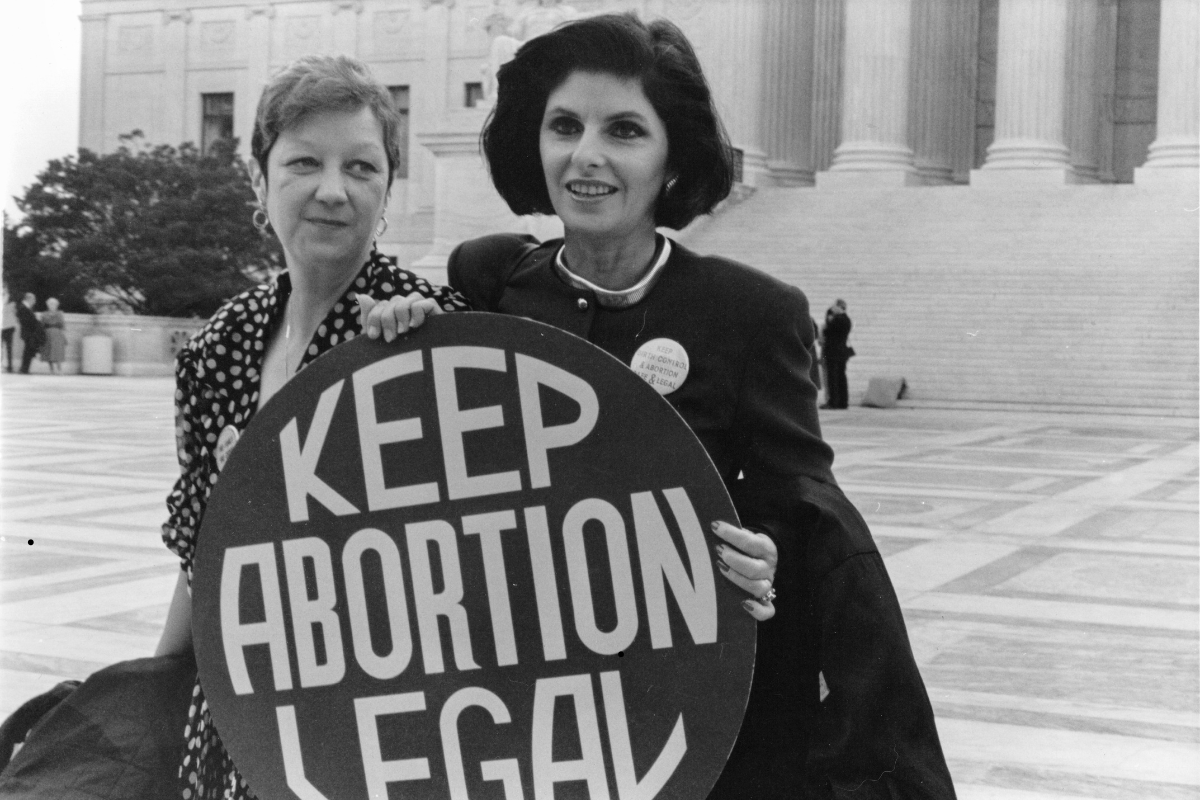
The legacy of Loving extends well beyond the realm of racial segregation, both in terms of its impact on constitutional law and its societal ramifications. Chief Justice Warren’s inclusion of substantive due process grounds for overturning the statute would prove an important doctrinal gateway to the judicial expansion of the constitutional justification on issues ranging from abortion rights to same-sex marriage. In joining with the majority in Roe v. Wade (1973), Justice Steward cited Loving (along with Griswold) for the general proposition that “freedom of personal choices in matters of marriage and family life is one of the liberties protected by the Due Process Clause of the Fourteenth Amendment.” Loving would serve as a springboard for widening the substantive due process status of a fundamental liberty to include decisions to terminate a pregnancy or engage in same-sex intercourse,
Likewise, the reliance on substantive due process in Loving, enlarged by the Court’s later undifferentiated application of fundamental liberty status to any marriage or family related matter, assured it would enter the legal discourse around questions of marriage equality and civil rights. The ostensible parallels between laws prohibiting interracial marriage and those banning same-sex marriage had a simple appeal, one that traditionalists arguing for the exclusivity of heterosexual marriage were never able to effectively counter. If states could not constitutionally prohibit a person from marrying someone of another race, how could they disallow marriage between individuals of the same sex? Indeed, those insisting on opposite sex marriage were the bigoted cousins of the segregationists of the 1950s and ‘60s. The argument certainly resonated with Justice Kennedy, who wrote the decision in Obergefell v. Hodges (2015) holding that states are required to allow same-sex marriages. Kennedy’s opinion cited Loving nearly a dozen times, as he relied overwhelmingly on substantive due process and an unenumerated right to same-sex marriage.
Future contributions to this series will look more closely at substantive due process as the basis for abortion rights, private sexual conduct, and same-sex marriage. For now, suffice it to say that the jurisprudence around the implied right to privacy – broadly accepted as correct both morally and legally when applied to access to contraception and the right to marry across racial lines – has proven far more contentious and contestable when resolving deeply divisive social and political issues.