Review of Russell Kirk On America: How to Understand the Legacy of 1776, ed. Michael Lucchese
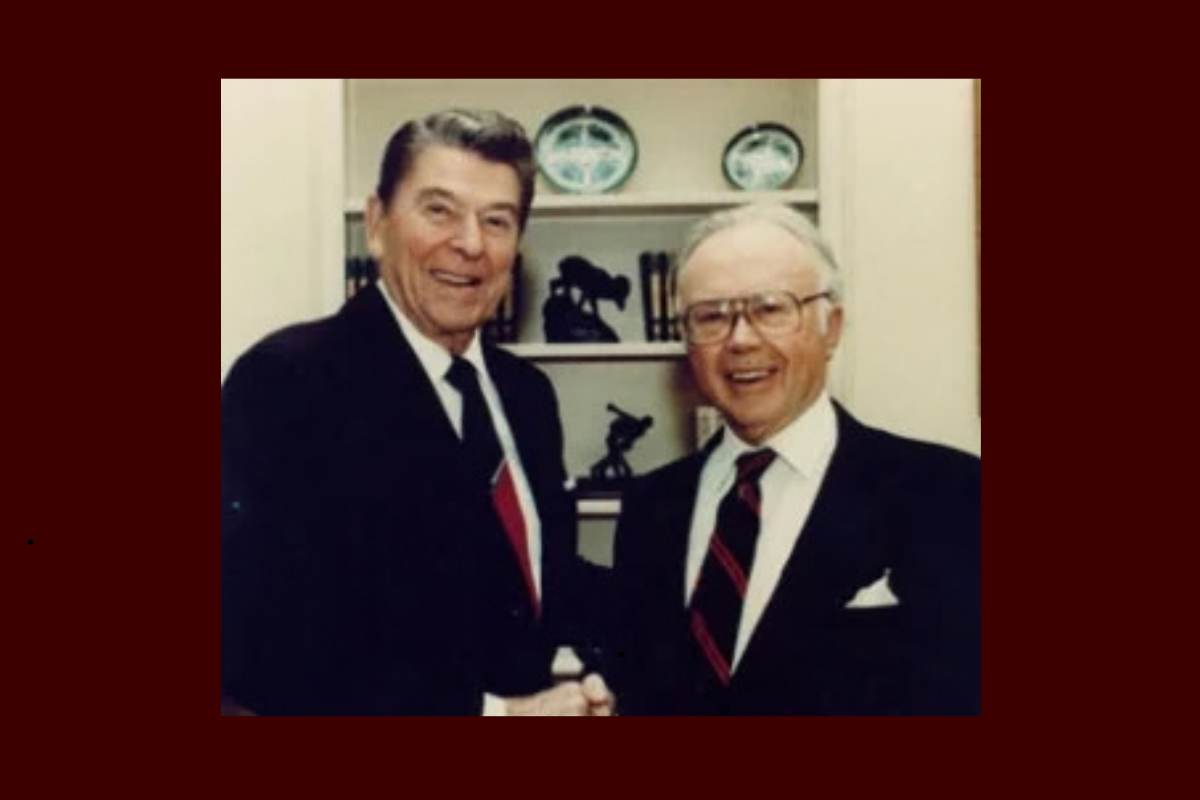
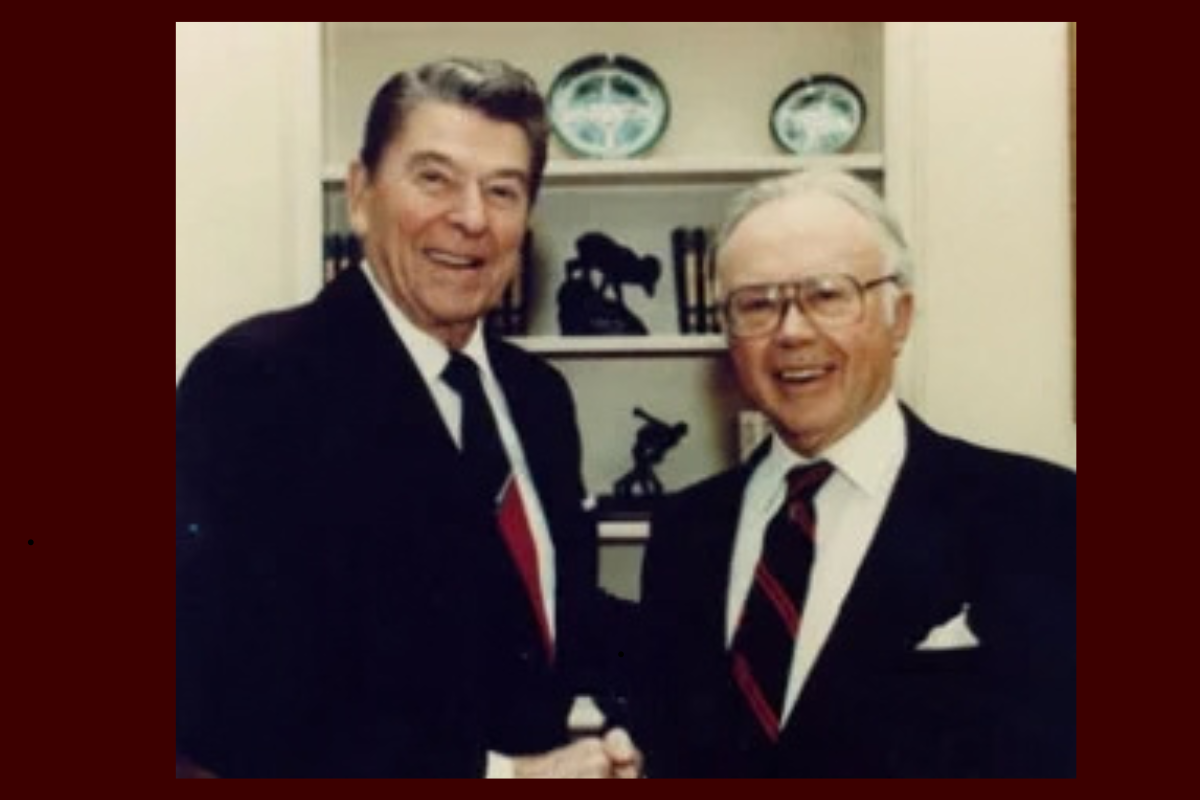
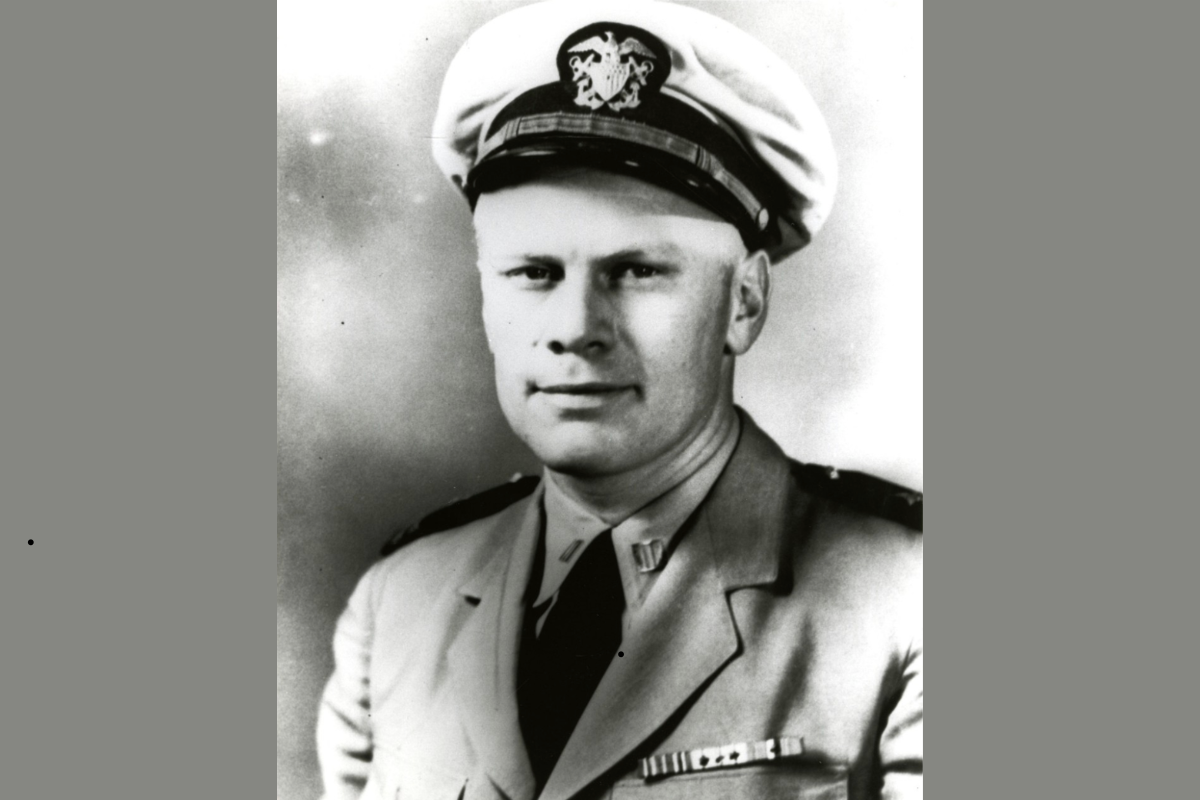
Russell Kirk (1918-1994), a pillar of the conservative movement, wrote The Roots of American Order in the lead-up to America’s bicentennial in 1976. President Ronald Reagan awarded Kirk with the Presidential Citizens Medal in 1989. He acknowledged that book’s merits when praising Kirk’s “powerful intellect,” which had allowed Kirk to clearly articulate “the values and ancient truths of our civilization.” For Kirk, a return to those truths constituted the only viable path to American renewal.
We face many of the same threats to American order that Kirk faced: religious decline, the growth of the unitary state, the expanding creed of multiculturalism, which now exists in the form of identity politics. In many ways, these threats have intensified. Kirk’s recommendations for the conservation of the American way of life, then, are still applicable and demand a hearing. Thanks to Michael Lucchese, who has compiled some of Kirk’s most trenchant writings in Russell Kirk On America: How to Understand the Legacy of 1776, a new generation can consult Kirk’s buoyant, optimistic prose and rediscover what is worth loving about our country—and how to restore her most lovable features.
A Conservatism of Love
Before you love something, you must know it. In the classic American film Groundhog Day, Phil, Bill Murray’s character, uses cheap gimmicks to win the heart of Rita, played by Andie MacDowell. When Phil lets slip a premature “I love you,” Rita snaps back, “Love me? You don’t even know me!” Kirk both knew and loved America. If we wish to love America—her people, her land, her history—we must know her. This volume is a great starting point for those who want to know America’s essence, to love her better and more truly.
This collection of Kirk’s writings is divided into three parts: American roots, American statesmanship, and American letters. Part one contains learned treatments of America’s founding principles. Parts two and three present lived, historical examples of how conservative thinkers applied conservative principles in the real world, in politics and literature. Among the great statesmen Kirk writes about are John Adams, defender of mixed government and “founder of true conservatism in America.” John Randolph of Roanoke, the proud localist, Virginian, and defender of the Southern conservative ideal of an agrarian society, also receives a chapter.
Kirk’s writing on Adams is drawn from his classic book, The Conservative Mind (1953). His writing on Randolph is drawn from his biography of Randolph, which was based on Kirk’s master’s thesis. Seasoned readers of Kirk will find much that is familiar here. But this volume also includes previously unpublished commentary on Abraham Lincoln and Mark Twain, together with other minor works on literary figures, such as Nathanial Hawthorne and Henry Adams, that are a sheer delight to read. And the delight derives, I think, from the love Kirk possessed for these great American authors.
In terms of knowing America, two things stand out from this volume as worthy of sustained reflection: first, America’s roots are ancient; second, the kind of knowledge most appropriate to understanding and cherishing our country is poetic knowledge. To gain knowledge, though, one must overcome falsehood. And Kirk masterfully punctures erroneous ideas about our country.
Clearing Away Modern Misconceptions
Kirk had his work cut out for him in 1976 when he sought to clear away the many misconceptions about America’s past that were gaining a foothold in the American psyche. Every generation is responsible for clearing away the clutter that impedes the proper perception of the past and a crystalline understanding of the present. Kirk swept away the detritus. He made sense out of nonsense. We should follow his example.
One common error, which Kirk debunked, is the idea that America was born in revolution. As Kirk explains in the chapter, “A Revolution Not Made but Prevented,” the colonists were the conservatives and George III the innovator in the American War of Independence. The colonists merely wanted to protect the practices of self-government they had developed for well over a century. George III, meanwhile, acted tyrannically, stripping the colonists of their rights as Englishmen. The famous appeal to natural right and abstract, universal principle in the second paragraph of the Declaration of Independence was a prudential addition designed to attract the support of French opinion leaders, whose help would provide indispensable to the American cause.
Kirk described the colonists as “defending their right to go on living in the future much as they had lived in the past.” In that case, “they were not marching to Zion.” Unlike the French Revolution (1789) or the Russian Revolution (1917), the American Revolution was not totalizing and destructive. It did not bow before the idols of reason and progress. It did not pound into dust the practices of the past. The American Revolution was practical, not ideological. It did not reject the divine order, nor did it place faith in humanity to create heaven on earth through rational planning.
To the extent that the American way of life has withstood the pressures placed upon it by revolutionary ideologies, it has done so because of its respect for religion. A major error, according to Kirk, is to mistake toleration—an American principle—with indifference to religion. America is entirely unique, in fact, because it combines “complete toleration of opinion with national attachment to religious principle.” The first amendment guarantees that no sect will be granted favored status on the federal level. But religion, as a whole, should be encouraged.
Kirk wrote these words about religion in 1958. The Founding Fathers, by and large, would have understood them. But Kirk’s words preceded the Warren court’s war on public Christianity, which erased bible reading and prayer from public schools. The American public is more secularized now. For Kirk, though, it seemed obvious that Americans lived in unparalleled peace, order, and freedom, because most of them continued “to believe in the Ten Commandments, the preachings of the prophets, the teachings of Christ, and the reasonings of the great theologians.” This protected them from the unsettling ideologies, including socialism, communism, and sentimental liberal humanitarianism, all of which “regard creation itself as a blunder” and the world as a thing to be remade. The more Americans move away from the Christian religion that formed them, the more they lack a protective shield against the enemies of tradition.
The enemies of tradition, coincidentally, often clothe themselves in American apparel, claiming, for example, that individualism—that is, dependence on one’s own reason and efforts to find meaning and purpose in life—is an American tradition. But that, too, Kirk argues, is foolishness. “There can be no tradition of ‘individualism,’” Kirk writes, “if by individualism is meant the doctrine that man can be guided simply by his private interests and private stock of reason.” We are born onto families and political communities, each of which is stratified, each of which is structured hierarchically, and each of which passes on stores of past wisdom. The radical effort to eliminate limits—to make everyone completely free—is un-American. Similarly, the radical effort to flatten everything—to equalize social roles and make everyone completely equal—is alien to the American tradition. Americans are builders, not destroyers, and we build with grateful hearts out of God-given material.
If the American tradition consists neither of complete individual liberty nor complete equality, then in what does it consist? What is the essence of that American tradition, or way of life—the mode of thought and action passed on from generation to generation—that Kirk sought to protect? That tradition is one of ordered liberty under God. It is the fruit of the “world-wide Christian tradition,” inherited from the Old World and, most directly, from Great Britain. It consists of the prejudices and patterns of thought that make us, as Americans, presumptively supportive of the traditional family, private property, hard work, decent manners, self-government, and Christian faith.
Kirk borrows from Orestes Brownson, the 19th century social critic—a former socialist who converted to Catholicism—when declaring that America’s mission in the world is neither to spread democracy abroad nor to serve as the world’s policeman, but to reconcile law and liberty, authority and freedom, and to model this for other nations.
This reconciliation, in Kirk’s favored phraseology, requires respect for two kinds of order: the order of the commonwealth and the order of the soul. The establishment of order out of diversity calls for the prudential application of ancient wisdom. That’s how Kirk interpreted the American founding, as the incorporation of hard-earned lessons from Greece, Rome, Jerusalem, and London, into the Philadelphia Constitution, which established a new, well-balanced order, drawing from timeless principles, concretized for a particular people.
Fostering Poetic Knowledge
The prudent application of timeless principles to particular contexts is, perhaps, the definitive conservative activity. To do this well, one must possess poetic insight into the nature of society and of man. Poetic knowledge rises above ideology. In fact, it is an antidote for ideological thinking. The poet looks beyond the moment, beyond the hour, beyond the news cycle, beyond the party platform. “The poet,” Kirk writes, “is loyal to norms, not to factions.” And these norms come from deep, disciplined study of the nature of man.
This study of the nature of man is a timeless study, since the nature of man is permanent. It is a study that draws us into conversation with great thinkers of the past (Homer, Sophocles, Virgil, Dante), the present, and the future. The community of souls that constitutes the “great conversation” parallels the community of souls that constitutes our political communities, that is, our ancestors, our countrymen, and our descendants. The study of the humanities reminds us that we are part of something permanent, not transient. We are engaged in the business of humanity, to govern ourselves and our communities in accord with pre-existing moral laws.
When we dwell on these moral laws, we develop penetrating knowledge of man, history, and society that helps us recall the essential fact that “our real enemy is not social institutions but the devil within us.” Hawthorne, for example, whose novel The Blithedale Romance provides a glimpse into the rot inside radical experiments in living, reminds us that the rot dwells within all of us. As a result, there is no social reform without moral reform.
The good poet speaks to us, in gripping language, of the grandness and wickedness of human nature. The conservative must take these two aspects of reality into account in all his reasoning. This is a central tenet of Kirk’s “imaginative conservatism.”
A critic might charge imaginative conservatism with naivete. It might appear fanciful to think, with Kirk, that, “no less than politicians do, great poets move nations, even though the generality of men may not know the poets’ names.” Kirk claimed that T.S. Eliot moved the nations in this way, even though the vast majority of the earth’s inhabitants, then as now, likely have no idea who Eliot, the twentieth century poet, is or what he wrote.
Kirk even maintained that the politician, if he is to be effective in renewing American order, must combine the audacity of a Franklin Delano Roosevelt or Ronald Reagan, with the poetic mindset. But has poetic knowledge ever ruled in the affairs of men? Are we not destined to have, instead, an American Caesar, who rules by gratifying the appetites of the masses? In true poetic fashion, Kirk kept two thoughts in tension: 1) we likely will get the American Caesar we deserve; 2) the conservative never loses hope, never succumbs to deterministic or nihilistic thinking. The conservative might be pessimistic, but he never gives up.
Kirk’s conservatism, then, is both imaginative and realistic. He affirmed that it is “persuasion, and not statistical tables” that “wins elections.” To carry out the renewal of American order, one must win elections. That is a fact. To win elections, one must capture the imagination. That is also a fact. To train the imagination in permanent truths and American tradition, with the hope of renewing America, I point readers to this volume and say, “pick up and read.”

Assistant professor of humanities at the Hamilton School of Classical and Civic Education at the University of Florida. He is an America250 Media Fellow at the Jack Miller Center.
Related Essays