When Leaders Were Larger Than Life
Editor’s Note: This essay was originally published on John Bridgeland’s Substack, Civic Moonshots.
Tennis taught me many things: focus, discipline, physical conditioning, the ability to remain calm when a match is turning against you, and the grace to win without boasting and to lose without bitterness.
But it also taught me something harder to put on a scoreboard: what leadership looks like when character matters more than applause.
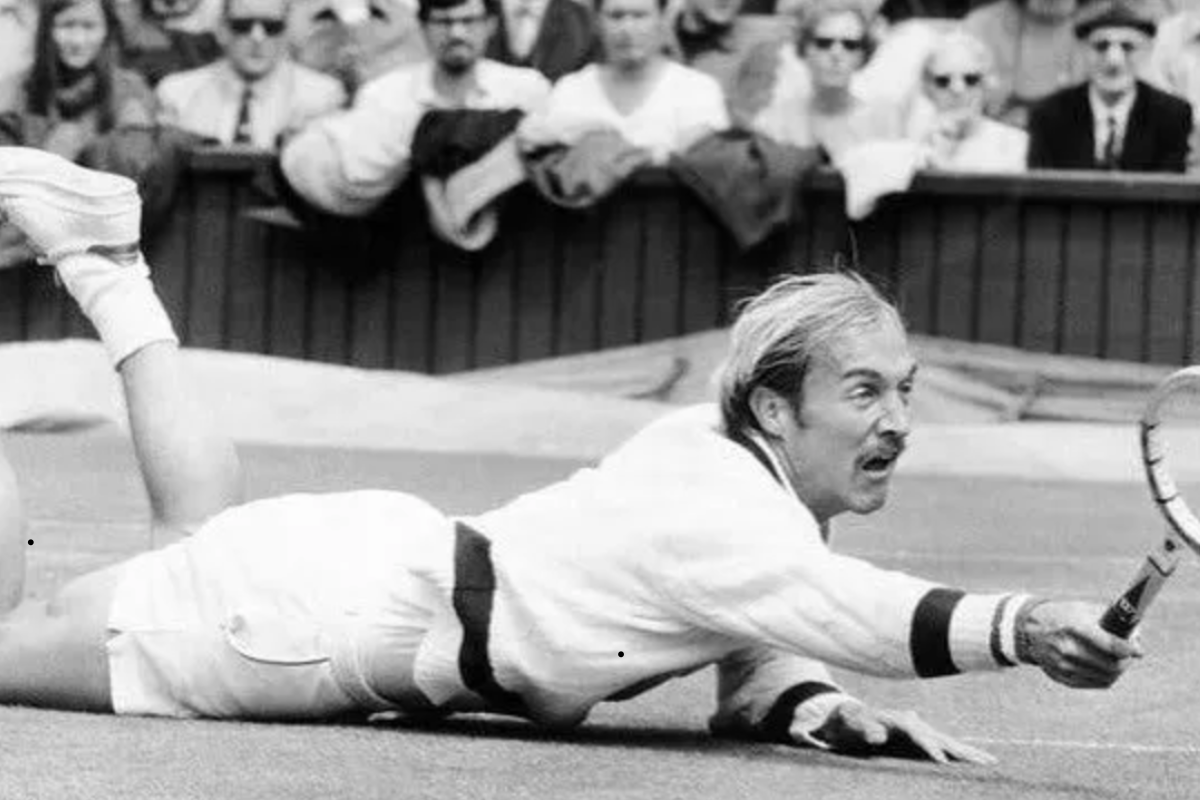
I was young when tennis gave me two of its greatest examples. In the 1973 World Championship, Stan Smith and Arthur Ashe—then ranked No. 3 and No. 4 in the world—faced each other in a match that came down to a single disputed point in the fourth set.
Ashe hit a perfect drop shot that barely cleared the net. Smith lunged forward and somehow flicked the ball back over the net, winning the point, the game and the match. But there was a question: Had Smith reached the ball before it bounced twice? The official ruled in Smith’s favor. The crowd remained unsettled.
I watched the post-match television interview, expecting that Ashe might have been angry or might have argued that the point should be replayed. Instead, when asked why he had not protested, Ashe said simply: “If Stan said it was up—that he got to the ball—it was up.” That sentence has stayed with me for more than 50 years.
Ashe had lost a championship. He had lost a significant prize. He had every incentive to challenge the ruling. Instead, he trusted the character of his opponent more than he trusted the opportunity to win.
A year later, I was a ball boy at the Western Championships in my hometown of Cincinnati. Ashe and Smith walked onto the court wearing their U.S. Davis Cup jackets. The announcer reminded the crowd of their service in the U.S. Army. Smith had won Wimbledon two years earlier; Ashe would win Wimbledon the following year.
But what I remember most happened after their matches. They took time to hit with our junior tennis team, to offer coaching tips, and to sign autographs. To a young tennis player, they seemed like giants. Yet they did not behave as if they were above us. They made us feel seen. They even made us laugh.
Years later, I recounted the story of Ashe and Smith in that controversial match during a speech to the Intercollegiate Tennis Association and to Stan Smith himself. By then I had played college tennis and even a few professional tournaments—failing miserably at the latter. But I had learned that tennis offered a revealing measure of character.
I saw on the junior tennis tour and in college that some players carried themselves with the quiet confidence and grace of Ashe and Smith. Others questioned nearly every call, slammed balls toward ball boys when frustrated or threw rackets in anger.
The difference was not talent. It was character. And character is most visible when we are losing.
That lesson seems particularly relevant now. We see leaders on television and social media who appear to regard public life as an extension of personal grievance. They elevate themselves by diminishing others. They divide Americans who need reasons to come together. They sometimes turn anger into entertainment and cruelty into applause.
Our children are watching. They are learning not only from what adults tell them, but also from what adults celebrate.
When I helped launch a national initiative to protect and renew American democracy five years ago, we grounded the effort in five goals: universal civic learning; expanded national service and volunteering; greater trust and bridging of divides; trusted elections and effective governance; and access to trusted news and information.
Inspired by our summit at General McChrystal’s headquarters, a supporter offered a sixth goal: responsible leaders who model good character. He was right.
Democracy is ultimately sustained not only by institutions, but also by the character of the people who inhabit them. The law can establish rules. A Constitution can establish limits. Courts can enforce principles. But none of these can substitute for citizens and leaders who possess the self-restraint, honesty, courage and respect for others necessary to make self-government work.
Judge Learned Hand put the matter memorably: liberty lives in the hearts and minds of people. When it dies there, he warned, no court, no law, no Constitution can save it.
The same is true of character. Our leaders are always teaching us something, whether they intend to or not. They teach children what constitutes strength. They teach citizens how to treat opponents. They teach communities whether disagreement will translate into contempt. They teach a country whether winning is worth any price.
Arthur Ashe and Stan Smith taught me something early in my life. They showed that greatness need not be loud. That strength can be gracious. That victory does not require humiliation of an opponent. That losing does not require abandoning one’s dignity. And that a person can become larger in the eyes of others by making himself, rather than others, smaller.
They wore their U.S. Davis Cup jackets with honor, having served their country. They competed fiercely. And when the match was over, they understood that the opponent across the net was still a human being worthy of respect.
That is a form of leadership America could use more of today. As we approach forthcoming elections, we will rightly debate policies, programs and promises. But perhaps we should ask another question before entering the voting booth:
What kind of example will this person set? Not only for us, but for our children. Not only in victory, but in defeat. Not only when surrounded by supporters, but when facing opponents. And not only when the cameras are on, but when character is all that remains.
A nation cannot choose every challenge it will face. But it can choose the kind of leaders it elevates to meet them. As a teenager, I looked to people like Arthur Ashe and Stan Smith and saw something larger than life that set me on a better course. They left the court more than champions. They left behind an example for children to emulate.
Perhaps that is what leadership at its best does. It makes us want to be better than we were before we encountered it.
Today, America does not need leaders who are merely larger than life. We need leaders who make the life of the country larger—by reminding us how to live with courage, humility, grace and respect for one another. And perhaps, when we vote, that is the kind of greatness we should seek.