How to Live in the World—And Be Not of It
Editor’s Note: This essay was originally published on John Bridgeland’s Substack, Civic Moonshots.
It is a season of reflection—Holy Week, Passover, and Ramadan. A pause. A question.
Years ago, in college courses on social and moral inquiry and faith-based reflection, Robert Coles asked a question that endures. Quoting historian Edmund Morgan on the Puritan dilemma faced by John Winthrop and all of us, he said:
How do we live in the world—and be not of it?
Coles had a way of turning a classroom into a chapel. His lectures were part scholarship, part sermon. We read about the lives that refused indifference—James Agee and Walker Evans documenting poverty in the American South, Dorothy Day building communities of mercy, Thomas Merton wrestling with faith and solitude, and Martin Luther King, Jr., summoning a nation’s conscience.
We also wrestled with Blaise Pascal’s Pensées, the confessions of St. Augustine, the mysticism of John of the Cross and Teresa of Ávila, the medieval wisdom of The Cloud of Unknowing, and John Bunyan’s journey from the City of Destruction to the City of Light.
These were not comfortable texts. They demanded something harder: engagement without surrender, conviction without noise, action without loss of soul.
Those lessons taught that service requires more than energy. It requires grounding. Call it faith. Call it character. Call it conviction. Without it, effort dissipates.
Today, that grounding is scarce. The news is relentless. The divisions are deep. Leadership too often drifts from principle. So, the quieter question presses: What fills our souls? What fills the nation’s?
There is, still, reason for hope.
Across the country, citizens serve—feeding children, strengthening schools, welcoming refugees, protecting land and water. Quiet work. Necessary work. American work.
Alexis de Tocqueville saw it early: a nation of joiners. That current still runs beneath the surface—steady, if unseen.
History shows it can rise again. Robert D. Putnam documents how earlier generations reversed inequality, distrust in each other and institutions, and political paralysis through shifts in the culture, renewed civic life, and leaders who reflected that energy from the ground up. Erica Chenoweth finds that even a small, committed minority can drive change.
But commitment alone is not enough. Many who serve are tired. Tempted to withdraw.
I hear it often. Friends confess exhaustion from the constant stream of chaotic actions from our leaders and negative news. Others feel unmoored. Some quietly dream of escape—retiring early, moving abroad, withdrawing from the noise. One friend sought to enter a convent.
I began to recognize the same struggles and tensions in my own life. So, I reached out to several friends—Timothy Shriver, Michael Gerson, Ted Wiard, and Tom Rosshirt—to form a book group. When we gathered for our first meeting, we made a humorous discovery: none of us had read the book. The busyness we hoped to escape had followed us into the room.
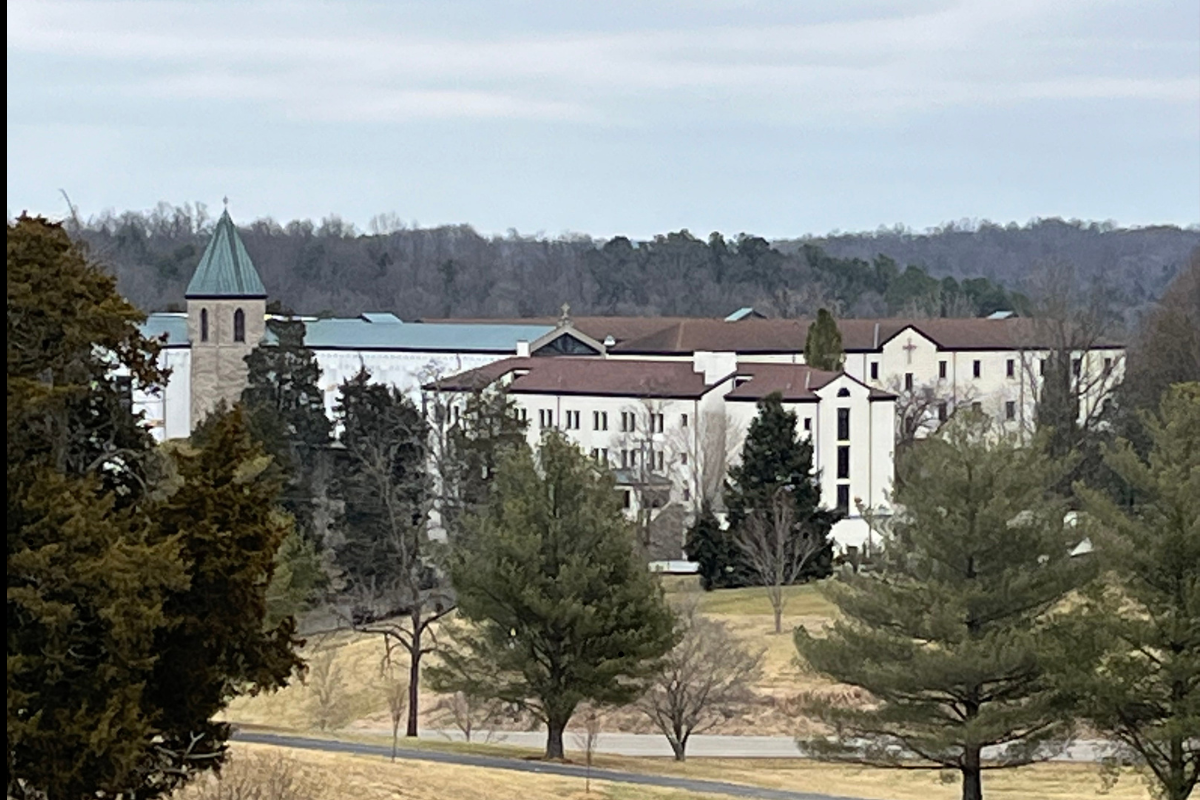
So, we tried something different. We formed a “Monastery Group.” A few times each year we spend long weekends visiting monasteries—places like the Abbey of Gethsemani in Trappist, Kentucky, where Merton wrote The Seven Storey Mountain, or Bon Secours Retreat and Conference Center in Marriottsville, Maryland. We pray with the monks and sisters, share meals in silence, walk together, and talk about what is on our minds.
The experience is disarming in its simplicity. Silence slows the pace of thought. Prayer quiets the noise within. Walking together opens space for deeper conversation. Gradually one realizes how much of the mind is occupied by the anxieties of the day. The mind begins to clear. We find our footing again.
Without reflection, service can become frenzied.
Without grounding, politics can become a quest for power without principle, as we see every day.
Without renewal, even the committed may fail.
To live in the world and be not of it is not a call to withdrawal: it is a call to depth. A restless age urges us to do more. But maybe the deeper challenge is to root ourselves and demand of our leaders something more enduring – moral conviction, adherence to ideals that informed our nation, and self-examination strong enough to steady us amid the storms of public life. From that stronger grounding, citizens can repair themselves, their communities, and the nation itself.