In Memorium: Bob Woodson

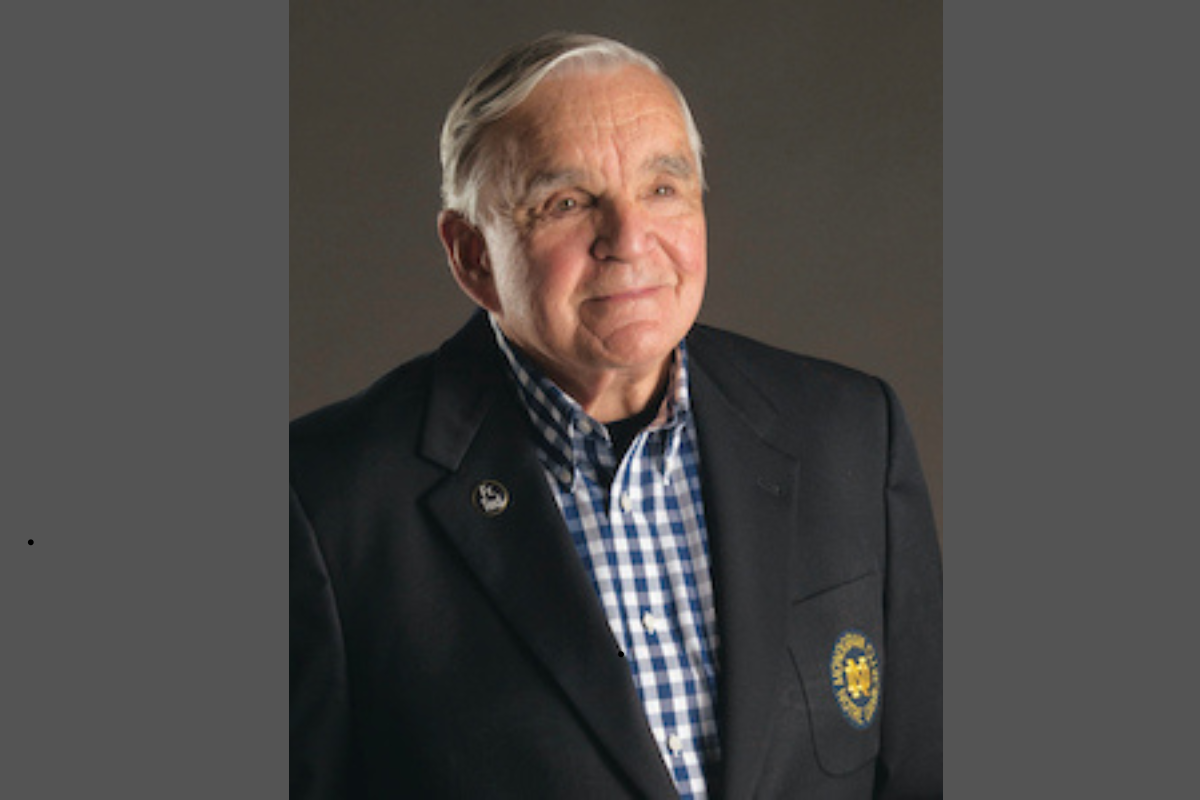
Bob Woodson passed away peacefully in his sleep last week Tuesday. He was 89 years old.
Some readers might not be familiar with Bob’s work nor why I might be writing a brief memoriam on his behalf. I didn’t know Bob well, but I knew him well enough. He embodied the kind of strength of character and democratic vision that I like to highlight on these pages. He was, I believe, a true American hero.
Bob’s work centered on a simple proposition: a whole can never be stronger than its parts. An early participant in the Civil Rights movement, he also witnessed its excesses and the occasional tendency – true of all political movements – to succumb to corruption. The animating principles of the movement – self-reliance, community spirit, fair treatment, judging people by the content of their character and not the color of their skin – were sound, so long as those principles didn’t devolve into self-pity or self-loathing and so long as the leaders of the movement didn’t sell out.
These were hard things to say. A white American such as myself doesn’t have the moral credibility to say these things publicly, and a black American such as Bob runs the risk of becoming a pariah to his own people But Bob was fearless, possessed of the kind of honest audacity that truth alone provides. Bob didn’t have time to help white people process their guilt or listen to people make excuses for why their lives were bad. There was too much work to do.
Bob founded The Woodson Center in no small part to support the work of those he called “Josephs,” the Biblical character treated unjustly by his brothers and, resurrected out of the most abject circumstances, becoming an advisor to Pharaoh and saved civilization. America, Bob believed, was filled with Josephs, those who had faced difficult circumstances and were serving their communities, providing support where it was most needed. These people toiled tirelessly and often in relative obscurity, but the work of one Joseph was greater than the mass machinery of the modern welfare state, that which had betrayed the animating spirit of the Civil Rights movement. Rather than liberating people, it kept them in a state of dependency.
Bob rightly saw that our crises of meaning and purpose arose from our loss of a sense of personal agency. He didn’t like people making excuses or playing the victim: we had choices to make, and actions to perform based on those choices, and we were accountable for those choices and actions. This simple equation proved the key to the understanding of the human person that lay at the heart of liberal democracy. Bad things happen to people; it’s what we do with the bad thing that matters. Bob didn’t care for people who nursed their anger, he was interested in people who would turn their anger and their hurt into something constructive.
One result was a fuller understanding of race relations in America. I had for some time been vaguely familiar with Bob’s work, but the pincer effect of The 1619 Project and the murder of George Floyd brought him to the forefront of my awareness. Those two events had a common theme: black people needed to be understood primarily as victims, subjects to modes of “systemic racism” that left them powerless. I remember, after the death of Floyd, getting into an argument with my dean who had confidently asserted that it was a racist murder. I expressed hesitation: maybe it was, but since there had not yet been a coroner’s report or a trial we couldn’t confidently say it was murder, which is after all a legal designation, nor could we say with absolute certainty that Chauvin was motivated by racial animus. After all, white cops killed innocent white people and black cops killed innocent black people (although cops killing innocent people remained relatively rare events). Perhaps there was another explanation available? Shouldn’t we consider all possibilities?
My dean’s intransigence resulted not from an assessment of the actual situation but from a narrative effect: operating from a framework of racial victimization he was unable to see the Floyd killing as anything else. Bob challenged the way we see the world, and by refocusing our vision he could change the way we acted in that world. Bob would give the devil of racism his due, but not pay a higher tribute than necessary.
Bob, as I said, was fearless. In. response to The 1619 Project, which had argued that race-based slavery was the true founding and thus foundational principle of this country, an all-determining reality, Bob founded 1776 Unites, rededicating America to what he considered its true founding principles as articulated in the Declaration of Independence. 1776 Unites is not simply an intellectual project, but as was always the case with Bob, found its way into constructive action. By emphasizing “black history and excellence,” Bob offered to black Americans “the American dream” as a viable alternative to welfare-state dependency and listless victimization. Bob liked to point out that black people were often at their best when white people were at their worst. Without understating the persistent and noxious presence of racism in America, Bob also understood that white guilt presented its own mode of paternalistic repression.
Among the pathologies associated with white guilt I would be remiss not to mention those race hustlers such as Ibram X. Kendi and Robin DiAngelo who turned that guilt into lucrative enterprises. DiAngelo’s White Fragility and its associated trainings made her very rich but impoverished the intellectual life of college campuses as well as the project of black uplift. Kendi went so far as to claim that animating principles of the civil rights movement were themselves modes of racism, but when Bob challenged Nikole Hannah-Jones or Kendi or DiAngelo to debate these matters with him publicly they quickly refused. They had too much to lose to pay the price of truthfulness. Bob called out grift when he saw it and admonished white people for purchasing indulgences that contained no promise of salvation. Improving the lives of the poor was real work, not “doing the work” the result of which was that you couldn’t feel good about yourself unless you felt bad about yourself.
In response to campus turmoil I had been reading about Bob and reading Bob’s own written work, which helped sharpen my thinking on many of these matters. Not long after taking this job at The Ford I was fortunate enough to meet Bob in person. We were both speakers at Pepperdine University on the topic “The Quest for Community: Realizing the American Project.” I gave one of my typically egg-headed, theoretical reflections on the state of community in America. I think the idea was that some of us would discuss the theoretical background while others showed how the theory could inform actual practice. Bob subsequently took the stage with some of his Josephs, and I was fairly blown away by what I heard.
But more. Later that evening I was fortunate to spend some alone time with Bob and the people his center supported. It was a delightful evening in no small part because, unlike on a college campus, I could actually speak freely and openly. Bob didn’t assume I was an oppressor and I didn’t assume he was a victim. Heart spoke unto heart, as Cardinal Newman said. I was inspired by the stories that Bob and the others were telling. These were stories of resilience and forgiveness and grace. Jon Ponder told us the story of how he used his time in prison to create a program that would reintegrate freed prisoners back into civil society. Sylvia Bennett-Stone gave a remarkable testimony concerning how, through an incomprehensible grace, she had turned her daughter’s senseless murder into Voices of Black Mothers United. Gary and Patricia Wyatt have worked tirelessly in Akron, OH to serve the people in that community in so many different ways. Andre Robinson had taken on great personal sacrifice to try turn Milwaukee schools into violence-free zones. Bob liked to say that these were callings, not jobs, and you never retired from them. It was a life commitment to people and to places. Bob and his people were doing the hard work of self-governance: local, selfless, attentive to detail, and devoid of cant and ideology.
As I said, I was inspired. So inspired in fact, that I felt there was a way to create some kind of relationship between the work Bob was doing and the kind of work that I thought President Ford would want us doing at his foundation. How could we replicate what was going on in other places here in West Michigan? Wherever social problems existed, Bob insisted, there was already someone there trying to do something about it. How could we help those people?
We brought Bob and his Josephs here to the museum for a daylong summit with community leaders. My lack of organizational skills showed, but the event went well nonetheless. Later that evening we hosted members of the Woodson Center for a public event. It was, for my money, the most inspiring evening we have had at the museum. I encourage you to watch the video.
In that first evening I got to spend with Bob out in Malibu he turned to me at one point and observed that there was so much left to do, and he only had 30 years left to do it. I smiled: “How old are you, Bob?” “85,” he replied, “but that’s just a number.” I thought to myself that he might actually have been able to pull off another 30, and good for all of us if he could. It may sound strange, but at 89, he was taken from us too soon. His work and legacy, however, will live on, so long as we have the courage and strength to carry that responsibility. Requiescant in Pace, Bob. Well done, thou good and faithful servant.
Photo Credit: Gary Wyatt. In the photo, left to right: Jon Ponder, Josh Mitchell, me, Bob, Andre Robinson, and Gary Wyatt.
“..for the growing good of the world is partly dependent on unhistoric acts; and that things are not so ill with you and me as they might have been, is half owing to the number who lived faithfully a hidden life, and rest in unvisited tombs.” George Eliot.

Director of the Ford Leadership Forum, Gerald R. Ford Presidential Foundation
Related Essays