Griswold v. Connecticut (1965)
Introduction
Even the most disinterested of citizens have some awareness of Roe v. Wade (1973), the Supreme Court case granting women the constitutional right to obtain an abortion. Far fewer are familiar with Griswold v. Connecticut (1965), the case which laid the foundation for Roe. In upending “an uncommonly silly law” outlawing the use of contraceptives in the state of Connecticut, the Court introduced a novel implied right of privacy to the world of constitutional doctrine that would prove wide reaching and deeply contested in its application. Indeed much of the responsibility for the endless conflict that has engulfed not only our constitutional debates, but broader political disputes, can be laid at the feet of the Court that decided Griswold.
The Historical Context
The seeds of the Griswold case were planted in the political and legal battles over contraceptives and birth control in the latter part of the 19th Century. In the late 1800s, a growing birth control movement in Europe gradually spread to the United States, where expanded birth control education and availability of contraceptive techniques were part of the emerging women’s rights movement. This sparked a countermovement that condemned contraceptive practice on moral grounds. For purposes of our story, it should be noted that the state of Connecticut became the epicenter of the conflict over contraception. Connecticut native Anthony Comstock, the director and organizer of the New York Society for the Suppression of Vice, led a relentless and vigorous “moral purity” campaign against birth control. In response, the U.S. Congress passed the Comstock Act of 1873, which prohibited interstate movement of contraceptive information and devices. Significant legislative activity at the state level mirrored the federal statute. By 1926, twenty-four states had anticontraception laws fashioned after the Comstock Act. Another twenty-two states had obscenity laws on the books that were interpreted to include a ban on contraception. The state of Connecticut, with Comstock’s activism bolstered by a sizeable and politically energetical Catholic population, has passed its own anti-contraception law in 1879. The law went further than the Comstock Act by criminalizing the use of contraception. The statute subjected to criminal prosecution “[a]ny person who uses any drug, medicinal article or instrument for the purposes of preventing conception” as well as anyone who “assists, abets, counsels, causes, hires or commands another” to violate the statute.
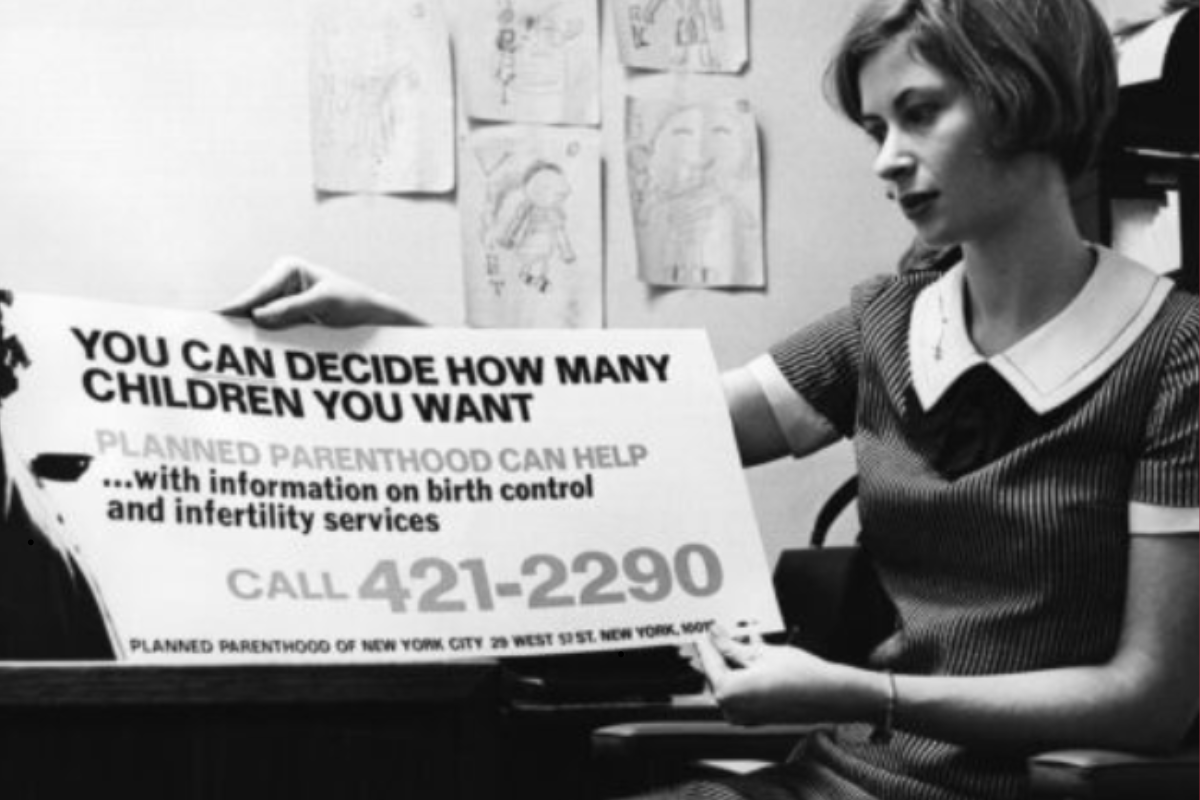
As the strictest anti-conception law in the country, the Connecticut statute became a target for birth control activists, who persistently, but unsuccessfully, lobbied the state legislature to overturn the law. Their efforts on the ground to expand access to and education around contraceptives over time would however prove to be a more fruitful avenue for attacking the legal footing of the law. With the help of noted activist Margaret Sanger, the Connecticut Birth Control League opened its first clinic in 1935 in Hartford. Ironically, the statute once passed had little practical effect. It was only when birth control clinics began popping up that the state turned its attention to enforcing the law. Eight clinics would open across Connecticut in the next four years, intensifying the battles with anti-conception moralists.
Legal challenges to the state statute soon followed. The first of those arose in 1941 and reached the Supreme Court two years later (Tileston v. Ullman). The Court sidestepped the merits of the case, dismissing it on technical grounds. The Court found that the physician who brought the claim on behalf of his patients lacked any personal harm from the law, and hence lacked the standing to sue. The Supreme Court would not address the issue again until 1961, when a doctor challenged the law on behalf of two of his patients who, in contemporary parlance, had suffered at-risk pregnancies and faced potentially life-threatening consequences were they to become pregnant again. Once again, the Supreme Court sidestepped the substantive question, rejecting the appeal for a lack of ripeness on grounds that no person had actually suffered a penalty for violation of the statute and hence there was no real case or controversy. Despite the outcome, the fact of a divided Court in Poe v. Ullman (1961) marked a significant step forward for the pro-contraception advocates. The dissent of Justice John Marshall Harlan was especially pointed, as he argued that “the full scope of the liberty guaranteed by the Due Process Clause cannot be found in or limited by the precise terms of the specific guarantees elsewhere provided in the Constitution.” Arguing that the Court should have weighed in on the substance of the case, Harlan contended that the “liberty” interest of the Fourteenth Amendment included “freedom from all substantial impositions and purposeless restraints.” In broadly interpreting the Due Process Clause to include unenumerated rights, Harlan left no doubt that he was ready to vote to overturn the Connecticut statute. Together with the separate opinions of Justices Douglas and Brennan, a critical mass on the Court signaled its eagerness for another opportunity to weigh in on the merits of the law.
As it turned out, the Planned Parenthood League of Connecticut (the successor organization of the Connecticut Birth Control League) needed no such prompting from the Court. On the very day that Poe was rendered, Planned Parenthood announced it was opening another clinic, in New Haven, Connecticut. With the specific aim of generating a test case to contest the law, PPLC executive director Estelle Griswold, along with PPLC’s medical director, Dr. Lee Buxton, opened the clinic’s doors on November 1, 1961. Within two days, police had arrived on the premises; Griswold was more than happy to aid in the investigation, giving the police a tour of the facility and showcasing its services that directly violated the law. Within a week, the police had returned with warrants, placing Griswold and Buxton under arrest for providing information and advice to married couples seeking contraception. The defendants were promptly tried, convicted, and fined $100 each. After the convictions were upheld by the Connecticut appellate court and the state Supreme Court, Griswold and the League successfully appealed to the U.S. Supreme Court.
Griswold v. Connecticut (1965): The Douglas Majority Opinion
On June 7, 1965, the Court issued its decision in Griswold v. Connecticut, a 7-2 decision striking down the Connecticut statute. Justice Douglas, who had penned a fiery dissent in Poe v. Ullman only four years earlier, wrote for the majority. After issuing a caveat acknowledging that the Court does “not sit as a super-legislature,” Douglas proceeded to make the case for a right of privacy that stemmed from “an intimate relation of husband and wife and their physician’s role in one aspect of that relation.” In doing so, however, he employed rhetoric and imagery that would open him up to the criticism, if not outright ridicule, of skeptics of non-enumerated rights. Notwithstanding the absence of explicit language establishing a right of privacy, Douglas waxed poetic about “specific guarantees in the Bill or Rights [that] have penumbras, formed by emanations from those guarantees that help give them life and substance.” Invoking a metaphor that conjured up notions of shadowy partial illuminations that were by definition indistinct or blurry hardly seemed either strategically or functionally likely to provide doctrinal clarity for a novel expansion of rights jurisprudence.
Nor did Douglas help himself with his “everything but the kitchen sink” approach to finding a non-textual right of privacy. He did not identify or limit himself to a single guarantee in the Bill of Rights. Rather he cited a variety of guarantees which could conceivably give rise to zones of privacy. After naming the right of association as one such “penumbra” of the First Amendment, Douglas offered a laundry list of possible sources of the emanations of privacy . . . the Third Amendment prohibition on the quartering of soldiers, the Fourth Amendment protection against unreasonable search and seizure, the Fifth Amendment admonition against self-incrimination, and the Ninth Amendment retention of rights not enumerated in the Bill of Rights. Douglas concluded that this array of potential constitutional guarantees was sufficient to provide for a zone of privacy around the marital relationship, within which one could conclude that contraception lay. Given that the state statute forbade even the use of contraceptives, the law worked “maximum destructive impact upon that relationship.”
Ironically, one amendment Douglas left off his laundry list was the Fourteenth Amendment. He was clearly wary of wandering into the mire of “substantive due process.” That since-discredited theory had been employed by the earlier Court to justify its laissez-faire approach which prioritized economic liberties over the progressive reforms and New Deal legislation of the early Twentieth Century. The Court’s having buried Lochner-era economic liberties in West Coast Hotel in 1937, Douglas studiously steered clear of anything that sniffed of Fourteenth Amendment substantive due process, lest it be resurrected by some future conservative court to revive the primacy of economic rights.
Finally, Douglas seemed to qualify the right of privacy by placing it firmly within the context of the relationship of marriage.
We deal with a right of privacy older than the Bill of Rights – older than our political parties, older than our school system. Marriage is a coming together for better or for worse, hopefully enduring, and intimate to the degree of being sacred. It is an association that promotes a way of life, not causes; harmony in living, no political faiths; bilateral loyalty, not commercial or social projects. Yet it is an association for as noble a purpose as any involved in our prior decisions.
The Concurring Opinions
The Douglas majority opinion failed to achieve anything close to a consensus among his fellow justices. Only two of the nine justices chose not to author separate opinions. Instead three concurrences and a pair of dissents all offered distinct doctrinal takes on the question of the right of privacy. Justice Goldberg in his concurring opinion found “marital privacy” to be a fundamental right located within the Ninth Amendment. By specifying that “the enumeration in the Constitution, of certain rights shall not be construed to deny or disparage others retained by the people,” the Ninth Amendment provided the space for reading “liberty” to include rights under the Fourteenth Amendment beyond those specified in the Bill of Rights, including privacy around marriage. Goldberg found it untenable “[t]o hold that a right so basic and fundamental and so deep-rooted in our society as the right of privacy in marriage may be infringed because that right is not guaranteed in so many words by the first eight amendments to the Constitution . . .” This did not mean judges were to look to their own personal or private notions of unnamed rights. Rather fundamental rights were those “rooted in traditions and collective conscience of our people.” Here Goldberg found common cause with Douglas, agreeing that the right of privacy is a fundamental right “emanating from the totality of the constitutional scheme under which we live.”
Justice Harlan likewise concurred, breaking from Douglas in unreservedly invoking the notion of substantive due process. He relied solely on the Fourteenth Amendment as the basis for judging whether the statute was congruent with basic values “implicit in the concept of ordered liberty.” The right of privacy need not depend on “radiations” from the Bill of Rights or other provisions of the Constitution. In Harlan’s estimation, “[t]he Due Process Clause of the Fourteenth Amendment stands . . . on its own bottom.” While agreeing with the majority, Justice White also concurred, arguing that the liberty interest of the Fourteenth Amendment was grounded in the intimacies of marriage relationships, child rearing, and the like. He argued for “a realm of family life which the state cannot enter” without substantial justification. The state’s offered rationale of discouraging illicit sexual relations failed to justify the sweeping nature of the law, and “deprive[d] married persons of liberty without due process of law.”
The Dissenting Opinions
Justice Hugo Black wrote the primary dissent. Noting the Fourth Amendment guarantee against unreasonable search and seizure includes privacy at “ certain times and places wit respect to certain activities,” Black found no basis for the newly conceived implied right of privacy. He belittled Dougal’s “penumbras” language, stating that “I get nowhere in this case by talk about a constitutional ‘right of privacy’ as an emanation from one or more constitutional provisions. I like my privacy as well as the next one but I am nevertheless compelled to admit that government has a right to invade it unless prohibited by some specific constitutional provision.” Black accused the Court of adopting a methodology that would demand that judges “determine what is or is not constitutional on the basis of their own appraisal of what laws are unwise or unnecessary.” In so doing, the Court was stripping from Congress “the power to make laws based on their own judgment of fairness and wisdom and transfer[ing] that power to this Court.” Black was equally dismissive of Justice Goldberg’s standard of the “traditions and collective conscience of the people.” He found the Court to be without the “machinery with which to take a Gallop Poll” nor did the Court have “a gadget which the Court can use to determine what traditions are rooted in the “[collective] conscience of our people . . .” Rejecting the notion that the Court ought to “keep the Constitution in tune with the times,” Black pointed to the constitutional amendment process as a sufficient means of seeking such changes. Finally, Black punctured the reliance of Justices Harlan and White on substantive due process. He concluded that a doctrine that was of dubious standing in the Lochner era of upholding economic liberties “so too is [was] . . . dangerous when employed by the Court to advance its conceptions of personal rights.”
Justice Stewart also penned a dissent, joined by Justice Black. Calling the statute an “uncommonly silly law,” Stewart found it beyond the Court to “say whether we think this law is unwise or even asinine. We are asked to hold that it violates the United States Constitution. And that I cannot do . . .” He lectured his brethren on “the essence of judicial duty,” which was to subordinate their personal views on the wisdom of the legislation. Stewart protested that “to say that the Ninth Amendment has anything to do with this case is to turn somersaults with history.” If the law failed to “reflect the standards of the people of Connecticut,” Stewart thought the appropriate response was for the people of Connecticut “to persuade their elected representatives to repeal it. That is the constitutional way to take this law off the books.”
The Significance of the Decision
The immediate practical effect of the Griswold decision was straightforward. The repeal of the Connecticut statute and similar laws in thirteen other states dramatically expanded access to birth control for women, particularly those of lower socio-economic standing. The broader legacy of Griswold, and its impact on American law and politics, is far more complicated.
The case undeniably broke fresh constitutional ground in establishing as fundamental a newly cast version of privacy. Privacy was hardly a foreign concept in constitutional law previously. Search and seizure law had encompassed a right of privacy understood largely in tangible and sensory terms. Within a physical or material realm, one had a reasonable expectation to be free of governmental intrusion without probable cause. The propriety of searches dealt mostly with a “reasonable expectation of privacy” around one’s person, residence, automobile, backpack, or pants pockets. Despite a near-infinite variety of fact situations implicating the Fourth Amendment expectation of privacy, constitutional text and a generally agreed upon conception of the Fourth Amendment have provided judges the tools by which to decide.
The same cannot be said for the implied right of privacy first recognized in Griswold. It was of a different nature, privacy understood as personal autonomy, as the liberty to exercise decision making and control over the highly personal dimensions of one’s life free of governmental interference. The right of privacy so understood has proven much more difficult to apply jurisprudentially in a principled fashion. The efforts of Justice Douglas and his fellow justices in Griswold to effectively cabin the right of privacy largely failed. As a result, the right of privacy has unspooled in ways that have generated massive political, legal, and constitutional battles.
Griswold was not immediately controversial. While conservative opponents accused the Court of judicially creating rights beyond the Constitution, their objections were fairly muted. The acceptance of Griswold surely stemmed from the Court’s recognition of a right that had largely been considered as such by the general public. The right to birth control in the context of a marriage in most people’s minds was well within the spirit of other freedoms expressed in the Constitution, even if not explicit. But the slew of majority and concurring opinions in Griswold provide an important lesson in the development of constitutional doctrine, namely that it matters not only what the Court does, but how it does it.
If ever there were an area of doctrinal development that demanded the Court speak with institutional authority, the creation of a right of implied privacy was it. Unfortunately, five disparate opinions almost guaranteed that the applied right of privacy would unfold in ways plagued by deep differences. That begins with Justice Douglas’s unfortunate use of the language of penumbras and emanations, which meant that the right when borne was beset by ambiguity and abstraction, leaving it unclear what fell within its ambit. Reliance upon ill-defined “conceptions of ordered liberty” only further muddied the waters. Douglas’s own attempts to ground privacy in a marriage relationship that predated the Constitution were quickly cast aside; within just a few years, the marital context was dropped, as the Court extended contraception as a right to unmarried couples, and including it in “the rights of single people.” (Eisenstadt v. Baird 1972). Justice Brennan now assuredly pronounced that “[i]f the right of privacy means anything, it is the right of the individual, married or single, to be free from unwarranted governmental intrusion into matters so fundamentally affecting a person as the decision whether to bear or beget a child.”
Nor can the complex legacy of Griswold be divorced from the progeny of cases it produced. The lineage of Griswold extends to and through Roe v. Wade (1973), where the privacy right was extended to a woman’s decision to terminate a pregnancy. It has been applied to “right to die” and termination of treatment cases, private sexual activity (Lawrence v. Texas 2003), and the constitutional guarantee of same-sex couples to marry (Obergefell v. Hodges 2015). A closer study of these cases will come in future essays in this series. For now it should be noted that the privacy right tends to be wielded in the context of “culture wars” issues that divide along moral and religious lines. But classifying the right at stake as fundamental, thus triggering the strict scrutiny standard of review, has moved issues from popular legislative bodies to unelected judicial ones. At the same time, the right of privacy has been applied to issues that can hardly be attributed to the “traditions or collective conscience of the people.” Thus have these cases stoked the accusations of judicial legislating whereby the right of privacy seems to be dictated more by the proclivities of judges than genuine popular tradition.
In a juridical universe dissected between originalists and textualists on one hand and realists on the other, the jurisprudence around the right of privacy has never found full acceptance or legitimation among large swathes of judges, lawyers, pols and citizens. By ascribing a questionable privacy doctrine to social and political issues where deep differences already existed, the Griswold decision contributed to long term developments that had a deleterious impact on the standing of the Court, public regard for the Constitution, and the health (or lack thereof) of our political debates.