The Secret of the Word, Revealed
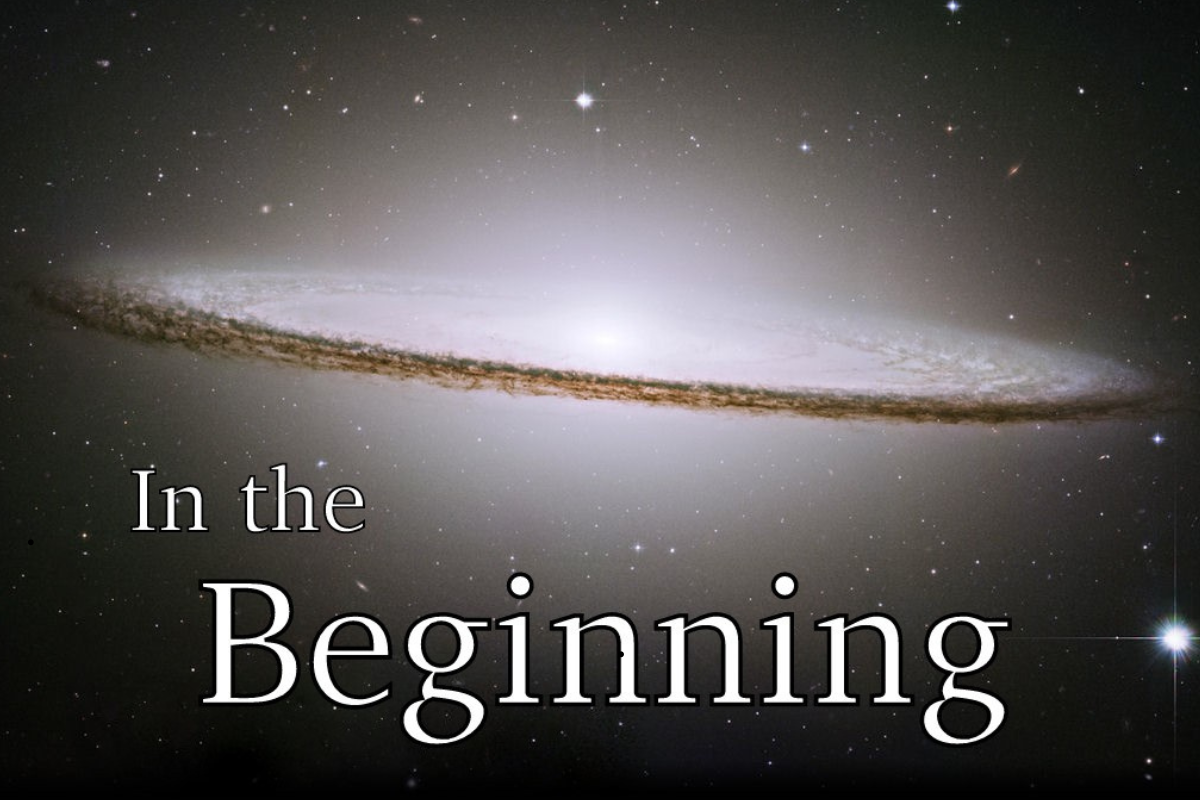
We dance round in a ring and suppose,
But the Secret sits in the middle and knows.
--Robert Frost
“In the beginning was the Logos; and the Logos was with God and the Logos was God. And the Logos became flesh and dwelt among us.”
In the Prologue (literally, “before the word”) of St. John’s Gospel the Greek logos is typically translated as “word,” thus connecting the advent of Christ Jesus to the written scripture, including the opening of the book of Genesis. St. John means to show us the fulfillment of the prophecy of good tidings: “behold your God.”
Other meanings of logos include “speech” or “reason.” In his Metaphysics, Aristotle called humans the “zōon logon echon” – the animal that speaks, but also the one that reasons. Human beings, he observed, not only reason differently from other creatures but also communicate differently, and this reasoning and communicating are intrinsically related to our sociability. Human beings are inherently and complexly social in ways other creatures are not. Part of what makes human sociality uniquely different is that while most creatures operate by instinct human beings deliberate about ends and purposes in ways other creatures don’t, and furthermore such deliberation can actually get humans to act contrary to instinct. Maximillian Kolbe, recognizing we are made for more than mere survival, willingly took someone else’s place in line at Auschwitz.
Aristotle believed that reason is the divine capacity in man, because Reason itself is what had ordered the whole cosmos. At its highest level our reasoning not only mirrors but participates in that divine ordering. Our words, our speech, our reason, therefore, are not mere chatter or mere symbols; they order the world around us and between us in definitive ways. Words matter in no small part because they constitute our ways of being in the world and being with each other. I’ll ask my daughter to please pass me the steak and thank my son for pouring more wine. I might even, if it comes to it, take Christmas day as an opportunity to tell my wife I love her.
All this results from the creative word. Here we happen upon a central mystery: how does something that is not of this world become part of it? The logos, according to Aristotle, is both the beginning and the end of all things, that which sets all other beings into motion, the dynamic force in all things but itself static. Our own logoi often fail, which may be why toward the end of his life Aristotle said he preferred mythos to logos. The Aristotelian logos is abstract and impersonal; we are in no relationship to it except conceptually. It does not come to us as a person.
The Book of Genesis begins the same way as the Prologue to St. John’s Gospel: “In the beginning,” and in that beginning we find the presence of God; this presence seems to us fundamentally mysterious not only because it is at the beginning but because it is also “beyond.” God is the “wholly other,” something so holy that we dare not invoke His name (among the Abrahamic faiths only Christians will pronounce the Name YAHWEH). This “name” is known as the “tetragrammaton,” in reference to the four Hebraic letters that form it, and may be derived from the verb “to be,” related to the “I am” of the burning bush. God, being above all, is also above being named, although we cannot avoid saying something (which Plato called “theology” – our words about the gods). Aquinas worked around the problem by saying that while our talk about God operates analogically and makes use of things we do know and can speak about, there is always a hidden depth we cannot know or understand or even talk about, and this he referred to as “the tetragrammaton.”
This is the secret that Christmas reveals: we cannot gaze upon the fullness of divine presence without perishing, but God can be present in such a way as to restore us to life. The mystery can be approached when we consider that the God of whom we cannot speak can, Himself, speak, when God decides out of His mercy to take on human form. In the Genesis account God calls the world into being by speaking. The word is already with God, and by divine speech all that is comes to be. The miracle of Christmas is that God takes on all the viscera and blood and sweat and tears and body functions of being human and takes them unto death, and then raises them again to new life. Our holiday meals are foretastes of the that time when “the Lord of hosts will make for all peoples a feast of rich food, a feast of well-aged wine, of rich food full of marrow, of aged wine well refined.”
The Divine Word is therefore a gift: there didn’t have to be something rather than nothing. God said “let there be light, and there was light.” Likewise God called us to life. And, then again, after God’s word became flesh and dwelt among us, a light would now shine in the darkness, and the darkness would not overcome it. The symmetry shared by the Genesis account and the Prologue to St. John’s gospel reminds us that the logos comes to us as a gift, first by bringing us into the company of being and then by restoring us to a rightful relation to it. If we cannot understand why God called the world into being at all, how much less can we understand the idea that He took on human flesh to dwell among us, and that only such emptying of the Godhead could accomplish the life-giving restoration and salvation we need?
Our inability to understand ought not render us insensitive to the nature of the gift: the logos comes to us as an act of love, for it is love that both ordains and sustains all things. In order for love to exist it must be embodied. The sacraments testify to the nature of love as real presence just as our love is attached to those whose lives we share. We have largely sentimentalized the idea of love, often reducing it to mere feeling, making it lose its concrete character as we forget that creation and redemption are acts. Words themselves mean little when separated from act, when spoken words remind us of the act and elicit a sense of gratitude that accompanies such remembering, particularly when we realize that all such gifts are undeserved.
Perhaps knowing these gifts are undeserved often results in our refusing to accept them. Such unmerited love may tap into our insecurities or pride. We may feel unworthy but we may also feel such proffering is unnecessary. Our prideful rejection of these acts of love ignores the simple fact that we did not will ourselves into existence. Whatever mystery awaits for us at the end, it is ordained by the same love expressed at the beginning. I think Michigan’s Russell Kirk expressed this well:
At the back of every discussion of the good society lies this question, What is the object of human life? The enlightened conservative does not believe that the end or aim of life is competition; or success; or enjoyment; or longevity; or power; or possessions. He believes, instead, that the object of life is Love. He knows that the just and ordered society is that in which Love governs us, so far as Love ever can reign in this world of sorrows; and he knows that the anarchical or the tyrannical society is that in which Love lies corrupt. He has learnt that Love is the source of all being, and that Hell itself is ordained by Love. He understands that Death, when we have finished the part that was assigned to us, is the reward of Love. And he apprehends the truth that the greatest happiness ever granted to a man is the privilege of being happy in the hour of his death.
Note how Kirk connects divine love to human love: that which ordains all things also rests at the foundation of any tolerably decent society. Here, too, the logos operates as both word and act. In dialogue – the dia-logos, or the search for the word that runs through all words – we unite ourselves into a community where love can have its rein. In dialogue we listen carefully to the other person, attending to her words even while we mind our own. The search for the logos properly expresses our dignity. In our efforts the logos can become real in time and lift us into a higher relationship, a kind of friendship. Aristotle realized that without commitment to the logos even friendship would become nothing more than seeking advantage. I can’t say that those friends with whom I “enjoy” genuine dialogue often leave me feeling better about myself. They load their words carefully and know exactly how to hit their mark. I’ll reluctantly confess that I respect their aim and acknowledge I’m the better for it.
Unlike God, we must learn how to speak, which involves both what we say and what we must leave unsaid. The times are not propitious. Too much of what ought to remain unsaid gets said, and too little of what must be said actually gets expressed – or gets buried in the sheer avalanche of words that bury the logos. Cardinal Newman, quoting St. Francis de Sales, connected the logos to agape: Cor ad cor loquitor. Heart speaks unto heart. The heart speaks, but the heart also listens, and that listening means that to be receptive to the logos we must learn to be silent. This, too, seems impossible in the din of this noisy world with all its distractions.
Because dialogue involves careful listening, gentle correction, and sustained engagement, it does not scale well, if at all. There is no such thing as a “national dialogue.” Nor does it translate to one-off “workshops.” The effects of dialogue take time, and therefore so do the processes. Often a seed planted in an early conversation doesn’t sprout until much later. It needs constant nourishment and tending to; or, put another way, it demands sustained presence. The logos requires that it be flesh, just as those we love require we be present in their lives, even if that means attending yet another Christmas pageant or listening to a children’s choir. A child’s smile may be the greatest proof of God’s existence. The gift-giving and Christmas meal remind us that presence matters far more than presents do, and that the best things in life are those we share with those we love.
The mystery of Christmas is the wonder of God taking on human flesh and, in the process, making the person so much more than a collection of organs and bones. As St. Paul said, Christ took the form of a servant, humbling himself by being “born in the likeness of man.” This “incentive of love” means that we likewise “in humility should count others better than ourselves” and look “not only to our own interests but the interests of others.” All persons of good will can reset themselves accordingly. Our walking in darkness has “received a great light.” It’s Christmas morn: Arise, shine, for thy light has come.

Director of the Ford Leadership Forum, Gerald R. Ford Presidential Foundation
Related Essays