Gerald Ford Knew Why Americans Fought in Korea
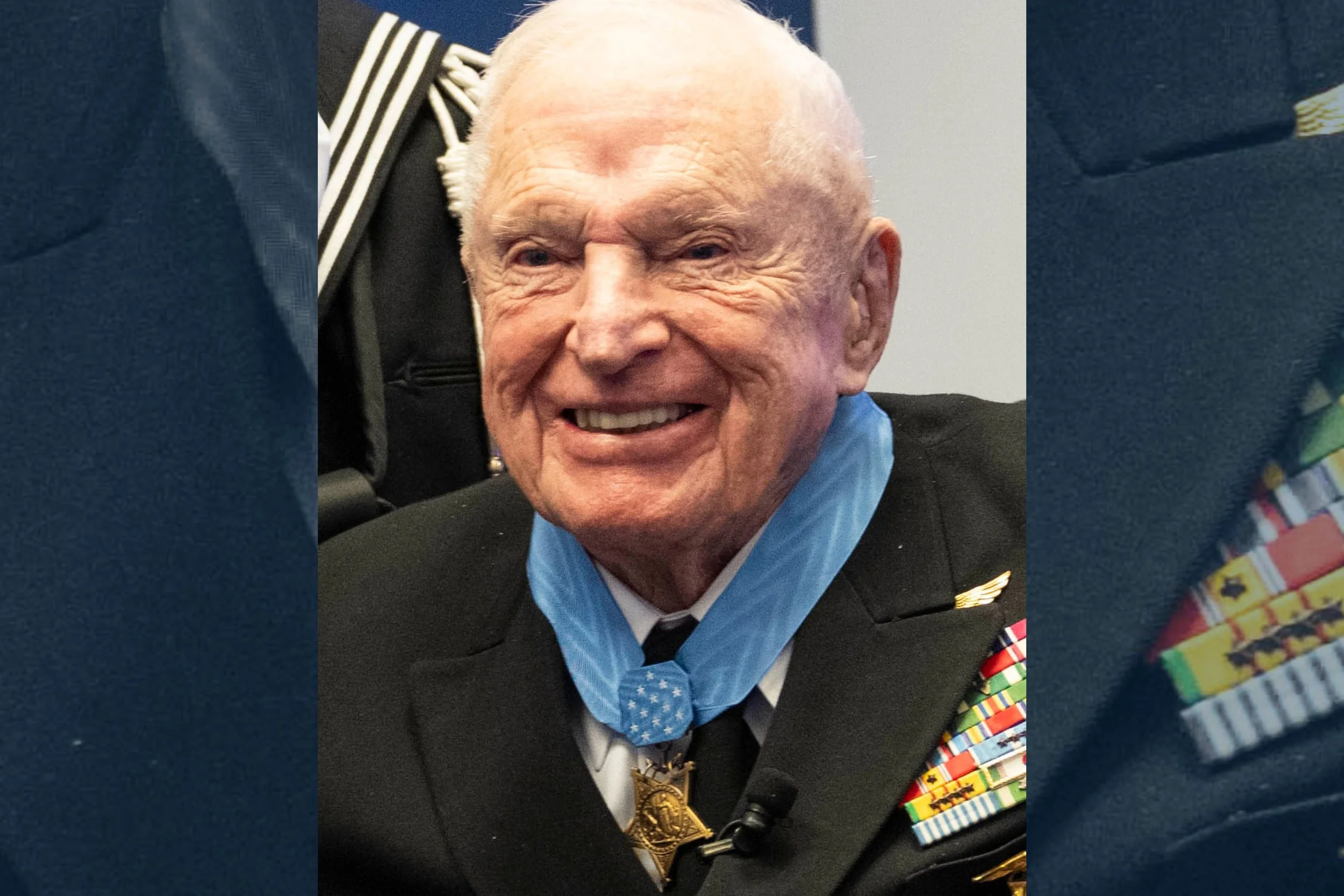
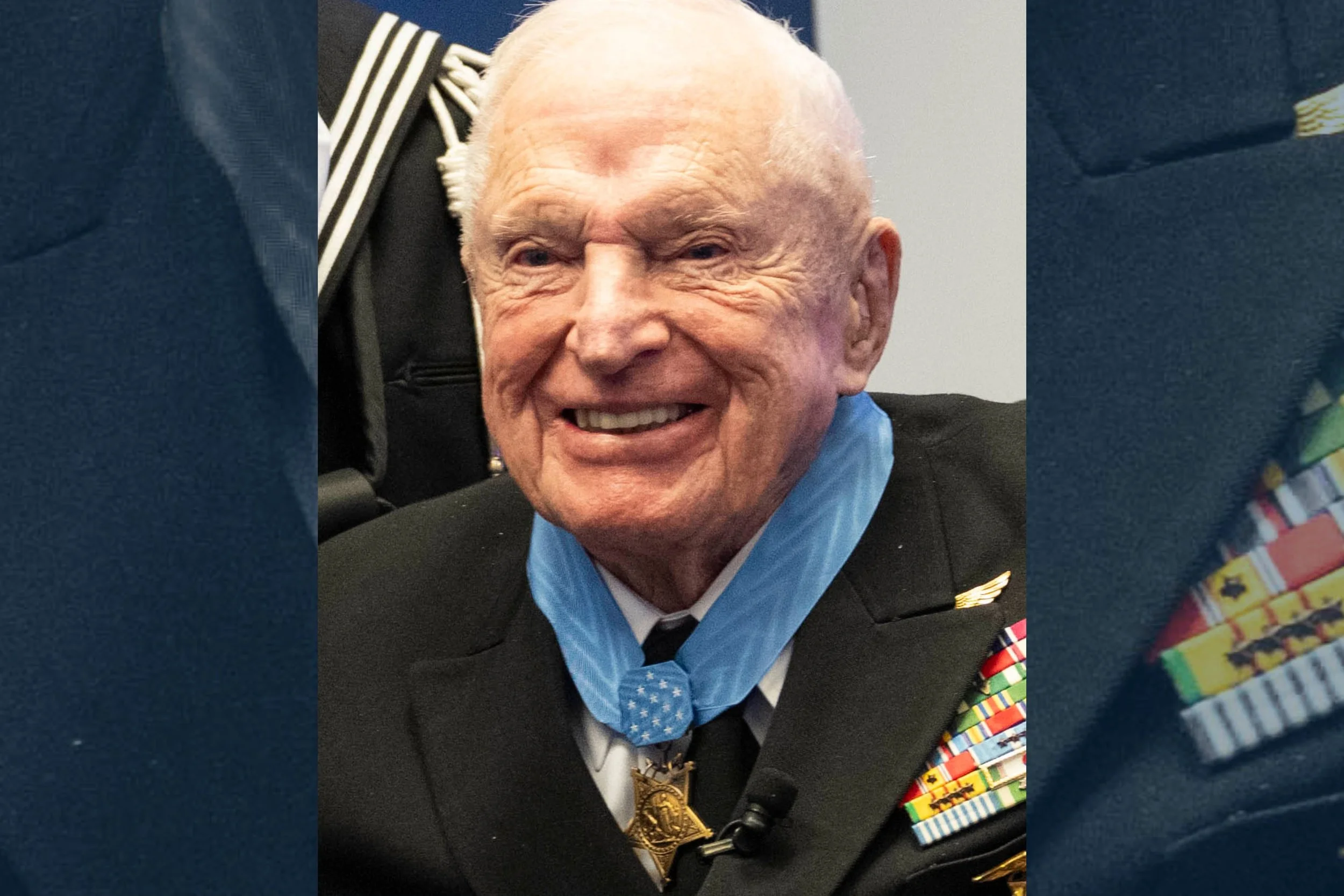
At the 2026 State of the Union Address, President Trump awarded the Medal of Honor to retired U.S. Navy Captain Royce Williams, 100 years old. In 1952, South Dakota native Williams, then 20 and serving in Korea, downed four Soviet MiG‑15s in a 35‑minute dogfight while flying an F9F‑5 Panther, the longest aerial battle in U.S. Navy history. The Pentagon kept Williams’s aerial accomplishment secret for fear of escalating Russian involvement in the Korean War.
As a Navy veteran of World War II, President Ford likely knew of Williams’s courageous service. Ford also knew why Williams and thousands of other Americans fought in Korea.
Ford served in Congress during the Korean War. He worked with Michigan’s Korean Prisoners of War and other veterans. The Grand Rapids Press (October 1, 1953), reported that Ford met with twelve Michigan Prisoners of War at the William Alden Smith Chapter of the Disabled American Veterans Chapter House. The DAV sponsored a parade for the former POWs.
What did Congressman Ford learn from talking with the Korean War veterans about why they fought? Eric Sevareid, in a 1953 news commentary titled “Why Did They Fight,” told America.
Sevareid (b. November 26, 1912- July 9, 1992) was an American broadcast journalist, commentator, and scholarly writer with CBS News from 1939 to 1977. He pioneered a new form of journalism that combined opinion with reporting and analysis. During his career, he reported from Europe during World War II and analyzed news from the Korean and Vietnam Wars.
For CBS News Radio, Sevareid’s commentary was broadcast at 9:55 p.m. Eastern Daylight Time on weekday nights. His broadcasts on AM radio were described as “capsule commentaries on the American scene.” They were also described as “oral essays.”
Sevareid, an accomplished print journalist, had the wisdom to publish some of these broadcast commentaries in two book collections. “In One Ear” was published in 1952. The beautifully titled “Small Sounds in the Night” was published in 1956.
In “Small Sounds in the Night,” a collection of 124 broadcast commentaries, Sevareid’s topics included the Korean War and the Truman and Eisenhower White Houses. One of his commentaries on the Korean War, broadcast on July 27, 1953, is an exceptional analysis and a fine piece of writing. In the essay “Why Did They Fight?” Sevareid shows an understanding of America and Americans.
“The achievements of this war,” Sevareid wrote, “may be very great indeed, but they lie in the realm of what might have been had not we fought.” American families who lost loved ones in Korea, Sevareid wrote, “are conscious of what might have been” due to “an empty chair at the dinner table.”
Sevareid said the big mystery of the Korean War was “what made American youngsters fight so hard, so long, and so well in this kind of war.” Sevareid’s broadcasts were based on news reports also broadcast by CBS News Radio.
“[T]hey have bled and died in the mud and the stones of that bleak and incomprehensible land, in full knowledge that half their countrymen at home were too bored with it all to give the daily casualty lists [published in newspapers] a second glance,” Sevareid wrote. Soldiers in Korea were “living the worst life they had ever known” while their countrymen “were living their best, and most prosperous life they had ever known.” He added, “And they fought on with no particular bitterness.”
When American soldiers “saw emaciated Korean children,” they gave them food, comfort, and medical attention. “Why have these youths behaved magnificently?” Sevareid asked. The professionalism of the U.S. military was only part of the answer. There was something else.
“The rest of it lies very deep in the heart and tissues of this American life,” Sevareid wrote, “and none of us can unravel all the threads of it.” Parental and religious upbringing, public school education, 4-H, scout troops, and community centers were some of the “threads” Sevareid mentioned. There was more.
“[I]t also has to do with their implicit, unreasoned belief in their country, and their natural belief in themselves as individual men upon the earth,” he wrote. “Whatever is responsible, their behavior in this undefinable, unrewarded war outmatches … the behavior of those Americans who fought in the definable wars of certainty and victory.”
A reviewer at The Pittsburgh Press said that Sevareid’s commentaries “were frequently brilliant little essays on the current scene, pungent though never embittered social criticism.” The Cleveland Press called Sevareid’s commentaries “penetrating glances behind the news.” Both print newspapers have ceased publication.
According to encyclopedia.com, Eric Sevareid, “understood the average American, and Americans learned about the Spanish Civil War, World War II, the Korean conflict, and the Vietnam War through his reporting.” In 1956, the New York Times called Sevareid, “the superior stylist of radio news writing.” In the early 1960s, after he had migrated to TV news, the New York Times called him “one of the ablest essayists in broadcasting.”
Sevareid’s analysis of why Americans fought in the Korean War might offer some comfort to their families. It might help families to understand an earlier time in our American Life.
While Gerald Ford, an Eagle Scout and a Navy veteran of World War II, likely knew of the heroism of Navy Captain Royce Williams. Ford knew why Williams and others fought in Korea.
Editor’s note: In March 2026, CBS News announced that its radio news service is ending. After 100 years, CBS News Radio made its final reports, airing on Friday, May 22

Former U.S. diplomat, life member of the American Foreign Service Association, and worked for the President Ford Committee at the 1976 Republican National Convention in Kansas City.
Related Essays