At the Zoo
Someone told me it’s all happening at the zoo . . .
~ Simon & Garfunkel, “At the Zoo”
Last year I visited a tourist trap in the Black Hills of South Dakota. It was actually a pretty nice tourist trap, and even the worst tourist traps are fun when you’re stuck there with your kids. Kids don’t know any better and are therefore free to have fun, which makes it easy for you to have fun too. Anyway, this was a little zoo called The Reptile Gardens (“world’s largest collection of reptiles”). My two boys and I had just left the alligator show, which involved a man pretending to be afraid of a lot of alligators, and were passing by an enclosure featuring a big bird of prey, which is not a reptile, but ok. One of the zookeepers was giving a spiel and we stopped to listen. When she finished, my oldest – he was seven – asked her why the bird was just sitting there on its perch instead of flying around. Something in her chipper grin told me this wasn’t the first time she’d been asked this question and was getting annoyed by it. She pounced like a hawk on a rabbit:
Zookeeper: “Aha! What would you rather do if you had a choice? Sit on the couch and play video games or go outside and run around in the woods? Well? Well?!”
Kid: “Uhm . . . go outside and run around?”
Zookeeper [perplexed]: “Hmm. Well, most kids would rather sit and play video games. That’s what’s natural. See, we’re all animals, you and me and this hawk here. And animals are efficient. Animals don’t move unless they have to. They don’t waste energy. So our friend here spends most of his time sitting still, just like kids do. Or, uh, most kids at least. Isn’t that neat!?”
Kid: “Uh huh.”
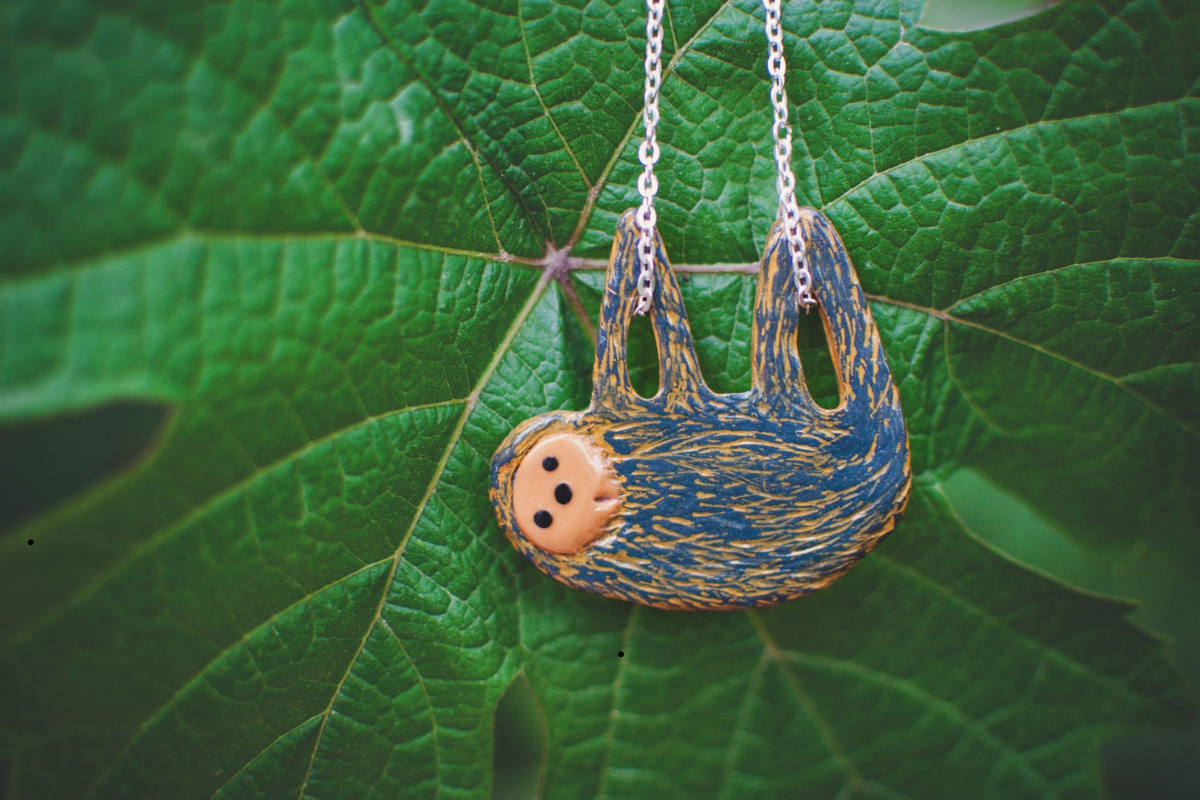
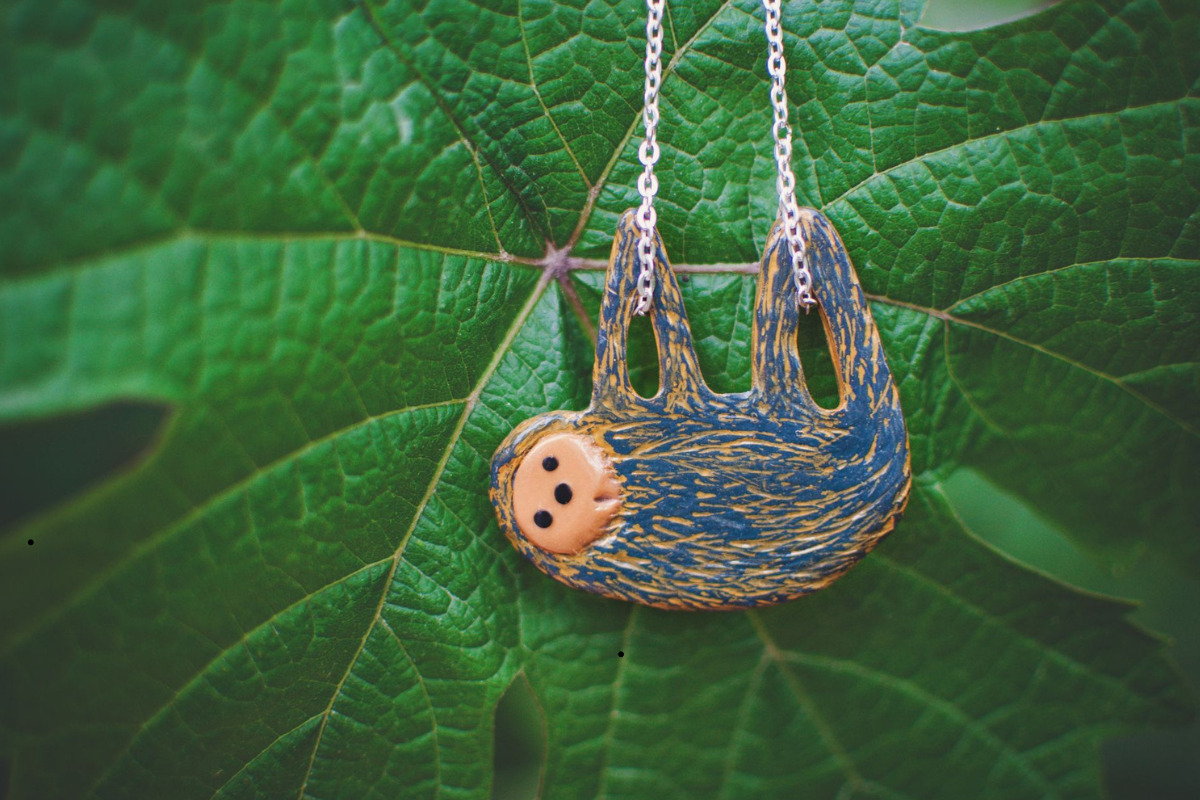
Now, just like Kentaji Brown Jackson isn’t a biologist, I’m not a zookeeper. But I’m pretty sure this is 100% pure uncut bullshit. Animals don’t move unless they have to? Why are we watching all these cat videos? What about those adorable otters turning somersaults? The deer and the antelope playing at home on the range? The weasels who murder squirrel babies for the fun of it? Sure, some animals seem pretty “efficient.” Sloths come to mind. But sloths are weird; that’s the point. They’re so efficient they only poop once a week.
I think that young woman must have skipped a class or two in zoo school. But I also think what she said was a pitch-perfect expression of how some people do think about the peculiar animal called homo sapiens. And as a description of how the human animal actually lives now, it was pretty damn accurate. A lot of kids really would rather sit around and play video games. A lot of kids really are that “efficient.” My boys don’t play video games, and they’re definitely the weird ones. Fortunately, they do poop more than once a week.
Back in the sixties an actual zoologist named Desmond Morris published an odd little book called The Human Zoo. His idea was that many of our contemporary pathologies are not natural but are instead the predictable symptoms of urban confinement. Modern life is life in a “human zoo,” the inhabitants of which behave just like captive animals plagued by the stress and boredom that come from not being able to do what comes naturally. Of course there are benefits, which is why we accept it. “The zoo world, like a gigantic parent, protects its inmates: food, drink, shelter, hygiene, and medical care are provided: the basic problems of survival are reduced to a minimum.” You never need to leave your perch.
The zookeeper’s idea was the opposite of Morris’s. For her, what’s “natural” is to do as little as possible. The hawk doesn’t authentically like flying. It just has to. What it likes to do is not fly. A good hawk life has a minimum of flying and a maximum of not-flying. And the best hawk life doesn’t involve any flying at all. Dinner comes to the hawk, already dead and cut up into nice little strips. The zoo makes it possible for the hawk to live more naturally than it can in the wild, where it’s forced to live “inefficiently,” out of sync with its instincts. As with hawks, so with kids. I guess I would have been a better parent if I’d left my boys at home with a couple of iPads, instead of dragging them to the Reptile Gardens.
Like I said, pure bullshit. Also deeply offensive. I’d never actually listened to someone straight-up tell a couple of impressionable children to get in the pod and eat the bugs, and I sort of wanted to punch her in the face. That would have been pretty inefficient, and that would have been the point. But I’m a gentle academic, so instead of punching her I just brooded on a political problem.
Presumably we can agree that people ought to have food, drink, shelter, hygiene, and basic medical care, so that the problems of survival (which, after all, can also drive you crazy) are reduced to a minimum. Even if we don’t believe this is a question of justice, we can recognize that political stability is threatened when people feel materially insecure, or when too much inequality breeds resentment. There is today a real popular demand for a politics that delivers those material goods, because lots of people are poor (at least relatively so), and lots are getting poorer, and lots are afraid of getting poorer. But there’s also a real popular backlash to the experience of being confined by a “gigantic parent,” an impersonal system that promises to deliver the goods more efficiently by making us into more efficient consumers, by algorithmically labeling and surveilling and distracting us and otherwise assaulting our personalities until we ourselves have become impersonal systems of measurable preferences. The backlash is generally right-coded, and that’s largely because this gigantic parent has been generally left-coded, since the parental system is administered by a professional-managerial class that locates itself on the left, and since the members of that class are more than happy to make progress by delivering the additional professional services required by the increasingly stressed-out and bored-to-death. Such psychiatric conditions, of course, are said to be entirely natural, and certainly not symptoms of “progress” itself. The only thing that’s supposed to be “socially constructed” is the stigma that gets attached to such conditions. Fortunately, stigma can be deconstructed by a proper education (to be delivered by professional educators, of course). But “right” and “left” are not very meaningful at this level of discussion, which raises a very basic question about politics: How do you improve material conditions without pushing people deeper into the zoo that’s driving them crazy?
On one level, it’s not necessarily a hard question to answer. Policies that aim to improve material conditions can usually be distinguished from policies that would expand “access” (that favorite word of the professional class) to “services” designed to adjust people to their status as zoo animals. We should promote the former over the latter. Our picture of a healthy community should not be one in which everyone has a therapist; it should be one in which most people do not need therapists, because they have rich friendships and interesting work and a capacity for leisure.
But on another level this question is more complicated. I can certainly imagine an otherwise sympathetic reader disagreeing with me about the need for therapy, for example. After all, “medical care” was part of my own list of material goods that we should strive to provide, and many people think therapy is part of medical care (“it’s not mental illness, it’s brain health”). In practice, the line between providing for people and putting them in a zoo is often fuzzy, and many of our deepest political disagreements are about where to draw it. As anyone who has ever been admitted to a hospital can attest, “care” and “control” often feel like two sides of the same coin.
The temptation is to look for some kind of bright line to end all disputes, but that’s a mistake. The better approach is to stay hyperalert to that truth about human nature which today’s zookeepers are most concerned to deny – if indeed they are willing to grant that we have a nature. The truth is that while we are certainly animals with material needs, we are also animals who need to meet them by exercising our own powers, and who languish when our powers are no longer necessary – and perhaps even no longer welcome – because the system can take care of us more efficiently than we can take care of ourselves. We take natural pleasure not so much having our needs met but in actively meeting them, and in “wasting” our energies on projects that go beyond our “needs” to encompass our need for play in all its forms.
One form of play is called “politics.” We should avoid imagining politics as no more than a grim struggle for survival against oppression. Politics is not a necessary evil to be overcome by a purely administrative state. That’s the anti-political ideal of the zoo; a permanent “administration of things” without the interference of persons who might have different views about the things and how to administer them, different views about the line between care and control. The truth is that we are not only animals but political animals. And political animals take pleasure not only in actively meeting their needs, but in arguing about what counts as a need and what doesn’t. We don’t just want to take part in decisions about the distribution of goods, and in the work of distributing them. We want to take part in determining what’s good in the first place. We want to argue about the meanings of things, about whether it’s “brain health” or “mental health” or just “you’re an asshole.” This makes things even more complicated. And the zookeeper doesn’t like things to be complicated. The zookeeper likes facts that end debate. Hawks don’t need to fly: thus saith science. Which is pretty convenient for the zookeeper, since it’s much easier to care for a hawk when it holds still.
We ought to embrace the complexity. Any equality worth seeking is what Michael Walzer called “complex equality.” For Walzer, distributive justice can’t be separated from questions of meaning, and questions of meaning can’t justly be answered by experts. While we often think of distributive justice as a social process in which “people distribute goods to (other) people,” Walzer rightly describes it as a process in which “people conceive and create goods, which they then distribute among themselves.” Definition precedes distribution, and the work of definition is not pre-political. It is politics at its most fundamental. When people cannot participate in that fundamental work, there is no politics; there is only administration. And people are not made to be administered.
The problem with the human zoo is not that the animals are taken care of; it’s that they’ve got no part in the caretaking, which has been outsourced to a menagerie of professionals. That’s what has the inmates hitting their heads against the walls and flinging crap at the spectators – or simply sitting on their perches, resigned to the life of a sloth, and eventually believing that this is in fact their nature, because that’s what the zookeeper tells them they are.

Adam Smith is Assistant Professor of Political Philosophy at the University of Dubuque
Related Essays