The Threat of Democracy
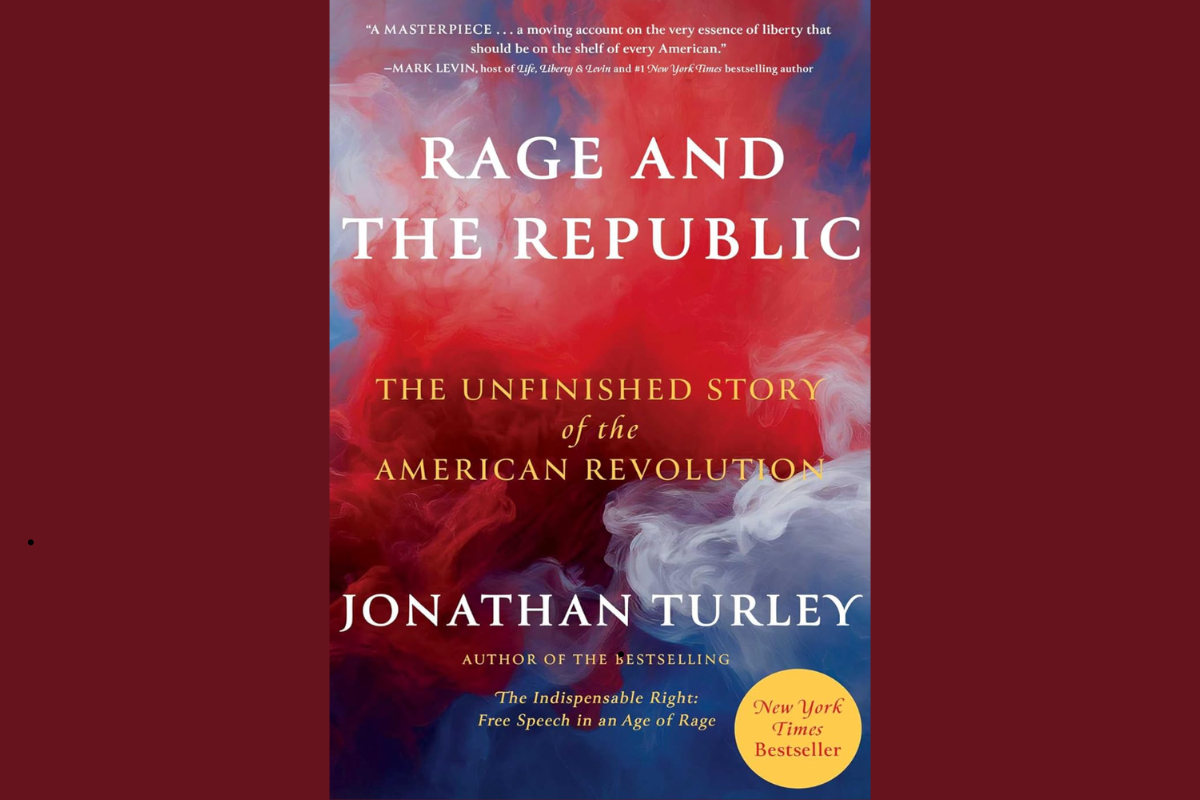
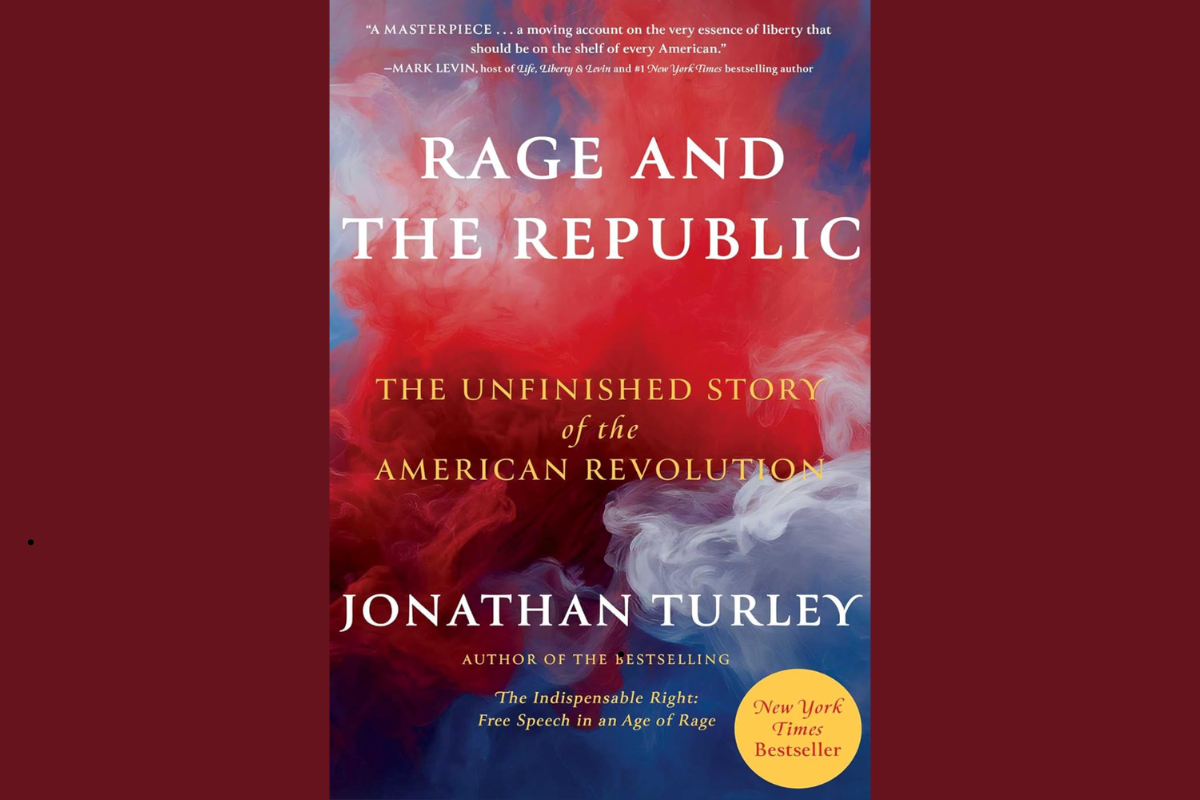
Review of Rage and the Republic: The Unfinished Story of the American Revolution
In the United States today, the greatest threat to democracy is democracy. So goes the thesis of Jonathan Turley’s most recent book, Rage and the Republic.
Not surprisingly, this 250th anniversary year of the Declaration of Independence is seeing a growing number of books on the U.S., the nature of democracy and the Declaration itself. Turley’s may be the most important of these offerings because he not only celebrates the genius of the Founding Generation—and especially the Constitution they produced—but he also delivers a warning to our generation that the greatest threat the country faces is unrestrained democracy, which can degenerate with surprising speed to a 21st century “mobocracy.”
Hurley calls on John Adams to set the tone of Rage and the Republic, as Adams warns of the historical dangers associated with a democratic form of government.
We may appeal to every page of history we have hitherto turned over for proofs irrefragable, that the people, when they have been unchecked, have been as unjust, tyrannical, brutal, barbarous, and cruel, as any king or senate possessed of uncontrollable power. (p. XXXII)
Thomas Paine and James Madison
Thomas Paine is one of the most colorful figures of the last quarter of the 18th century
Turley structures this important book in a clever and effective fashion. Thomas Paine is the well-known author of “Common Sense,” the pamphlet that did so much to turn the country’s mood to independence. Paine, moreover, was uniquely and intimately involved not only with the American Revolution but also with the French Revolution. His is a kind of political coming-of-age story: While in America, Paine advocated unbridled democracy and the doleful experience of the state of Pennsylvania during the interim between the Declaration and the Constitution should have shown him the danger associated with his proposals. Yet he advocated the same in Paris and it was only when the gutters were running with the blood from the guillotine and it appeared he might be its next victim, did Paine realize the error of his political philosophy. Thus Paine becomes a kind of avatar for 21st century Americans, many of whom may unwittingly share Paine’s early naive views of human nature and government structure.
All of this raises an important question. Why did the American Revolution not fall into the same abyss of the French Revolution, which Hurley rightly suggests was the Western version of Mao Zedong’s horrible Cultural Revolution of the 20th Century. In only a year’s time in France (1793-1794), between 30,000 and 40,000 individuals lost their lives, with half of them summarily executed. The answer to the question is complex, but Hurley explains that James Madison’s concepts of complex government, and especially a bicameral legislature, were safeguards on this side of the Atlantic. To prove his point, he explains that Pennsylvania—the most salient example of a unicameral legislature—conspicuously suffered from mob violence. Even more dramatically, Hurley ably demonstrates how the French revolution validated Madison’s concerns about “factions,” which Madison explains in Federalist Paper #10 and once again for emphasis, in Federalist Paper #51. Hurley writes,
Where the Declaration was the ultimate expression of American values, the Constitution was the ultimate expression of American pragmatism. It was written not to inspire but to last. Madison took us for what we are and designed a system that could not only attain our loftiest values but also withstand our lowest impulses (p. 329).
The Problem and Promise of Human Nature
The argument could be made that the U.S. is not immune to mob violence? The 2020 “George Floyd” riots began in 2020 in Minneapolis but quickly became widespread across the nation. In Minneapolis alone, over 1000 buildings were destroyed or badly damaged, at a cost of approximately $500 million. The arson, looting, and vandalism were indiscriminate. About 60% of the financial losses from rioting in Minneapolis–Saint Paul were uninsured.
Social media throws gas on the flames with the ever-growing social media platforms like X (formerly Twitter), Blue Sky (the new and even more radical alternative to Twitter), Instagram, Tik-Tok, etc. In this case, these platforms can be are “virtual” mobocracy, though when they are used to reveal personal information about individuals, as in the practice of “doxxing,” the line between the virtual and the real is crossed. Doxxing) is the malicious act of publicly releasing an individual's private, such as home addresses, phone numbers, or private emails—so that those individuals can be harassed. Doxxing is used to intimidate, harass, shame, or threaten victims, often leading to stalking or further cyberattacks.
Those engaged in these 21st century cyber transgressions may not carry out actual lynchings, but they are remarkably effective in killing reputations and ruining lives. In addition, pornographic sites, podcasts, and radio programs, like the fabled Pied Piper, are leading many to lives of unrestrained narcissistic carnality; yet, a republic must count on civic and personal virtue if it is to survive. Egoism and habitual self-indulgence undermine the character on which self-government depends.
In What Would the American Founders Do?, I have expressed similar concerns, namely that human nature shows itself both in nobility and, unfortunately, in dishonor as well. In Federalist Paper #55, Publius observes that though we must keep in mind our weakness of character, at the same time we need to encourage and rely upon our character strengths. He writes that just as “there is a degree of depravity in mankind, which requires a certain degree of skepticism and distrust, so there are other qualities in human nature, which justify a certain portion of esteem and confidence.” Publius adds, “Republican government presupposes the existence of these qualities in a higher degree than any other form.”
Yet, as Hurley calls on John Adams once again as the venerable American statesman expresses his doubts about government “by the people” as early as January 1776, when he states,
There is so much Rascallity, so much Venality and Corruption, so much Avarice and Ambition, such a Rage for Profit and Commerce among all Ranks and Degrees of Men even in America, that I sometimes doubt whether there is public Virtue enough to support a Republic.” (p. 330)
Hurley succinctly adds, “Government by the people is rarely government for the people.”
A (Cautiously) Hopeful Book for Everyone
Although Rage and the Republic displays a great deal of scholarship, the book is written for the layperson far more than the scholar, though the scholarship is impressive. Accordingly, it is easily accessible to almost any reader. Some books emerging this year are works of political philosophy; some are historical in nature. Rage and the Republic is both. In addition, Turley is a good storyteller, a skill no doubt cultivated by means of his profession as a professor of law, his media appearances, his opinion pieces in major newspapers, and his blog activity.
Rage and the Republic includes several topics that are not critical to the book’s thesis, but the author is unwilling to leave anything to chance. One of these is a discussion of Adam Smith and economic liberty. The second is harsh criticism of that bête noire of conservatives, the European Union.
The political philosophy is richly supported by history, namely Turley’s interpretation of the late 18th century in America that sees the Declaration, and especially, the Constitution, as an ongoing attempt to save American democracy from itself. And in contrast to some of the works coming out this year, Turley does not leave the reader “hanging” with only a critique of the U.S. democratic experience today. Rather, like Lincoln in his “Young Men’s Lyceum Speech,” Turley urges us to protect the U.S. Constitution at all costs. This will not be easy because he warns there is a substantial movement in law schools and elsewhere to discount the role of the U.S. Constitution, saying its day is past because it is irrelevant to today’s concerns.
In the conclusion to this vital book, the author offers a sober prophetic apprehension for the decades to come:
In the twenty-first century, this country will have to deal with a crisis of faith that has few parallels since the founding. We can remain in the shelter of the “happy port” of the Founders, or we can set ourselves adrift in the tempest of democratic despotism (p. 333)
We can’t say that we weren’t warned.
Review of Rage and the Republic: The Unfinished Story of the American Revolution(2026), Jonathan Turley, Simon and Schuster, 2026, 448 pp. $24.71.
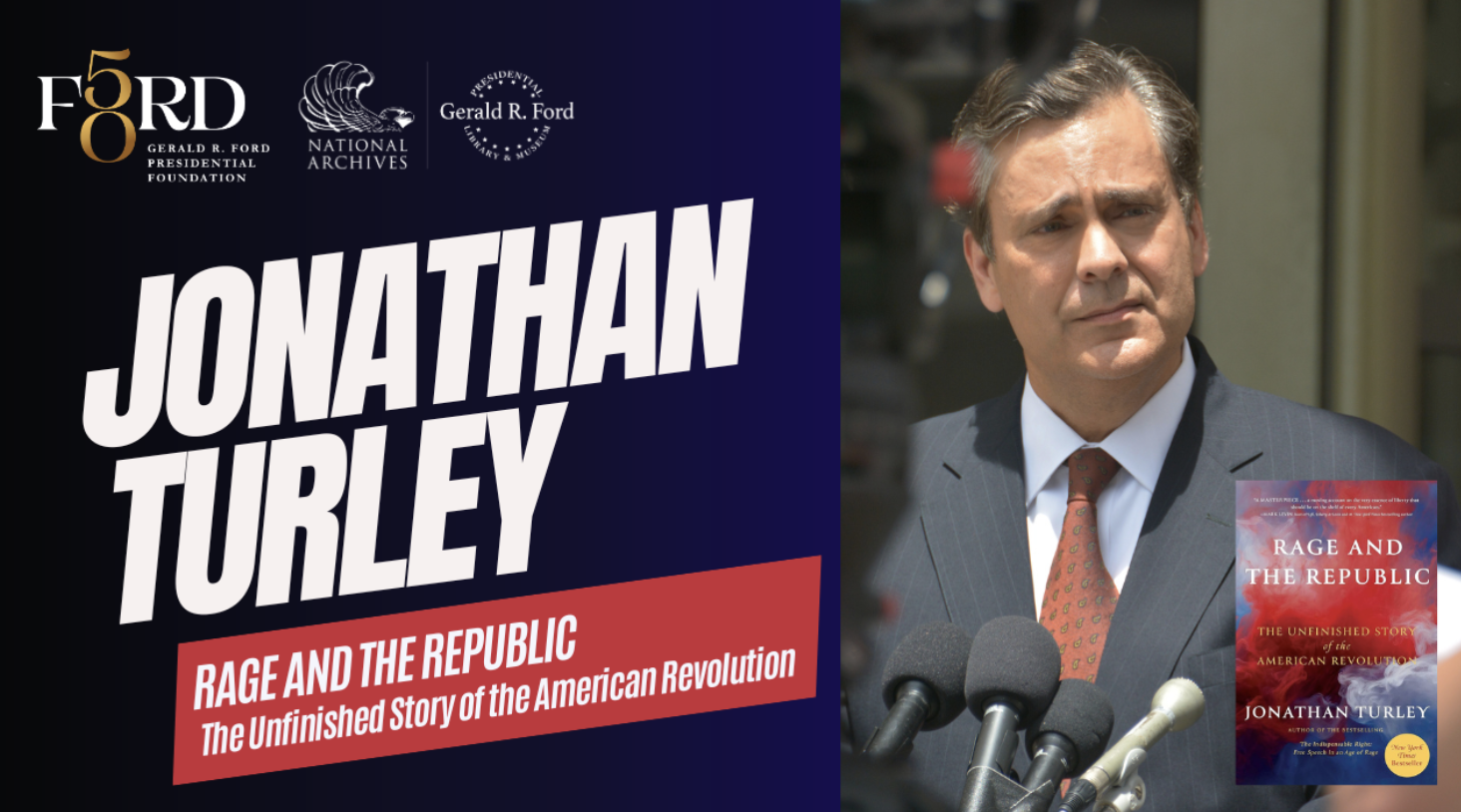
The Gerald R. Ford Presidential Foundation is hosting an event featuring Professor Jonathan Turley on September 30 and October 1. Join us in person or watch the livestream! Click here for event details.

Henry T. Edmondson III, is Carl Vinson Professor of Political Science and Public Administration at Georgia College.
Related Essays