Employment Division v. Smith (1990)
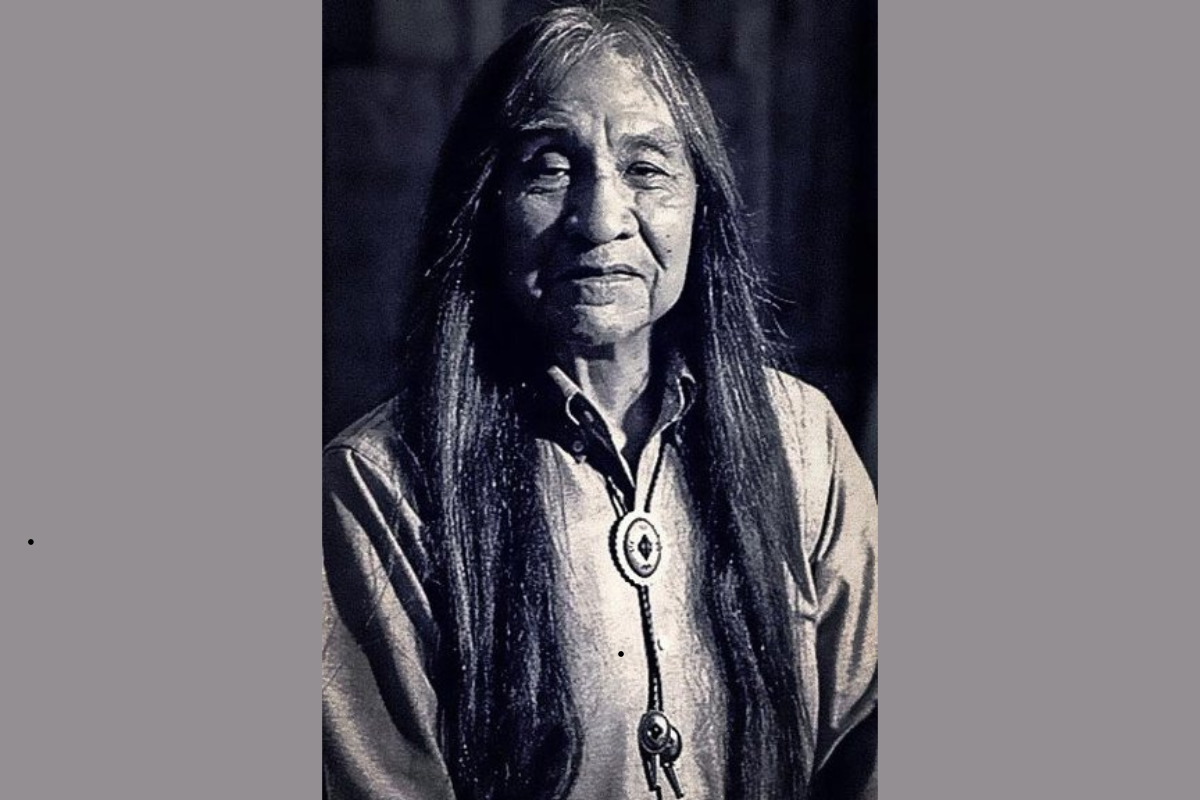
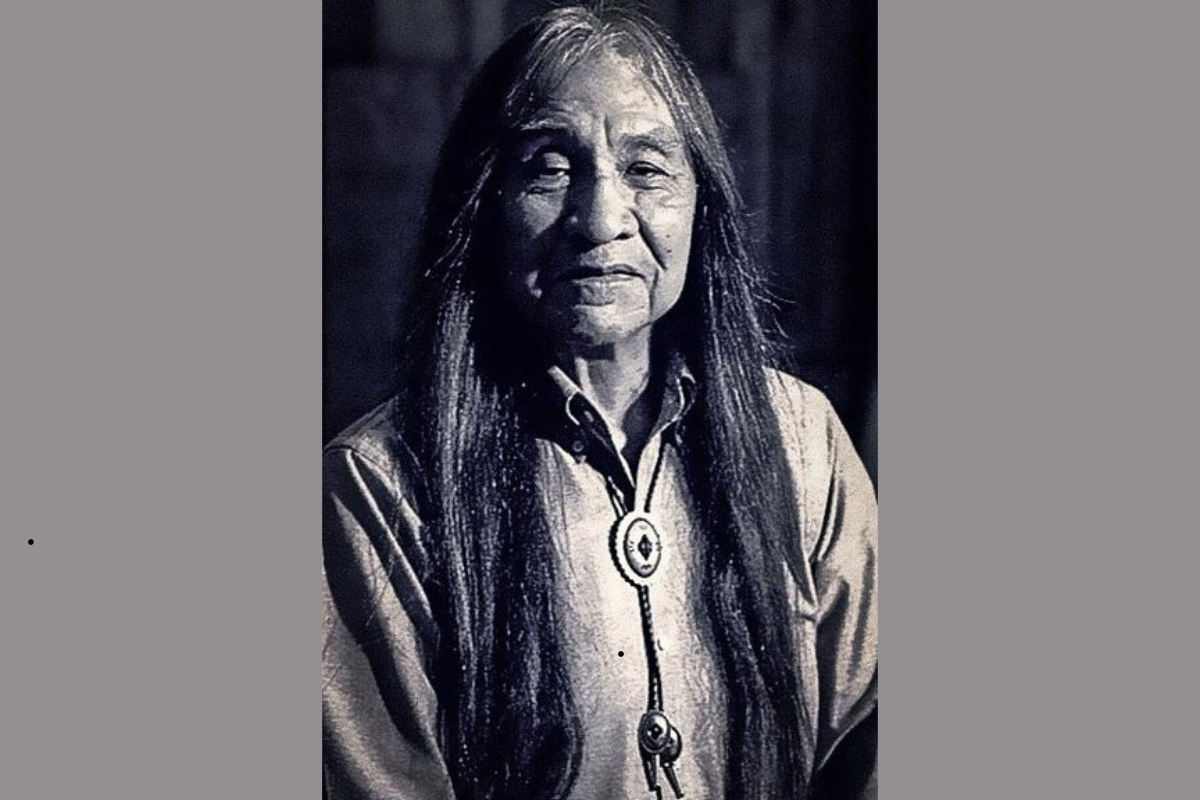
Alfred Smith was one of two men fired from their jobs as private drug rehabilitation counselors for ingesting peyote as part of a sacrament of the Native American Church. They both were denied unemployment benefits by the state of Oregon because they had violated a state criminal statute on drug use. The Supreme Court ruled that the state's law served a legitimate public interest in combating drug problems and Smith’s and Black’s free exercise rights were not violated. Although Smith lost, the case created so much national attention that Congress later strengthened protection for Native American religious practices. Smith was a 50-year adherent to Alcoholics Anonymous and worked to help others with alcohol and drug addictions. Photo courtesy of the Free Speech Center.
Introduction
Justice Scalia’s opinion in the case of Employment Division v. Smith (1990) can only be read as an inexplicable aberration. It embodied all that Scalia purported to despise – a disregard for text and history, the willing distortion of precedent, a reliance on speculative policy considerations to reach a preferred outcome. It also cast aside a judicial standard that was rightfully protective of Free Exercise for one that badly diminished religious liberty and that plagues our First Amendment jurisprudence to this day. It is hardly hyperbolic to describe Smith as the worst entry in the Scalia corpus.
Sherbert v. Verner, Free Exercise, and the Rise of Strict Scrutiny
Following the incorporation of Free Exercise in Cantwell v. Connecticut (1940), it took the Court several decades to settle on a standard that granted a greater measure of protection to religion as the “first freedom” of the First Amendment. Early cases relied on a distinction between religious belief and practice, with religious behavior subject to regulations designed to ensure safety, health, and public order. The Court initially was inclined to subordinate religious practices to general, nondiscriminatory state police powers unless they were directly aimed at religious expression or compelled speech (West Virginia Board of Education v. Barnette, 1943).
That changed with the Sherbert decision in 1963, in which the Court sided with a 7th Day Adventist who refused Saturday work based upon her religious convictions regarding the sabbath. The Court concluded that the state’s denial of unemployment benefits was in fact a substantial burden on Sherbert’s s practice of her religion. The Court determined that the burden could survive constitutional scrutiny only if it was justified by a “compelling state interest” in the regulation of a matter the state was empowered to regulate. The result coming out of Sherbert was formal reliance on a strict scrutiny test for religious freedom jurisprudence; a substantial infringement on religion would stand only if (1) it was in furtherance of a compelling governmental interest and (2) it was narrowly tailored as the least restrictive means of realizing the compelling interest.
There was little doubt about the application of strict scrutiny to subsequent cases involving challenges to religiously burdensome laws and policies. For example, the Court upheld a Amish family’s objection to Wisconsin’s compulsory education law in Wisconsin v. Yoder (1973). While no one doubted that Wisconsin had a compelling interest in ensuring the education of young people, the Court concluded that the refusal to exempt the Amish from the law failed the second prong of the strict scrutiny analysis.
Peyote, Tribal Ritual, and Oregon Drug Laws
The Smith decision arose out of the firing of a pair of drug counselors, Alfred Smith and Galen Black, after they used peyote as part of a tribal religious ceremony. Peyote is a hallucinogen that is considered a sacramental substance central to the religious rituals of the Native American Church. It also was a “controlled substance” which Oregon law made illegal to possess. At the time of the firing of Smith and Black, twenty-three other states and the federal government granted formal exemptions under their drug laws for the religious use of peyote. Oregon law offered no such exemption. Because they were fired for “work-related misconduct” that warranted the withholding of benefits under state law, Smith’s and Black’s respective applications for unemployment benefits were denied. They brought suit asserting that the denial of benefits violated their First Amendment Free Exercise rights.
After the plaintiffs prevailed at trial, both the Oregon Court of Appeals and the state Supreme Court likewise found that they were constitutionally entitled to an exemption from the state ban on peyote. Oregon appealed to the U.S. Supreme Court, which granted review. On April 17, 1990, the Court issued a 6-3 decision reversing the lower courts and finding that the religion claimants had no Free Exercise entitlement to exemptions from generally applicable state laws. Interestingly, the Smith majority was filled with conservative Scalia, Rehnquist, White and Kennedy. Justice Stevens was the only member of the liberal bloc to join the majority.
Justice Scalia’s Majority Opinion
Justice Scalia quickly dispensed with the “compelling interest” test as a bar that states needed to clear for laws that only incidentally impinged on religion. In a revisionist reading of the precedent, Scalia asserted that the Court had never held that one’s religious beliefs excused him from acquiescence to an “otherwise valid law” that prohibited conduct that the state is free to regulate. Conveniently overlooking Wisconsin v. Yoder, Scalia claimed that the only time the Court had invalidated a governmental action under the “compelling interest” test was in Sherbert, in the context of unemployment compensation. And Sherbert did not necessitate a similar application of strict scrutiny here, since the claimants had been fired for misconduct, a fact missing in Sherbert.
In his recasting of the rule, Scalia concluded that Free Exercise did not relieve one of compliance with a “valid and neutral law of general applicability.” The only independent protection offered by the Free Exercise Clause was in the prohibition of laws that were motivated by a desire to disadvantage or target religion. A law aimed at harmful conduct across the board that incidentally impacted religious practice would pass constitutional muster.
The law at issue here was not specifically directed at the religious use of peyote, but was a general law applicable to the entirety of society. Scalia found that the state’s interest in ensuring the integrity of the unemployment insurance fund was sufficiently important to justify the refusal to pay benefits to those guilty of misconduct. Scalia saw the employees as attempting to use their religious motivation for using peyote as placing themselves beyond the reach of Oregon's neutral, generally applicable ban on the possession of peyote. Scalia worried that limiting one’s obligation to obey religiously intrusive laws only when the state had a compelling interest would render every man “a law unto himself,” something that defied both constitutional law and common sense. To do so would be to “court anarchy;” it was a “luxury” – one we could not afford – to deem “presumptively invalid . . . every regulation of conduct that does not protect an interest of the highest order.”
Scalia envisioned a parade of horribles were the “compelling interest” test to be more broadly applied. He speculated that it would
open the prospect of constitutionally required religious exemptions from civic obligations of almost every conceivable kind -- ranging from compulsory military service to the payment of taxes to health and safety regulation such as manslaughter and child neglect laws, compulsory vaccination laws, drug laws, and traffic laws; to social welfare legislation such as minimum wage laws, child labor laws, animal cruelty laws, environmental protection laws, and laws providing for equality of opportunity for the races.
Scalia closed his opinion with a flippant dismissal of the status of marginalized religious groups. He acknowledged the legislative practice of religious carve-outs from the application of the law. But he essentially left it to those religious groups to make their case for exemptions to Congress and state legislatures.
It may fairly be said that leaving accommodation to the political process will place at a relative disadvantage those religious practices that are not widely engaged in; but that unavoidable consequence of democratic government must be preferred to a system in which each conscience is a law unto itself or in which judges weigh the social importance of all laws against the centrality of all religious beliefs.
In other words, those politically powerless faiths – those most in need of constitutional protection from majoritarian will – would in fact be left to rely on the good will of the majority.
The O’Connor Concurrence
Justice O’Connor’s concurrence offered a more honest reading of the precedent. She noted that virtually all of the Court’s previous cases had concerned generally applicable laws that significantly burdened religion. Yet the Court had repeatedly sided with those parties claiming First Amendment protection. If the Free Exercise Clause was to have any meaning, it could not be limited only to the extreme cases where the government explicitly targeted religious practice. To O’Connor, a plain reading of the Court’s cases over three decades was clear - any substantial government interference with religion demanded government to “justify any substantial burden on religiously motivated conduct by a compelling state interest and by means narrowly tailored to achieve that interest.”
O’Connor scolded Scalia for his indifference toward the interests of those less common religious faiths and practices. The First Amendment was enacted “precisely to protect the rights of those whose religious practices are not shared by the majority and may be viewed with hostility.” Indeed, the long history of majoritarian rule in the U.S. had done serious harm to “unpopular or emerging religious groups such as the Jehovah’s Witnesses and the Amish.”
Moreover, O’Connor found Scalia’s abandonment of the Sherbert test as unnecessary in the pending case. She would have reached the same result even while maintaining the Sherbert standard of strict scrutiny. On the one hand, Oregon’s ban on peyote was an unquestionably severe burden on the claimants’ religious exercise. Yet there also was no dispute that Oregon had a genuine interest in controlling the use of peyote by its citizens. While it was a close question, O’Connor concluded that the inherent dangers posed by peyote use by even a single person was enough to compel uniform application and the denial of exemptions.
The Blackmun Dissent
In his dissent, Justice Blackmun cast the state’s interest in different terms. It was not the interest in fighting the war on drugs that had to justify the law, but the narrow interest of the state in refusing an exception for the religious use of peyote. But the state had failed to establish any specific interest in why it could not grant a limited exemption for religious use of peyote. Blackmun castigated the majority for distorting long held precedents and for its subjugation of minority interests as an “unavoidable consequence of democratic government.” The Founders could not have considered the freedom from religious persecution to be a “luxury.” On the contrary, it was an essential element of liberty that lay at the heart of their drafting of the Religion Clauses.
The Impact of the Decision - Constrained by Federalism
Smith marked a major shift in the standard of protection against laws that negatively impacted religiously motivated practices. But few were happy with it. Critics contended that the Court had essentially gutted the First Amendment’s religious exercise protections by limiting them to the rare instance of intentional religious discrimination. The case generated a backlash among both major parties and across a wide range of interested groups. The case made for odd bedfellows, as exemplified by the joint efforts of the Christian Legal Society and the ACLU in lobbying Congress to reverse Smith. The outrage over Smith mobilized Congress to pass the Religious Freedom Restoration Act (RFRA) in 1993; the statute explicitly rejected the Smith test and reinstituted the strict scrutiny balancing standard of Sherbert. The depths of the unpopularity of Smith was evident in the unanimous vote for RFRA in the House of Representatives and an overwhelming 97-3 Senate vote.
Notwithstanding RFRA’s stark reversal of Smith, subsequent developments left a murkier religious liberty picture. First, the Supreme Court in City of Boernes v. Flores (1997) denied Congress the power, under its enforcement authority under section 5 of the Fourteenth Amendment, to alter the substance of the Free Exercise Clause. Hence RFRA did not apply to state-level actions. To further confuse matters, the Court then affirmed Congress’s power to define the contours of religious freedom as it pertained to actions of the federal government. (Gonzales v. O Centro 2006) This proved a perplexing exercise in judicial federalism whereby free exercise lawsuits over state laws and regulations would proceed under the Smith standard of “valid neutral laws of general applicability” while the stricter standard of “compelling interest/least restrictive means” covered federal actions impinging on religious freedom. To complicate things further, over half of the states reacted to City of Boernes by enacting their own mini-RFRA’s, thereby reinstating strict scrutiny of laws burdening religious practices in their states.
The Judicial Narrowing of Smith
Just as significant as the legislative responses to Smith was the Court’s diminishment of the practical impact of the case. The Court, which is highly solicitous of religion and religious claimants under the First Amendment, has found various ways of limiting the reach of the Smith rule. In some instances, it has formally hewed to Smith’s framework while finding artful ways to judge the intruding policy as not neutral or generally applicable. For example, the Court in Masterpiece Cakeshop v. Colorado (2018) sided with a conservative Christian cake artist who refused to create a same-sex wedding cake for religious reasons. The Court cited Smith, but held that anti-religion rhetoric engaged in by members of the Colorado Civil Rights Commission reflected animus toward the baker, thus depriving him of equal treatment.
At other times, the Court has simply ignored Smith. In important cases such as Trinity Lutheran Church v. Comer (2017) and Carson v. Makin (2022), the Court ruled that states could not deny religious actors participation in programs of otherwise generally available public benefits (such as subsidies for a playground surface or a tuition-assistance program) merely because of the applicant’s religious identity. While upholding the religious claimants’ Free Exercise rights, the Court relied on unconstitutional conditions and status-based discrimination jurisprudence to apply strict scrutiny rather than rely on Smith.
Finally the Court has sometimes avoided the Free Exercise Clause altogether, as it did in 303 Creative LLC v. Elenis (2023). In that case, the Court upheld a challenge to Colorado’s anti-discrimination law by a Christian web designer who planned to add wedding websites to her offerings but resisted doing so for same-sex marriages on religious grounds. The Court’s reasoning rested on the designer’s Free Speech rights rather than her Free Exercise claim. Again Smith garnered nary a mention.
A Postscript: Is Smith a Zombie Precedent after Fulton v. City of Philadelphia?
Given the Court’s efforts to avoid Smith in practice, it was unsurprising when its 2021 decision in Fulton v. City of Philadelphia brought the Court’s reservations about Smith fully into the open. The case involved the city’s termination of its contract with Catholic Social Services based on the agency’s indication that the social teachings of the Church would not allow it to place foster or adoptive children with same-sex or unmarried couples. The case was an easy one under Smith, since the city had carved out carved out exceptions for other organizations but refused to do so for the Catholic agency. Individualized exemptions that favored secular groups over religious ones meant the city’s policies were neither neutral nor generally applicable. But of particular note was the fact that five of the justices expressed deep skepticism over the Smith rule. Justice Alito wrote a lengthy concurrence joined in by Justices Thomas and Gorsuch urging the Court to face Smith head on and overturn it. Justice Barrett’s concurrence, in which Kavanaugh joined, likewise concluded that the text and structure of the First Amendment supported the notion of exemptions, contrary to Smith. Yet she was unwilling to cast it aside, in the absence of clarity on what would replace it.
In the five years since Fulton, Smith remains in place. For now, the justices seem content to work around the empty husk of Smith. Given Antonin Scalia’s iconic status as the great influencer of the conservative judicial movement, perhaps his acolytes on the Court are loathe to bring attention to a case in which his otherwise masterful judicial craftsmanship so clearly failed him.