This July 4th the Country Could Use Some Plain Speaking from Gerald Ford
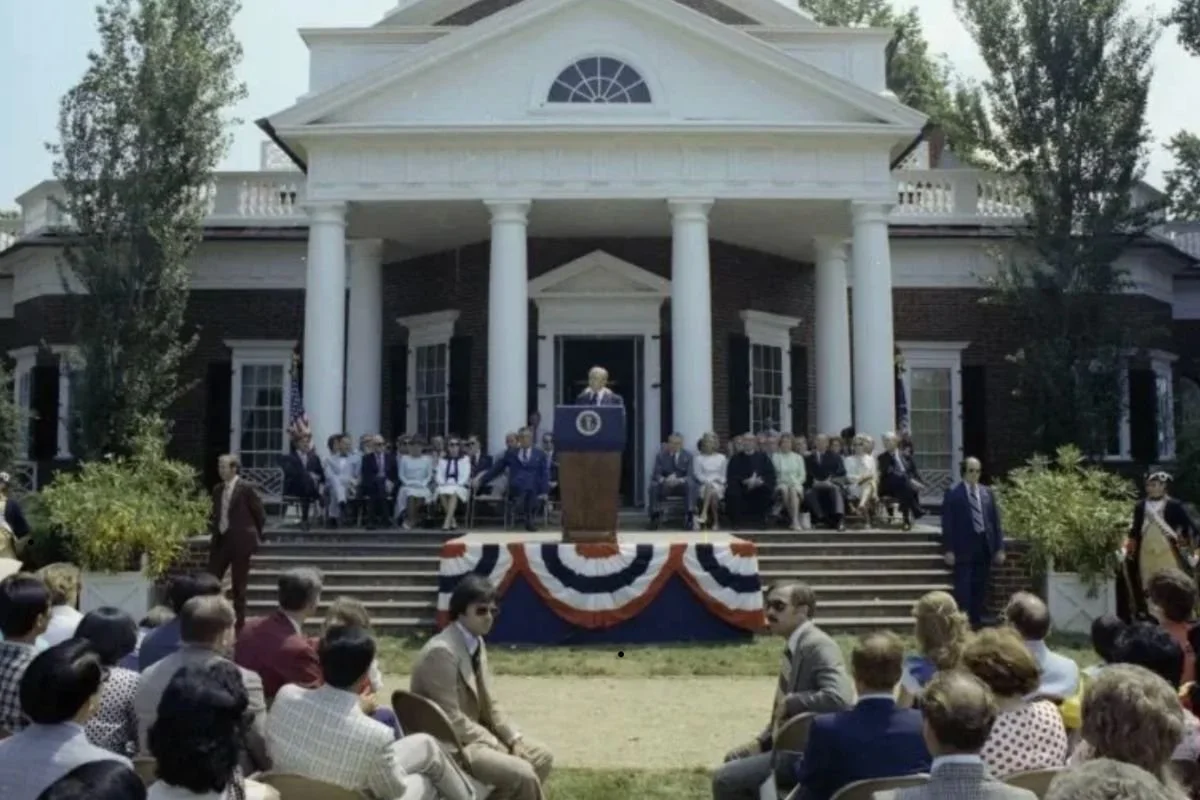
Photo courtesy of the Gerald R. Ford Presidential Library and Museum
July 4, 2026, marks the 250th anniversary of the signing of the Declaration of Independence. Marking the semi quincentennial, Donald Trump has promised “the most spectacular birthday party the world has ever seen.” Ever the showman, Trump’s multi-day spectacular includes a UFC fight on the White House lawn on Flag Day featuring “the greatest champion fighters in the world;” a “Great American State Fair” on the National Mall with representation from the fifty states; and a “spectacular” military flyover concluding with “the largest fireworks display in the world.”
This isn’t the first glitzy July 4th ceremony the nation has experienced. In 1986, Ronald Reagan found himself aboard the USS John F. Kennedy to celebrate a two-day “Liberty Weekend” whose highlight was a rededication of the century-old Statue of Liberty. Millions lined the New York streets. Naval guns boomed. Fighter planes screamed overhead. Bells rang. And when President and Mrs. Reagan walked onto the decks of the USS Kennedy, thousands of sailors whooped and cheered. Laser lights enveloped Miss Liberty, and 40,000 pyrotechnics began a nonstop twenty-eight-minute spectacular. The Washington Post captured the memorable scene: “Incandescent rainbows, splinters of gold and silver, sizzling stars of light reflected off the windows of Wall Street skyscrapers.”
Ronald Reagan and Donald Trump have little in common. Reagan’s conservatism is a far cry from Trump’s populism and his America First policy with its emphasis on protectionism and retreating from the Cold War alliances that undergirded U.S. foreign policy after World War Two. But both were polished showmen who used the presidential stage to produce television extravaganzas.
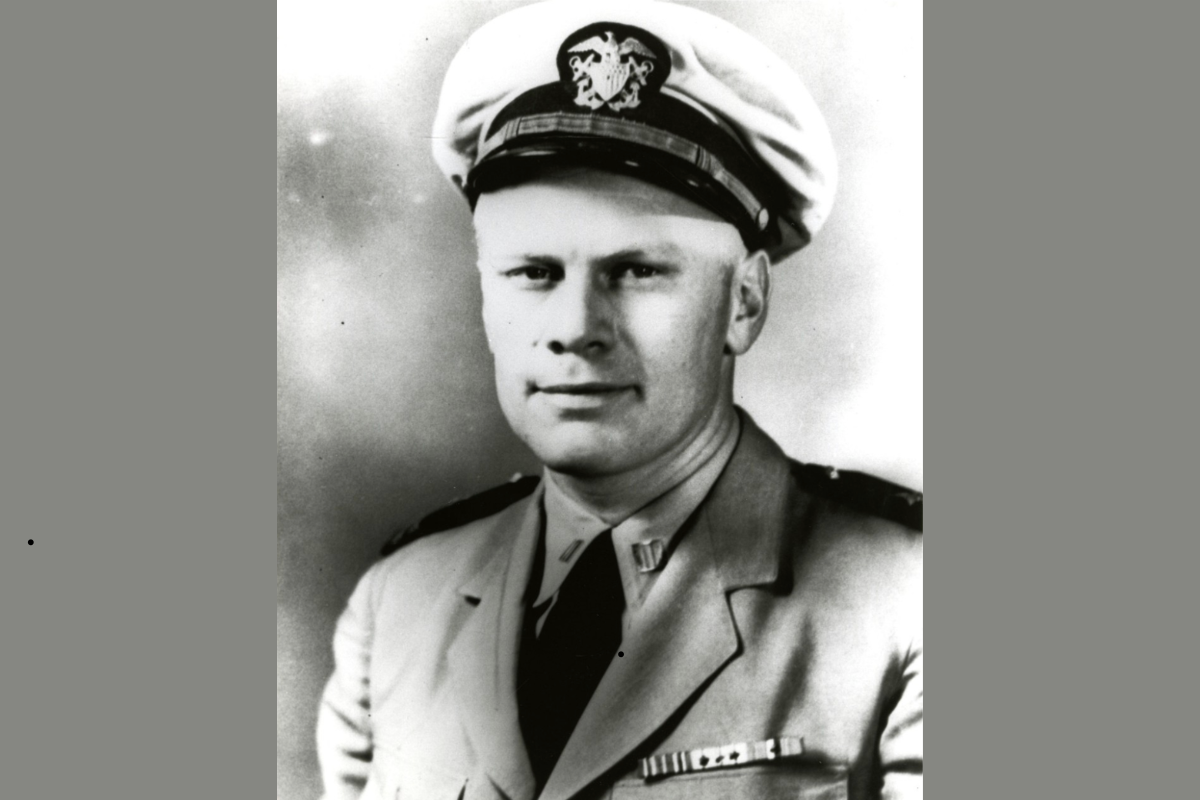
Gerald Ford was none of those things. Upon taking office following Richard Nixon’s resignation, Ford promised to have “a little straight talk among friends,” pledging it would be the first of many. Like Harry Truman, this plain-spoken Midwesterner kept his word. On July 5, 1975, still evoking the spirit of celebrating his first Independence Day as President, Ford presided over a naturalization ceremony at the home of Thomas Jefferson. Inviting his audience to “join fully in the American adventure,” Ford told the newly minted U.S. citizens that “there is still something wonderful about being an American.” For Ford, that wonderful thing was celebrating American patriotism—not just a love of country but also the ideas it represents.
Ford recalled that Thomas Jefferson and the other American patriots of 1776 dared to build a new country based on the radical idea that people could be trusted “to govern themselves without a master.” The goal, Ford stated, was to create a land of freedom and opportunity, and “a haven of safety and happiness”—not just for themselves but those who would follow.
People from all over the world came to this new country, a fact that Ford celebrated: “Unfettered by ancient hates, the people of the young United States really believed that all men are created equal.” Unlike other nations, the United States offered citizenship to anyone who desired it—not as a privilege but as a right guaranteed to those who pledged allegiance to this country. By keeping true to its word, Ford declared that the United States had been “richly rewarded.”
Even as he celebrated the promises of life, liberty, and the pursuit of happiness contained in the Declaration of Independence, Ford did not shy away from calling attention to the untoward parts of American history. Acknowledging the evils of slavery and the discrimination suffered by blacks and women, Ford decried those “stubborn blind spots” in the founders’ lofty visions, and praised the “Black Is Beautiful” movement as a “motto of genius which uplifted us far above its intention,” noting that the country’s racial and ethnic diversity created a beauty of its own.
This mosaic of diverse races, cultures, and customs Ford argued, was essential to giving birth to the new nation: “The American adventure draws from the best of all mankind’s long sojourn here on Earth, and now reaches out into the solar system.” Ford’s words were prophetic. In April, the crew of Artemis II composed of astronauts Victor Glover, the first person of color; Christina Koch, the first woman; Canadian Jeremy Hansen, the first non-U.S. citizen; and Reid Wiseman, the oldest person became the first persons first to travel further into space than mankind has ever ventured.
Ford’s 1975 speech came with a warning about a growing danger “to conformity of thought and taste and behavior.” Ford cautioned that individual expression must always be protected: “The wealth we have of culture, ethnic and racial traditions are valuable counterbalances to the overpowering sameness and subordination of totalitarian societies.” Those words stand at odds with Donald Trump’s assertion that “immigrants are poisoning the blood of our country,” and his preferences for white migrants from “nice countries” like Denmark, Norway, and Switzerland.
Ford likewise would have objected to Donald Trump’s rewriting of American history. Last year, Trump posted on his Truth Social account that the Smithsonian Institution is “OUT OF CONTROL,” and he identified seven exhibits he deemed offensive: the history of the gay and transgender movement, a portrait of Dr. Anthony Fauci, an exhibit on voting rights and the depiction of slavery as “bad.”
To Gerald Ford, any attempt to quash expressions of opposition either to himself or his administration’s policies—be it from the press, late night comedians, or the opposition Democrats—was anathema. Always a civil man, Ford installed a sense of decency to the White House. Unlike Richard Nixon, Ford was secure in knowing who he was and what he believed—understanding that while disagreement was inevitable being disagreeable was never an option. In this, Ford’s persona is the opposite of Trump’s whose tolerance for criticism is negligible and who sees the Justice Department as his agency-of-choice to prosecute his enemies.
Concluding his 1975 remarks, Ford told his listeners that he (and they) were “caretakers of this great country,” adding: “Remember that the more freedom you give to others, the more you will have for yourself. Remember that without law there can be no liberty. And remember, as well, the rich treasures you brought from whence you came, and let us share your pride in them.”
Those plain-spoken words, not the glitzy Trump-produced spectaculars, are what the country needs to hear once more—and this time take to heart.
John Kenneth White (johnkennethwhite.com) Substack: https://substack.com/@johnwhite272113 is a professor emeritus at The Catholic University of America. His latest book co-authored with Matthew R. Kerbel is titled Democracy on the Edge: The Trump Elections and the Future of American Politics https://kansaspress.ku.edu/9780700641758/.

Professor Emeritus, The Catholic University of America
Related Essays