The Coming Collision Over Independent Agencies
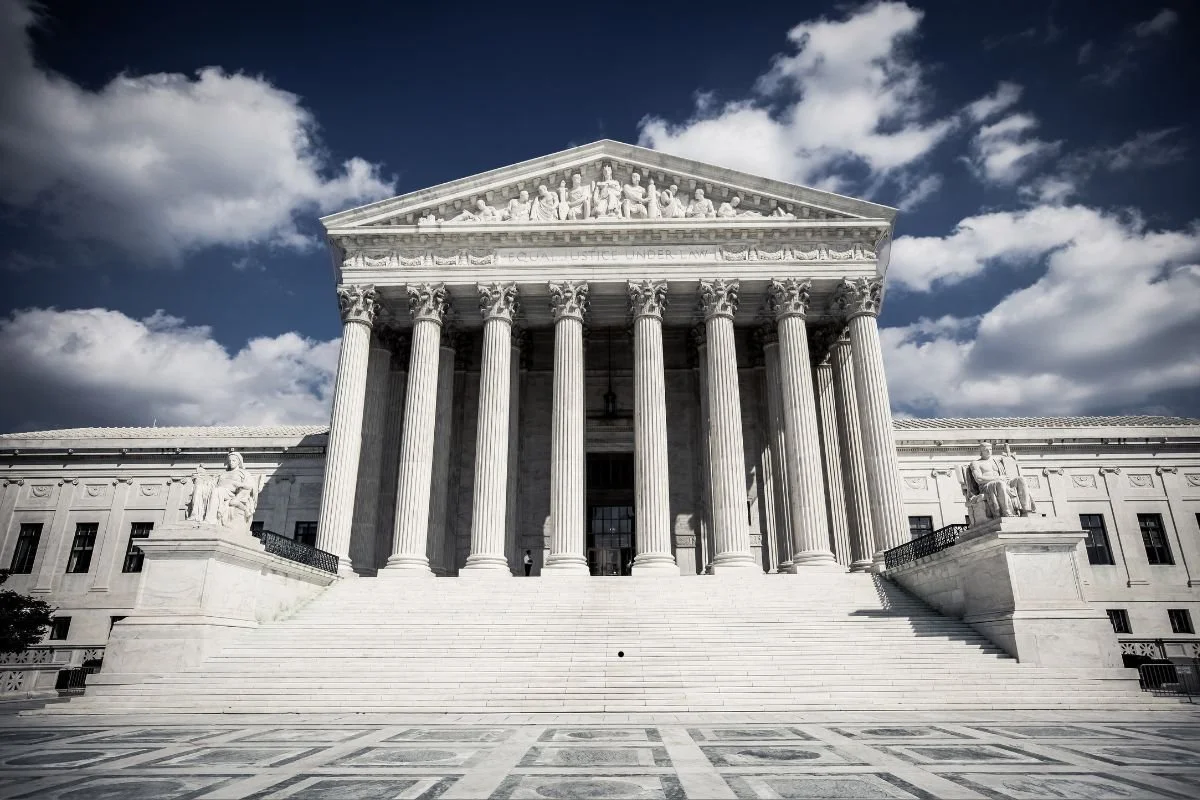
In The Federalist Papers #47, James Madison warned that “[t]he accumulation of all powers, legislative, executive, and judiciary, in the same hands” may justly be pronounced “the very definition of tyranny.” The Constitution’s answer to that danger was structural: divide power among three branches and equip each branch with the means to defend itself against encroachment from the others.
For much of American history, however, the federal government has operated through institutions that do not fit neatly within that tripartite design. Independent agencies — such as the Federal Trade Commission, the Securities and Exchange Commission, and the National Labor Relations Board — exercise substantial governmental authority while remaining partially insulated from direct presidential control. Congress created these agencies precisely because it feared placing too much regulatory authority in the hands of partisan political actors.
For nearly a century, the constitutional foundation for that arrangement rested on Humphrey's Executor v. United States. In that decision, the Supreme Court upheld statutory restrictions limiting the President’s ability to remove members of the FTC except for “inefficiency, neglect of duty, or malfeasance in office.” The Court reasoned that the FTC exercised not purely executive authority, but also “quasi-legislative” and “quasi-judicial” functions. Because of that mixed character, Congress could shield commissioners from at-will presidential removal.
That framework is now directly in question.
The case of Slaughter v. Trump places before the Supreme Court one of the most consequential separation-of-powers disputes in generations: whether Congress may create agencies exercising executive authority while simultaneously insulating their leaders from presidential control. The Court’s decision will determine whether the traditional structure of independent agencies remains constitutionally valid under Article II. The modern Court’s separation-of-powers jurisprudence has moved steadily toward a more robust conception of presidential authority under Article II. In Seila Law LLC v. Consumer Financial Protection Bureau, the Court invalidated removal protections for the director of the CFPB, emphasizing that “[t]he entire executive Power belongs to the President alone.” Likewise, in Free Enterprise Fund v. Public Company Accounting Oversight Board, the Court stressed that the President cannot ensure faithful execution of the laws without meaningful supervisory authority over executive officers.
These decisions reflect a broader constitutional theory often associated with the “unitary executive.” Under that view, Article II’s Vesting Clause — which provides that “[t]he executive Power shall be vested in a President of the United States of America” — means that executive authority must remain accountable to the President, who alone is nationally elected and politically answerable to the people.
The logic has considerable force. The Constitution vests legislative power in Congress and judicial power in the federal courts. It would therefore seem strange for executive power to be fragmented among officials whom the President cannot adequately supervise or remove. As Chief Justice Taft argued in Myers v. United States, the removal power is tied directly to the President’s obligation to “take Care that the Laws be faithfully executed.”
Indeed, the Roberts Court has increasingly emphasized political accountability as a constitutional value. Diffusions of executive authority, the Court has argued, create diffusions of accountability. If voters dislike how federal law is enforced, whom should they blame — the President or insulated commissioners protected by statute?
Yet the constitutional argument against independent agencies is not as straightforward as proponents of the unitary executive often suggest.
First, the Constitution nowhere expressly grants the President a general removal power. The text of Article II says the President shall “take Care” that the laws be faithfully executed, but it does not explicitly state that he may remove all executive officers at will. The historical evidence surrounding the Decision of 1789 is deeply contested. James Madison supported presidential removal authority, but others argued that the Senate must participate in removals because it participates in appointments. The debate produced ambiguity, not consensus.
Second, independent agencies emerged because Congress concluded that some forms of administration require expertise, continuity, and insulation from raw political pressure. Agencies such as the FTC do not merely prosecute violations of law. They also adjudicate disputes, promulgate regulations, conduct investigations, and develop technical standards. The “quasi-legislative” and “quasi-judicial” labels used in Humphrey’s Executor may be analytically awkward, but they reflected a practical reality: modern administration does not fit cleanly into eighteenth-century categories.
The Court therefore faces a central constitutional dilemma in resolving this case. If it fully embraces the unitary executive theory, then many longstanding features of the administrative state become constitutionally suspect. If executive power must remain entirely under presidential supervision, then decisions like Morrison v. Olson — which upheld limits on presidential removal of an independent counsel — become difficult to justify. Even bipartisan composition requirements for agencies could come under scrutiny because they limit the President’s discretion over appointments.
The implications would be enormous.
A decision overruling Humphrey's Executor v. United States would not merely alter the FTC. It could fundamentally reshape the modern administrative state by allowing Presidents far greater control over agencies traditionally designed to operate with relative independence. Future administrations could remove commissioners for political disagreement rather than misconduct or inefficiency. Agencies intended to operate as expert bodies could become more overtly partisan and more directly tied to presidential agendas.
Supporters of such a transformation would argue that this is precisely what democratic accountability requires. Elections, after all, are supposed to matter. If voters elect a President to implement certain policies, they reasonably expect executive officials to follow that President’s direction. A President who cannot control those executing federal law may bear responsibility without authority.
Critics, however, warn that dismantling independent agencies risks concentrating excessive power in the presidency. The Framers feared arbitrary power no matter where it originated. An administrative system entirely dependent on presidential loyalty may weaken institutional expertise, encourage patronage, and blur the distinction between neutral enforcement and political enforcement. The concern is not hypothetical. Throughout American history, both political parties have accused administrations of attempting to pressure supposedly independent agencies for partisan advantage.
The Court must therefore decide not only what Article II means, but also how constitutional structure should operate in a modern administrative state unimaginable in 1787.
The most likely outcome is narrower than either side publicly claims. The Court may overrule or substantially limit Humphrey's Executor v. United States while attempting to preserve certain adjudicative or multimember agencies.
Such a decision would continue the Roberts Court’s incremental movement toward stronger presidential control without entirely dismantling the administrative framework on which the federal government depends.
But even a narrow ruling would signal a major constitutional shift. For decades, the Supreme Court largely accepted the legitimacy of independent administration as a practical necessity of modern governance. Today, the Court increasingly evaluates these agencies through a different lens: not as safeguards of expertise and stability, but as potential threats to democratic accountability and constitutional structure.
That shift reflects a broader revival of separation-of-powers principles across the Court’s recent jurisprudence. In cases involving the major questions doctrine, agency deference, and presidential authority, the Court has repeatedly insisted that the Constitution’s structural protections are not obsolete formalities. They are safeguards of liberty.
Whether that revival ultimately strengthens constitutional government or destabilizes the administrative state remains uncertain. But one thing is increasingly clear: the era of unquestioned judicial deference toward independent agencies is ending.