When It Came to War, Gerald Ford Was Shaped by the Lessons of World War Two
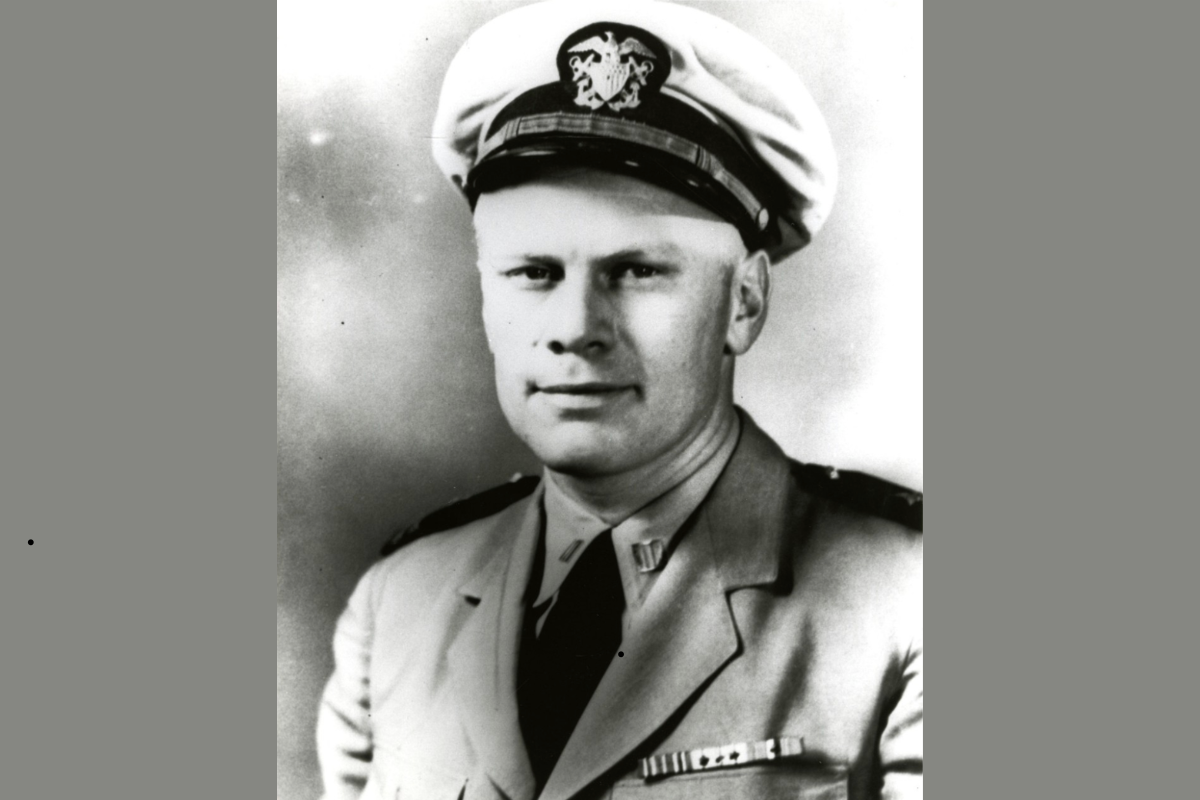
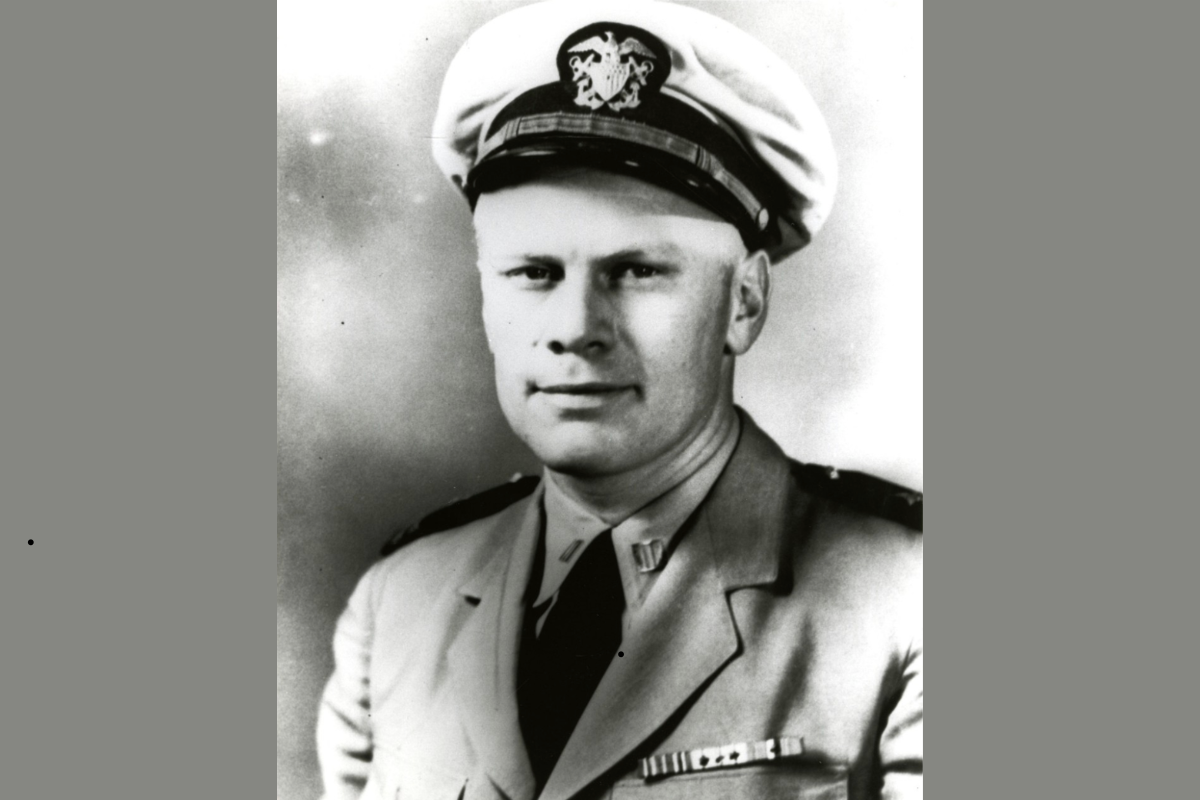
When Gerald Ford was discharged from military service at the conclusion of World War Two, his views on foreign policy had substantially changed.
Ford’s military service began after the Japanese attack on Pearl Harbor. He enlisted in the Navy, rising to the rank of lieutenant commander and saw action in Okinawa, Wake, Taiwan, the Philippines, and the Gilbert Islands—winning ten battle stars for participating in those engagements. The war transformed Ford from, in his words, “a passive isolationist to an ardent internationalist.”
And it was those views that propelled Gerald Ford into political office. In 1948, Ford declared his candidacy for a seat in the House of Representatives. Bartel J. Jonkman was the Republican incumbent from Grand Rapids and an ardent isolationist. Michigan Senator Arthur Vandenberg, also from Grand Rapids, was a strong internationalist who believed that “our oceans have ceased to be moats which automatically protect our ramparts.”
Aligning himself with Vandenberg, Ford made foreign policy a top issue in primary challenge to Jonkman: “Barney Jonkman had become a total isolationist. He was a thorn in the side of our senior senator, Arthur Vandenberg, who was converted by the war to internationalism. So here you had Senator Vandenberg trying to help President Truman with the Marshall Plan, and with the United Nations, and our own Congressman Jonkman gutting Vandenberg at home.” Calling himself a “liberal” on foreign policy, Ford excoriated Jonkman’s opposition to the Marshall Plan and all other forms of foreign aid. In his memoir, Ford wrote that foreign aid was “morally right, and I said so repeatedly.”
With help from Vandenberg, Ford beat Jonkman by nearly a two-to-one margin. And he took the lessons learned from World War Two to Congress and later the presidency. Specifically, Ford believed there were unintended consequences from wars of choice, as Adolf Hitler demonstrated. To keep the peace, international alliances, rules, and norms were needed. Most important of these was NATO, whose creation Ford strongly supported. Among Ford’s congressional colleagues who carried those same lessons with them were John F. Kennedy and Richard M. Nixon.
Gerald Ford believed in peace through strength, a slogan that became a Republican mantra during the Cold War years. But to Ford, military strength alone was only one tool the U.S. should employ in its dealings with foreign nations. Soft power—namely, building alliances and tending to international relationships, a key lesson learned from World War Two—was another. During the Kennedy administration, for example, Ford supported the Foreign Assistance Act of 1961, a measure Kennedy cited in his executive order that created USAID.
As President, Ford was determined to keep the peace. This became a prominent issue during his closely contested primary with Ronald Reagan. In 1964, Reagan made his political debut with a television appearance endorsing Barry Goldwater whose bellicose rhetoric alarmed many Americans. Lyndon Johnson seized upon Goldwater’s impudent statements by running the “Daisy Commercial.” As television screens showed a little girl plucking a daisy, a voice starts a countdown ending with an atomic explosion. Shown only once, the commercial had a powerful effect. By election day, 51 percent of voters thought Goldwater would get the U.S. into a war.
Faced with the prospect of a humiliating defeat in the 1976 Republican presidential primaries, President Ford took a leaf from Johnson’s playbook and accused Ronald Reagan of being a warmonger. In one pro-Ford television advertisement, a somber female voice warned: “Governor Reagan couldn’t start a war. President Reagan could.” Another commercial featured a ringing telephone while an announcer ominously declared: “When the Hot Line rings, who do you want to answer? And what do you want him to say? Do you want someone who talks like he wants to start a war or someone who’ll stop one? Think about it. You’ve got until Tuesday.”
Those commercials had the desired effect: When Republicans were asked which candidate could do a better job of dealing with Russia, respondents preferred Ford by two-to-one. And by the thinnest of margins, Ford secured his party’s nomination for President. Ford’s commercials made the difference.
Gerald Ford carried the lessons from World War Two with him throughout his life. To him, maintaining international alliances and adhering to international rules and norms were paramount. Those lessons should continue to guide those who carry the responsibilities of guiding U.S. foreign policy.

Professor Emeritus, The Catholic University of America
Related Essays