A Jonquil for Wendell Berry (1934-2026)

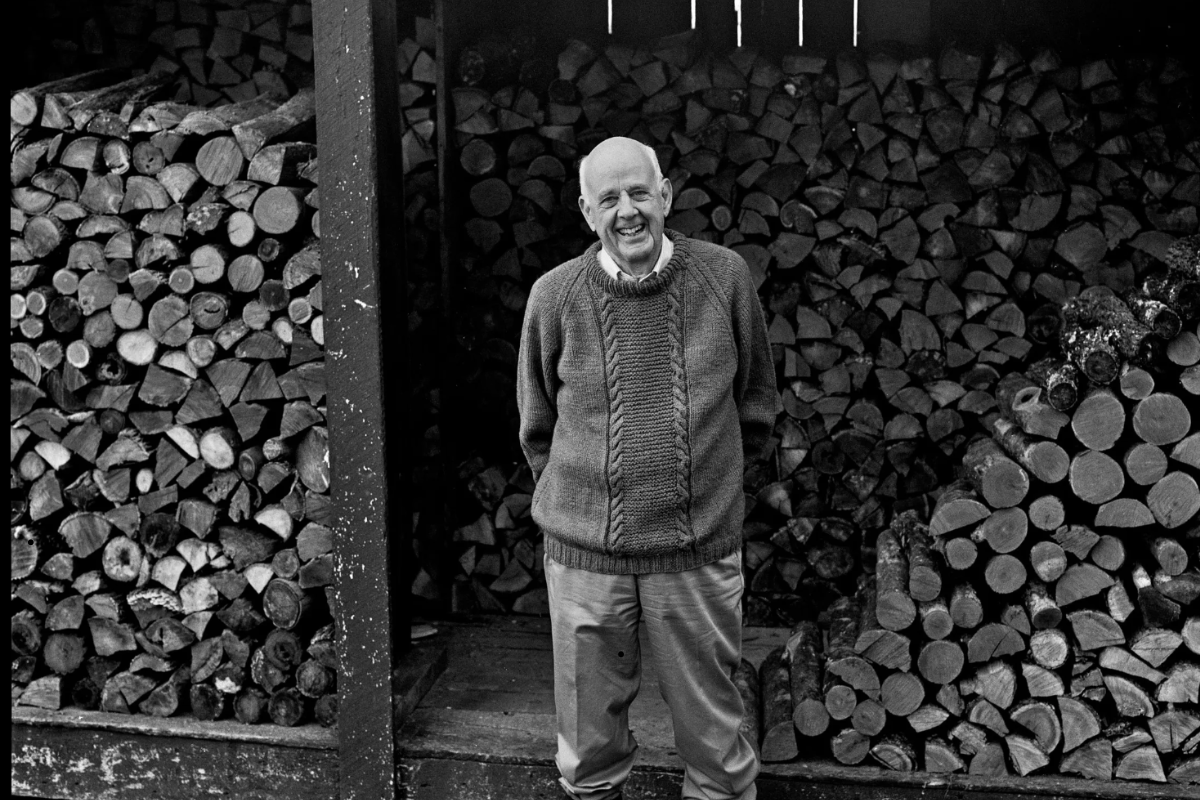
Wendell Berry, farmer, writer, and defender of the land and of its people, died last week, August 31, at the age of 92.
Some readers will probably know that Berry made a bit of a name for himself in the late 1980s by publishing an essay in Harper’s titled “Why I am Not Going to Buy a Computer.” People who don’t know anything about him somehow know about this. Several good things came of it, including the essay itself. Another is that it smoked out a lot of ignoramuses. It also lead to a companion essay, “Feminism, the Body, and the Machine,” which is full of insights nowhere else available. In it Berry leveled an attack on that deathless old foe Gnnosticism. “I know,” he wrote,
that there are people, perhaps many, to whom you cannot appeal on behalf of the body. To them, disembodiment is a goal, and they long for the realm of pure mind—or pure machine; the difference is negligible. Their departure from their bodies, obviously, is much to be desired, but the rest of us had better be warned: they are going to cause a lot of dangerous commotion on their way out.
Again: that was not on the cusp of ChatGFY but in the late ’80s. That’s really something.
That appeal on behalf of the body undergirds Berry’s great mission in life, which was to defend farmers, farmland, rural places, and rural communities from the predatory extractive economy that is everywhere colonizing and destroying the country—I mean the real country, not the one that our elites and technocrats see from their seats in the air or from the interstates.
And he had the distinction of being a man who farmed with horses and still had time to write over fifty books.
It turns out that a combination of disciplined work and the elimination of frivolous distraction makes it possible to leave behind an impressive literary legacy, which is exactly what this beloved backward redneck did. (He delighted in pointing out that hicks are the one remaining minority that even liberals, who have no prejudices, still allow themselves to look down on.)
Berry was a master essayist, a poet, and a novelist—in that order, I would argue. His fiction is mostly set in an agrarian community he called Port William, the original name of Carrolton, Kentucky, which lies at the confluence of the Kentucky and Ohio rivers a dozen or so miles north of Port Royal, where Berry lived for over six decades once he’d decided, in 1964, to repatriate. Berry’s characters and their predicaments are by turns hilarious and heartbreaking. There are good and middling and no-account denizens of the Port William “membership,” as one of their numbers calls it. And there are murderers. Their speech, being particular, particularized, and local, is far more interesting than anything you’ll hear in other contemporary fiction, especially fiction that is set in the big city, which in the impoverished American imagination alone is real. The early novels—Nathan Coulter, for example—have a rhetorical economy about them that reminds of Hemingway. Such later novels as Jayber Crow and Hannah Coulter, both first-person narratives and both deeply reflective, are written in a different style altogether. Much of Berry’s short fiction is a masterclass in the form. These stories also have the advantage, some of them, of being very funny. And funny is not easy to do.
His poetry is marked by its clear idiom, its strict adherence to form, its plainspeaking, and its fidelity to the place and circumstances it issues from. Berry was too good a poet and too learned a man to be seduced by novelty or by the adolescent cult of originality. He didn’t regard poetry as “self-expression,” which is the last thing good poetry is.
But I will venture to predict that it is as an essayist, and a sometime polemical one at that, that Berry will mostly be remembered—insofar as he will be remembered as a writer, that is to say, and not as a neighbor or friend or father or grandfather or great-grandfather or husband. (He and his wife Tanya were married eight months shy of 70 years.) Berry was his generation’s Man of Letters, and I would pin that claim on his greatness as an essayist.
Berry’s most important book, again in my judgment, is The Unsettling of America (1977). I think it might also be one of the most important books of the twentieth century. It sets out carefully and deliberately the government-sponsored ruination of farms, farm lives, and farmland since the industrialization of farming that began after World War II. But it is more than that. It is a searching analysis and a fairly scathing criticism of the new human relation to the material order inaugurated by the industrial revolution. It is also an incisive accounting of the ecological crises that beset us in the 1970s and that have only worsened since then. Early on Berry saw the dangers of specialization and compartmentalization, which came at the expense of a unifying account of reality—a view of mind and body, body and earth, earth and mind:
things that appear to be distinct are nevertheless caught in a network of mutual dependence and influence that is the substantiation of their unity. Body, soul (or mind or spirit), community and world are all susceptible to each other’s influence. The body is damaged by the bewilderment of the spirit, and it conducts the influence of that bewilderment into the earth, the earth conducts it into the community, and so on…. All that is certain is that an error introduced anywhere in the network ramifies beyond the scope of prediction; consequences occur all over the place, and each consequence breeds further consequences.
Berry refused to sing the praises of mechanized farming (though he did allow that good farming was being done on some mechanized farms) mainly because of the costs, both cultural and agricultural, that such farming rang up. The cultural loss was never difficult to see. Agricultural technology saves labor, but it will only save labor by evicting laborers from their work. Beginning in the 1950s the government decided there was a surplus of farmers, and so it told farmers to “get big or get out.” In other words, it told farmers that they could continue in their chosen vocation only on the government’s terms. And those terms would lead rapidly to the ruin of farm culture. In fact “get big or get out” might be the most cynical demand our government ever made of its people—farming people, be it remembered, whom Thomas Jefferson called the most valuable, vigorous, independent, and virtuous citizens, “tied to their country & wedded to its liberty & interests by the most lasting bonds.” Thus did Jefferson think highly of farmers, even as the Secretaries of Agriculture under Johnson and Nixon thought nothing of them.
But those instructions to get big or get out would also lead to the ruin of farmland. Industrial methods in agriculture are responsible for, among other atrocities (such as CAFOs), massive losses in topsoil. By some estimates, to give but one example, Iowa has squandered fifty percent of its original endowment—this in just 70 years—and these losses have been conveniently kept off the books. According the agribusiness experts the ledgers are full of large deposits from which there have been no subtractable debits, cultural or agricultural. Somehow we’ve been convinced that a lose-lose situation is win-win. Mostly that has been accomplished by appealing to our aversion to work.
People who do their private bookkeeping the way Big Ag and Big Government do theirs go broke—gradually, then suddenly. A nation that farms the way ours does destroys the sources it lives from. You can talk all you want about markets and magic hands and the relation of supply to demand, but the lesson of industrial agriculture is not so much that demand can outpace supply; it is that demand can destroy supply. Nature, which should always get a seat at the table, should also always have a say. And what she is saying is that if you hope to eat you can’t erode the soil that feeds you, nor can you do without the knowledge, skills, disciplines, and restraints by which the land is both protected and used kindly. The pixie dust of Demand that economists are fond of talking about will not create topsoil. Only Nature, by means of decomposition, can do that, and she does it very slowly—an inch per 500 years under good conditions. Nor will Demand replenish aquifers. And you can’t eat data centers or slake your thirst with AI.
Berry, in his uncompromising prose, nailed perfectly our ruinous attitude (which he also called immoral) toward energy. The final irony of our shift from solar to fossil-fuel energy in agriculture—that is, from energy stored in the body and available thanks to contemporary rather than ancient sunlight—
is that we are abusing our land … in order to correct our “balance of payments”—that is, in order to buy foreign petroleum. In the language of some “agribusiness” experts we are using “agridollars” to offset the drain of “petrodollars.” We are, in effect, exporting our topsoil in order to keep our tractors running.
Berry’s critics accused him of being nostalgic, and of course you can never be nostalgic except “for a past that never existed,” even though that past did exist and in some places still does. (As Faulkner said, “The past is never dead. It isn’t even past.”) Had these critics never heard of the Amish? Did they ever bother to find out how Amish farms can easily, and also sustainably, out-produce mechanized farms?
The reason for the willful blindness of these critics goes back to the post-war farm crisis itself. If you remove almost everyone from the land, almost no one will know anything about how to work it and care for it. And this ignorance will provide far too many people with permission to say stupid things.
Case in point: The New York Times, which somehow managed to learn within a few hours of Berry’s death, quickly put up the obituary it had standing by. Many of us suspected that this tone-deaf paper would botch the job, and it did. The headline called Berry a writer “who extolled America’s agrarian past.”
What Berry did was argue eloquently, peaceably, and insistently for an agrarian present.
One take-away from our Paper of Record is this: understanding Berry is too difficult a job for the educated elites. That job will require careful readers who also know something about how Nature works and are prepared to interpret the feedback she gives when she doesn’t approve of what we’re doing. It will require some proper circumspection regarding technological innovation. It will require the love of beauty and a proper sense of awe before the order of things. It will require people who can see, as the narrator of Andy Catlett: Early Travels can see, that the modern world with all its gadgets and gee-whizzery is just props and lighting and scenery. It blocks our view of the real—the given—world.
That most people prefer the world of props and lighting and scenery, of gadgets and gee-whizzery, is finally irrelevant. Reality doesn’t give a damn what we think.
As someone who has written a fair amount about Berry and who has assigned some of his books in classes, I am often asked where a neophyte should begin should he or she wish to read Berry’s work. In truth you could throw a dart at the shelf and start with whatever book the dart sticks to. But here are a few suggestions:
If you want to read Berry on agrarian economics, pick up What Matters? Economics for a Renewed Commonwealth. If you want to read Berry on the tyranny of science and scientism, Life is a Miracle is the place to start. If you want a representative collection of essays, The World-Ending Fire, edited by Paul Kingsnorth, is terrific. So are What are People For? and Home Economics, among many others, including especially The Art of Loading Brush, wherein Berry says that the main cause of our desecrated farmland is overproduction. (If we don’t control it, we’ll overproduce ourselves into starvation.) If poetry is your thing, buy any volume; I’d buy the Collected Poems. If you like fiction, the Library of America collection (stories from the Civil War to World War II) will not disappoint. Or you could read Jayber Crow or Hannah Coulter. Those seem to be favorites.
Or read anything. Just be sure that at some point you get to The Unsettling of America.
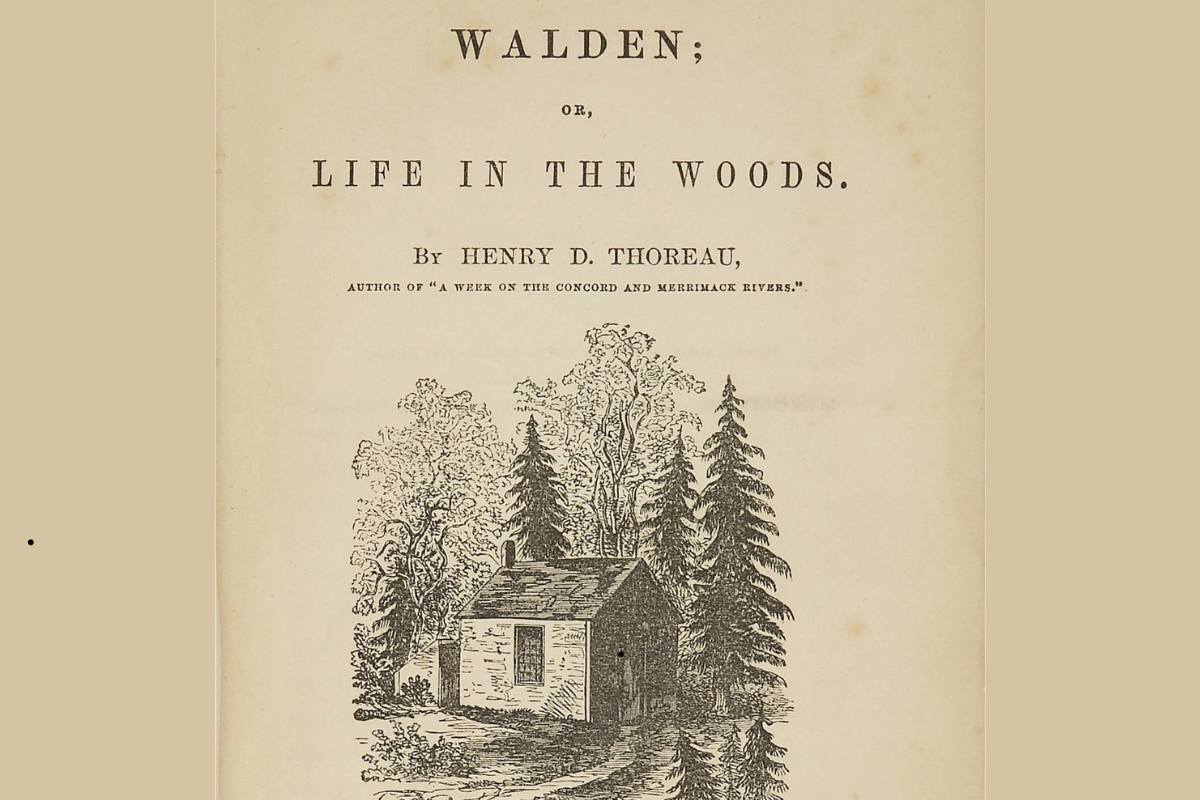
When Thoreau died Emerson said of him, “no truer American existed.” It is not for me (and it wasn’t for Emerson) to make such claims, though when notable men die you can understand the temptation. I had the good luck to know Berry a little, it is true, yet it would be as wrong of me to overstate the intimacy as it would be to exaggerate his greatness. Nevertheless I think the country, the real country, has lost a great man.
When I saw him last, which was in January of this year, I had a feeling we wouldn’t meet again. And so we won’t, unless there really is, as Berry seemed to believe, a beautiful shore and a sweet by and by.

Jason Peters joined Hillsdale’s faculty in the fall of 2021 after spending 25 years at Augustana College, where he was Dorothy J. Parkander Professor in Literature.
Related Essays