On Character
In Federalist #57 James Madison identified one of the key features of the proposed constitutional system: “The aim of every political constitution is, or ought to be, first to obtain for rulers men who possess most wisdom to discern, and most virtue to pursue, the common good of the society; and in the next place, to take the most effectual precautions for keeping them virtuous whilst they continue to hold their public trust.” He had already a noted in Federalist #55 that republican government presupposes the virtue of its rulers to a higher degree than does any other system.
It’s hard enough to find persons of good character to hold office; all too often ambition rather than the desire to do that which is genuinely proves the ruling passion. The concentration of power tends to draw the worst sorts rather than the best, political thinkers had long noted. Even if the best make their way to the center of power, keeping them in virtue proves even more difficult. The constant temptations, compromises, and accommodations to human nature’s darker side whittle away at the steadfastness required to keep character intact.
Worse still: it is difficult to be virtuous when one has no clear idea of what virtue even is. Classical thinkers such Plato and Aristotle carefully delineated the nature and operations of the virtues and demonstrated the necessity of integrating the virtues into a coherent whole; the possession of any one virtue necessarily committed one to the whole of the virtues. The person who integrated these virtues, a person of integrity (or wholeness) is a person possessed of good character.
Good character has several features to it. First, and most importantly, it discerns what is good and right and pursues it. In other words, a person of good character has clear vision and constant effort. Second: A person of good character will also maintain consistency across situations. You can count on a person of good character to be the same person conducting him or herself in the same fashion regardless of circumstances.
As General McChrystal has written, character results when discipline meets conviction. Alexander Hamilton noted that “the passions of men will not conform to the dictates of reason, without constraint,” thus identifying self-restraint, the virtue of temperance, as essential to good character. “It is written in the eternal constitution of things,” Burke observed, “that men of intemperate minds cannot be free. Their passions forge their fetters.” When office and wealth become available to all, however, those passions soon lose all constraint. We become competitors for wealth and power and status and see others as threats to our advancement. Tocqueville thus identified the unleashing of avarice and ambition as threats to the American efforts at democratic self-governance. Men incapable of self-governance are incapable of self-governance.
The emphasis on discipline reinforces one of Aristotle’s central tenets of virtue: that human beings need training in virtue, just as they need to train in any activity in order to achieve excellence in it. Training in virtue is a lifelong and arduous task wherein we habituate ourselves into the actions that define good character to such a degree that we are hardly capable of not doing the right thing. We completely internalize the ends pursued as well as the means best suited to pursuing those ends.
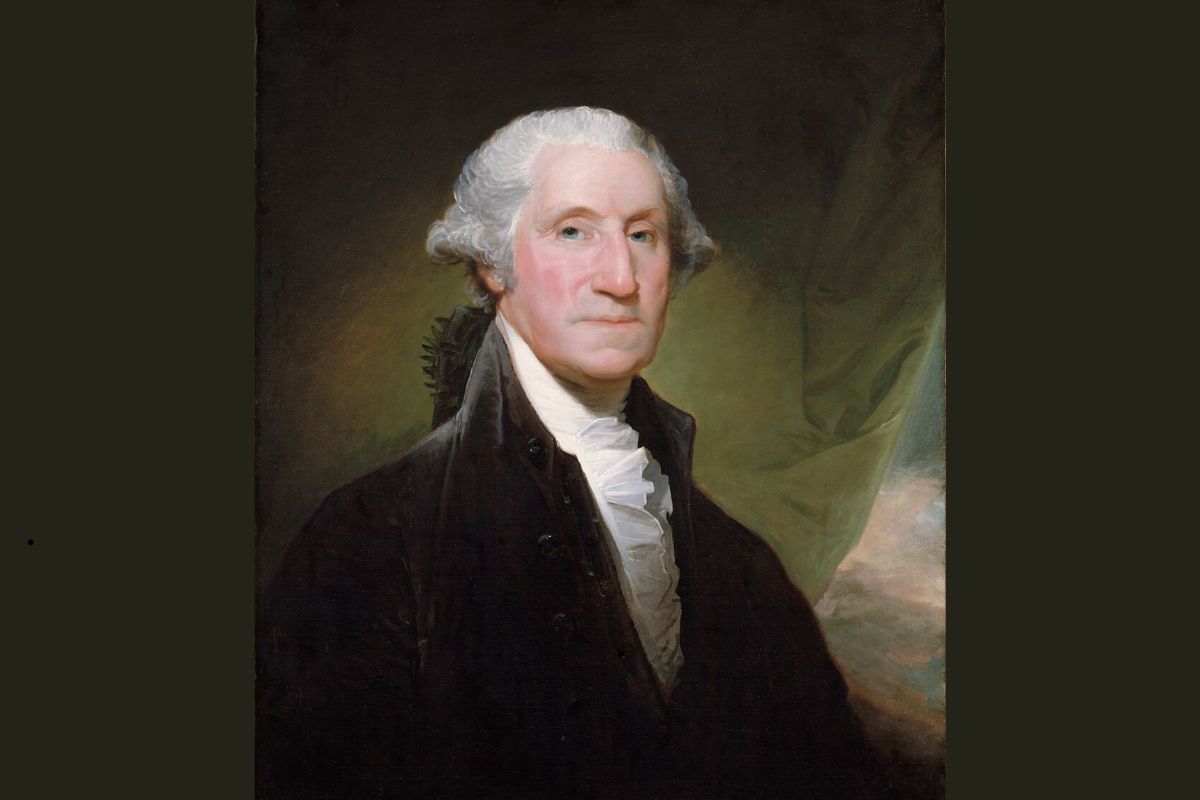
In his Days and Works, the pre-socratic philosopher Hesiod, in delimiting three types of human beings, identified one of the central issues of character. The best person is the one who can discern what is good and does it. The not-as-good person, but a very common one, is one that cannot discern on their own what is good but will take instruction. The third type of person, whom he called “a true scoundrel,” is one who cannot discern what is good nor will take instruction. For most people, therefore, instruction becomes the key to good character. Washington’s lifelong companion, the book Rules of Civility & Decent Behavior, demonstrated the need for constant instruction and reminder of lessons learned, lost, and learned again. Washington, a man of the finest character, took to the instruction. He realized the intimate connection between reputation and character that we sever to our own discredit.
What form does instruction take? Aristotle identified the laws as one mode of instruction, so that obedience to [good] laws sets one on the right path toward what is good and just. Stories and sound teaching are also important modes of instruction, but Aristotle argued that the two most important forms are imitation — you become a good person by imitating a good person (spoudaios) — and friendship. Friendship provides the kind of intimacy and accountability we need to steer us in the right direction while good models provide a kind of objectivity that friendship with its occasionally distorted loyalties sometimes obscures. Good models not only spark the imagination but also provide for the continuity of wisdom across generations and the ages, creating what Edmund Burke called society’s “eternal contract.” These models of conduct, both good and bad, the latter as cautionary tales, help shape the moral imagination of the youth. Undoubtedly this is why Plato believed that storytellers were the most important guardians of character and that those who told morally suspect stories posed a threat to the well-being of the political community.
In a highly diverse and ambulatory society such as ours both friendship and good modeling become difficult, and with their attenuation becomes an overall decline in societal levels of good character. Polling data indicate that Americans in general and young people in particular have disinvested in friendship. One in ten Americans claims to have no close friends. One out of three young Americans who has friends is “dissatisfied” with his or her friendships. Modeling, likewise, takes place best either through stories or through face-to-face interactions, and those interactions must be sustained over time in order to be effective. Many young people claim to have no models they can copy, and social science data indicate that the more mentors a person has the higher the levels of social success and public engagement. Mass media and corporate-sponsored entertainment cannot be counted on to tell the stories young people need.
In his analysis of character General McChrystal stripped away a lot of bourgeois values. He rightly recognized character’s stable nature in the face of constantly changing circumstances, and his appreciation for human frailty and weakness, maybe especially among men in battle, is offered as a tonic against hero worship. He understands heroism as “the result of measured actions over time that cumulatively constitute a level of behavior that sets a person apart from, and above, what we usually expect,” the particularity of which I find a useful corrective to assumptions we make about people just because they wear uniforms.
McChrystal is very good on the discipline side of assessing character, but less sure of himself when it comes to understanding the role of conviction. Granted, he believes it plays an equally important role, but while the demands of discipline seem clear to him the substance of conviction eludes. The reason for that should be clear: people can be convicted to pursue morally suspect ends. For this reason Aristotle insisted that conviction didn’t attend primarily to the passions, although they are certainly implicated, but to reason’s capacity to discern appropriate ends. Hume claimed that reason was the slave of the passions, but the pursuit of virtue requires, as Plato argued in the Phaedrus, that reason has a firm grasp of the passion’s reins. We do have a capacity to discern the difference between just and unjust convictions, but the difficulty of such discernment should not dissuade us from the task. The alternate relativism renders us unable to connect conviction to character.
Governments do not form persons of good character, but they do require them. People of good character are formed in primary social institutions such as families, churches, and other modes of associative life. “Ideas and sentiments are refined, the mind renewed and the heart enlarged only in the reciprocal actions of citizens upon one another,” Tocqueville rightly insisted. The revivification of associative life thus becomes imperative for the formation of character, and that revivification happens at the local level, at small scale, or not at all, for part of that formation involves accountability that occurs in long-term relationships where the parties are not always looking to gain an advantage.

Director of the Ford Leadership Forum, Gerald R. Ford Presidential Foundation
Related Essays