Gerald R. Ford and Malcolm Baldrige: Leaders Who Changed America
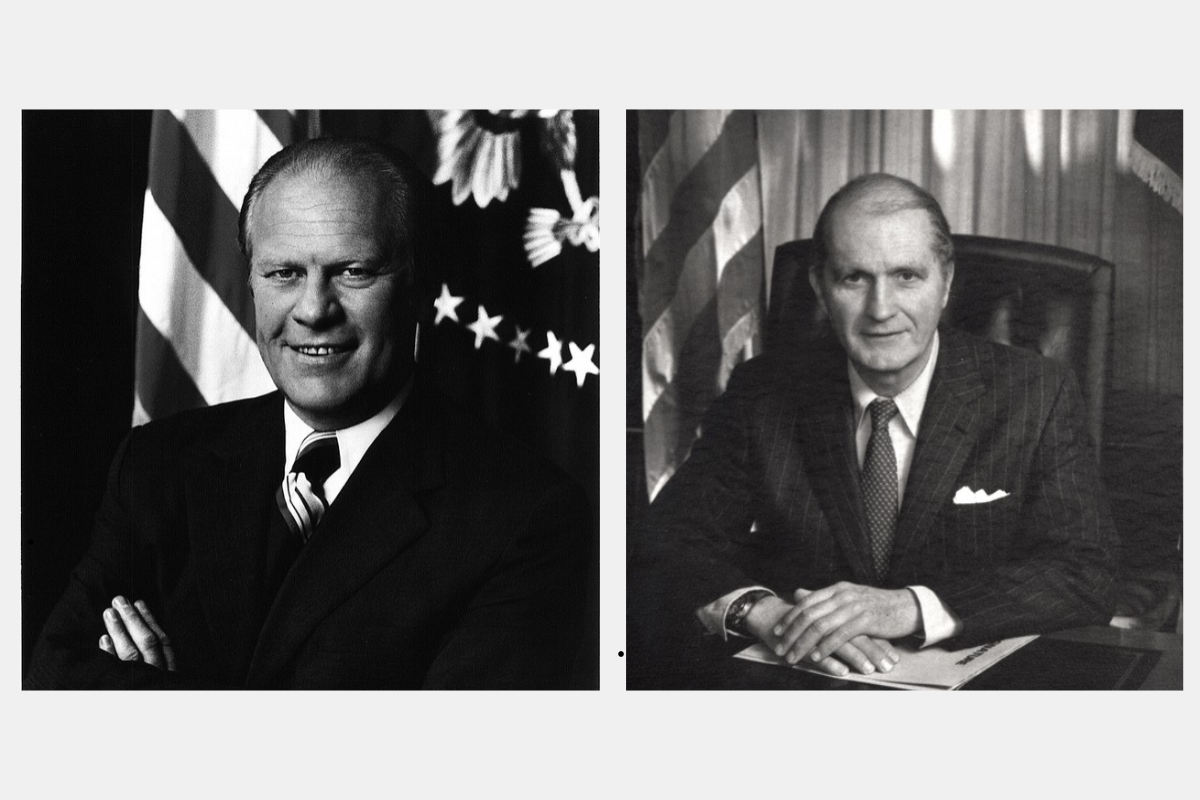
Howard Malcolm “Mac” Baldrige was a visionary corporate executive and, later, Secretary of Commerce in the Reagan administration. He led the Department of Commerce during challenging domestic economic times and an equally difficult period of international trade disputes, especially with Japan’s dumping of semiconductors.
Baldrige served in the Reagan administration from January 1981 until his death in a rodeo accident in 1987. At the time of his death, Baldrige was second only to Herbert Hoover as the longest-serving Secretary of Commerce.
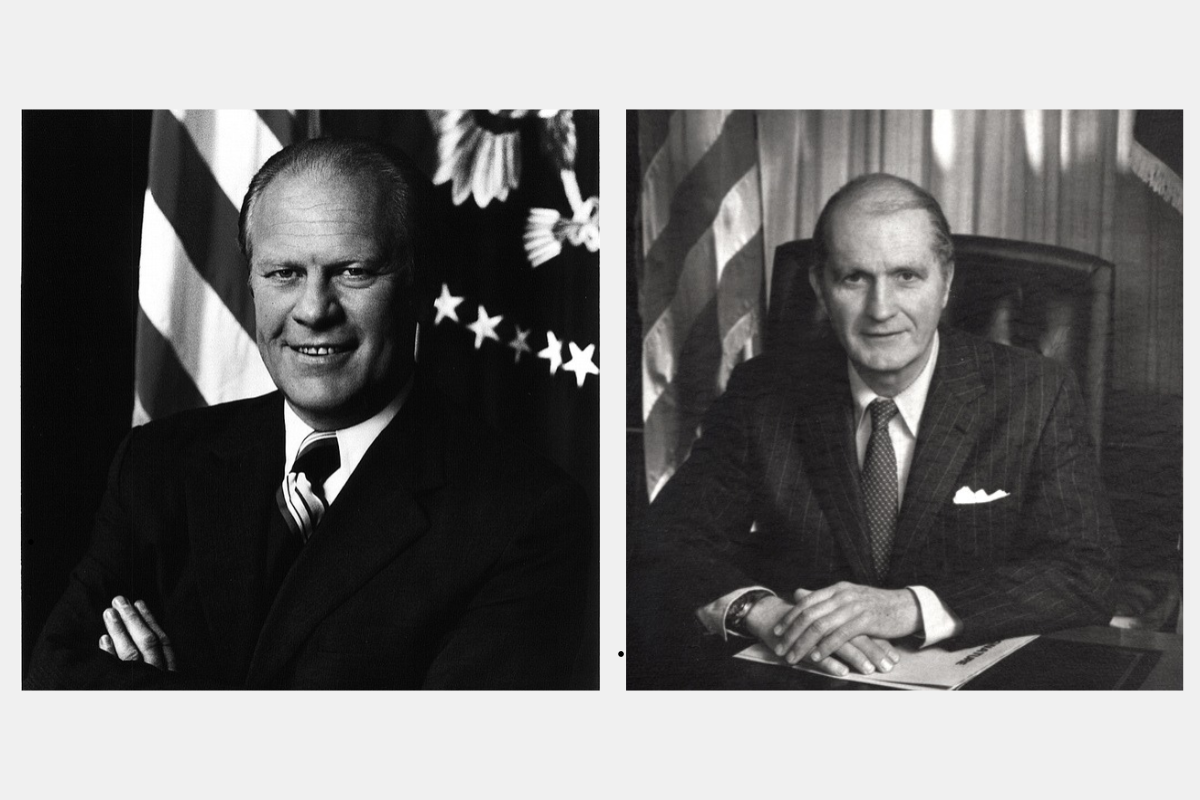
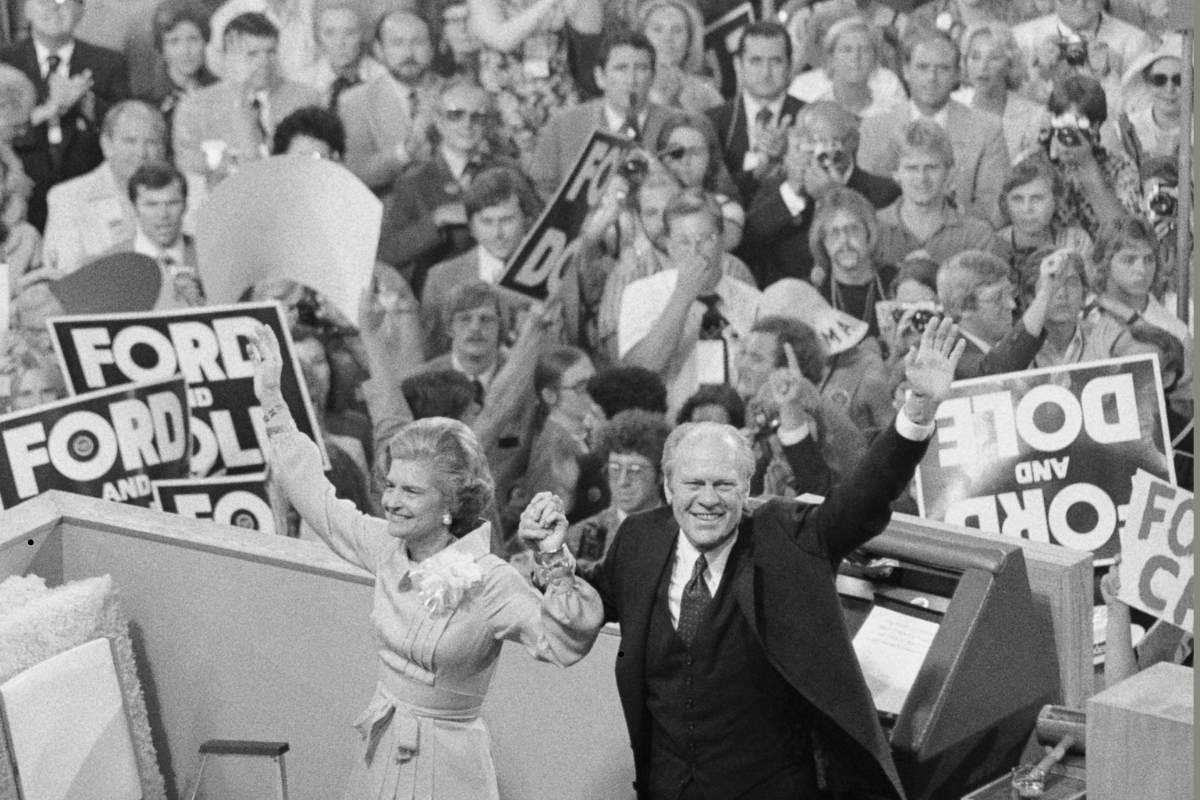
Gerald R. Ford and Malcom Baldrige had many similarities. Both were born in Omaha, Nebraska. In 1944, Baldrige graduated from Yale University with a B.S. degree in English. Ford graduated from Yale Law School in 1941. After Yale, both men served in the U.S. military. Ford served in the Navy; Baldrige in the Army. History would bring them together again at the 1976 GOP National Convention in Kansas City.
Baldrige, then a Connecticut resident, served as a delegate to the Republican National Conventions in 1968, 1972, and 1976. During these years, Baldrige was CEO of Scovill, a diversified manufacturer with sales of about $1 billion in small appliances, among other products.
Baldrige had good relations with his unionized employees and their representatives. He had good relations with community leaders. In 1968, Baldrige used his private plane to fly black leaders from Waterbury, Connecticut, to attend Dr. Martin Luther King, Jr.’s funeral in Atlanta.
In the contested 1976 GOP presidential primary, Baldrige supported Ford over challenger Ronald Reagan. Connecticut’s Republican Party sent a 35-member delegation to Kansas City that year. They all voted for President Ford’s nomination as the GOP presidential candidate.
When President Ford had secured the nomination, Baldrige supported William Simon, Ford’s Treasury Secretary, as the president’s vice-presidential running mate. Ford selected U.S. Senator Bob Dole. Baldrige said he would vote for Simon on the final night of the convention.
When Convention officials released the final tally of votes for Connecticut’s delegation, 34 members voted for Dole. One member abstained. Based on his strong public support for Simon, the abstention was likely Malcolm Baldrige.
In the 1980 GOP presidential primary, Baldrige initially supported Reagan’s challenger George H.W. Bush. Baldrige served as Bush’s Connecticut campaign chair.
Bush ran a strong primary campaign based on his solid foreign policy experience as U.S. Ambassador to the United Nations and as the Second Chief of the U.S. Liaison Office to the People’s Republic of China in Beijing. Bush criticized President Carter’s Middle East policy, especially the crises in Iran and Afghanistan.
Bush said he opposed a permanent U.S. force in the Middle East to impose peace between warring states. He preferred diplomatically negotiated peace agreements, such as the 1978 Camp David Accords, which Carter negotiated with Israeli Prime Minister Menachem Begin and Egyptian President Anwar Sadat.
After winning the 1980 GOP Presidential nomination, Ronald Reagan selected Bush as his running mate. They ran a successful campaign against Jimmy Carter. On January 20, 1981, Baldrige joined the Reagan-Bush administration as Secretary of Commerce.
Lou Cannon, writing in his 1991 book “President Reagan: The Role of a Lifetime,” said George H.W. Bush chose Baldrige as Commerce Secretary. The Connecticut businessman “appealed to Reagan,” Cannon wrote, “because Baldrige’s hobby was roping cattle at rodeos.” Baldrige, who appeared in rodeos across the U.S., was a member of the Cowboy Hall of Fame.
In his confirmation hearings before the Senate Commerce Committee, Baldrige, perhaps channeling Ford’s economic policies, said he would seek government deregulation “from top to bottom” to stimulate growth, especially among middle-sized and small businesses. The Committee voted 13-0 to refer Baldrige’s nomination for a Senate vote. The Senate overwhelmingly confirmed him 97-1.
Baldrige’s leadership at the Commerce Department fit into the broader economic and trade agenda set by President Reagan. Baldrige was a “trade hawk.” He intensified the trade dispute with Japan over electronic products by endorsing tariffs. President Ford had sought tariffs on oil imports to stimulate domestic production.
Baldrige sought tariff authorization under Section 301 of the Trade Act of 1974. Japan was found to be dumping semiconductors into the U.S. and damaging U.S. industry. As a result, Japan recognized the need to follow trade law more closely.
Other business leaders supported Baldrige’s philosophy about government. “The government is a fascinating place to work, but you can’t really compare working for the government with working in the private sector. And those differences are frustrating to a lot of businessmen.
“In the private sector, companies are organized to make things happen. The government is organized to not have bad things happen,” Baldrige said. After four years of failed economic policy by the Carter administration, these words must have been reassuring to businesses.
As a “trade hawk,” Baldrige argued with other administration figures, including U.S. Trade Representative Clayton Yeutter, a fellow Nebraskan. Baldrige wanted to consolidate the USTR, which reported to the President, into the Commerce Department. Reagan did not agree.
Former Budget Director David Stockman, in his 1986 book “The Triumph of Politics,” called Baldrige “a protectionist-leaning manufacturer.” He said Baldrige “had a little understanding of free market doctrine and less willingness to hear about it.” These comments angered the soft-spoken Baldrige.
Stockman “was somewhat overeducated and underexperienced,” Baldrige said. He denied being “protectionist-leaning.” Baldrige said, “he was the number one spokesman for business and defender of the administration’s ‘free trade’ policies.”
In 1981, Baldrige wanted to export U.S. computers to Iran, arguing the technology had no military applications. Secretary of Defense Casper Weinberger refused.
Secretary of State George Shultz recalled in his 1993 memoir “Turmoil and Triumph” that “Secretary Baldrige's visit [to China] had been a great success, especially since he was able to inform the Chinese of the president's decision to liberalize technology transfers. [U.S. Ambassador to the People's Republic of China] Art Hummel in Beijing described the atmosphere for Baldrige's visit as ‘the best in my nearly two years as ambassador here’.” The 1980 GOP Party platform opposed technology transfers to China, among other nations.
Baldrige equipped the Commerce Department staff with the then-new microcomputers and software to better perform their mandated work for taxpayers. Modernizing the agency while training its massive staff was a huge task. Baldrige’s passion for modernizing Commerce impressed managers across the federal government.
Mac Baldrige used his B.S. in English at Yale to improve communications at the Commerce Department. This caught the attention of syndicated columnist James J. Killpatrick. In a 1983 column, Kirkpatrick wrote that Baldrige was modernizing communications at Commerce. He wrote that Baldrige had forbidden staff to use such phrases as “to optimize,” “to interface,” and “to finalize.” Baldrige also forbade “bottom line,” “subject matter,” and “new initiatives.” This marked the beginning of simpler, more understandable government language.
Kilpatrick presciently and humorously wrote: “At this point in time, no other functionary is implementing any program of comparable enhancement to the quality level of federal prose.”
After his 1987 death in a rodeo accident, Congress established the Malcolm Baldrige National Quality Improvement Act of 1987 (Public Law 100-107) to enhance the competitiveness of U.S. businesses. In 2017, the program was expanded to include the cybersecurity sector. The Malcolm Baldrige National Quality Award, “The Baldrige Award,” is the highest U.S. recognition for organizational performance excellence, resilience, and long-term success.
Gerald R. Ford and Malcom Baldrige were Midwesterners with passions for public service. They gave generously of their time to help improve America’s future. Thanks to the Gerald Ford Journalism Prizes and the Baldrige Award, their heroic examples continue to inspire and motivate their fellow Americans.

James Patterson is a former U.S. diplomat, life member of the American Foreign Service Association.
Related Essays