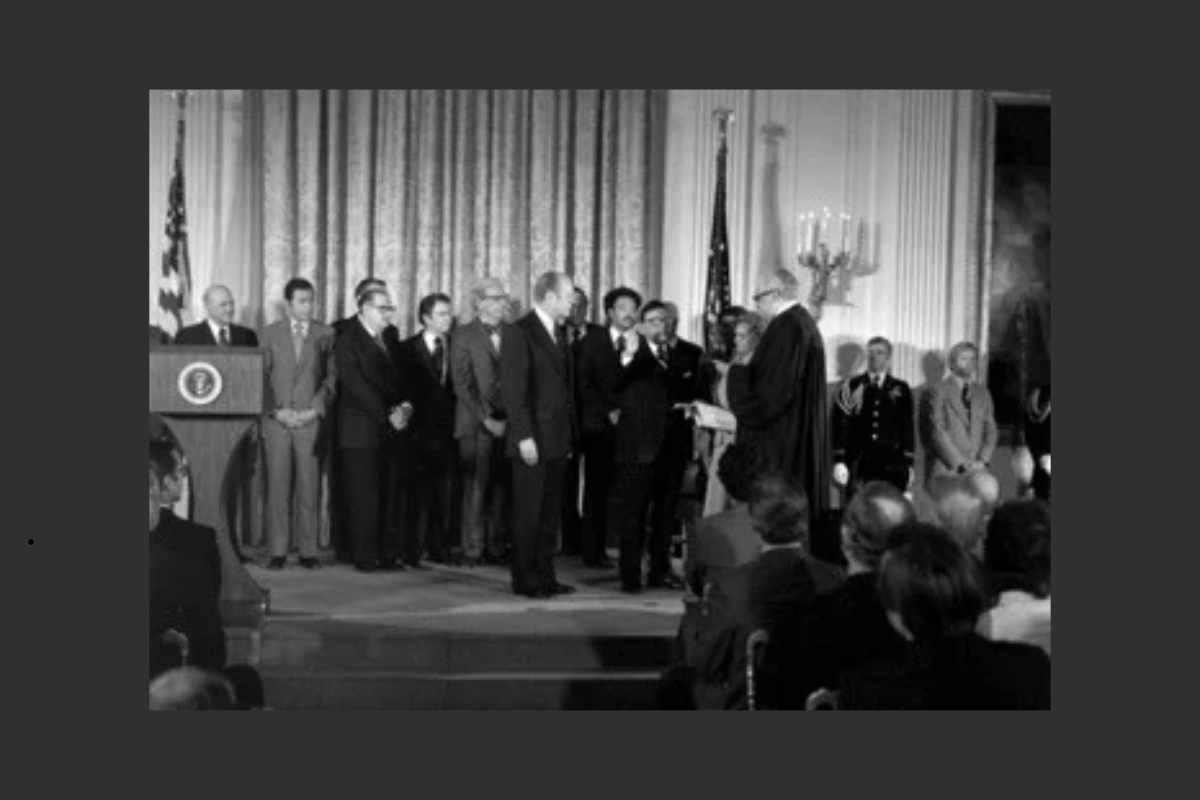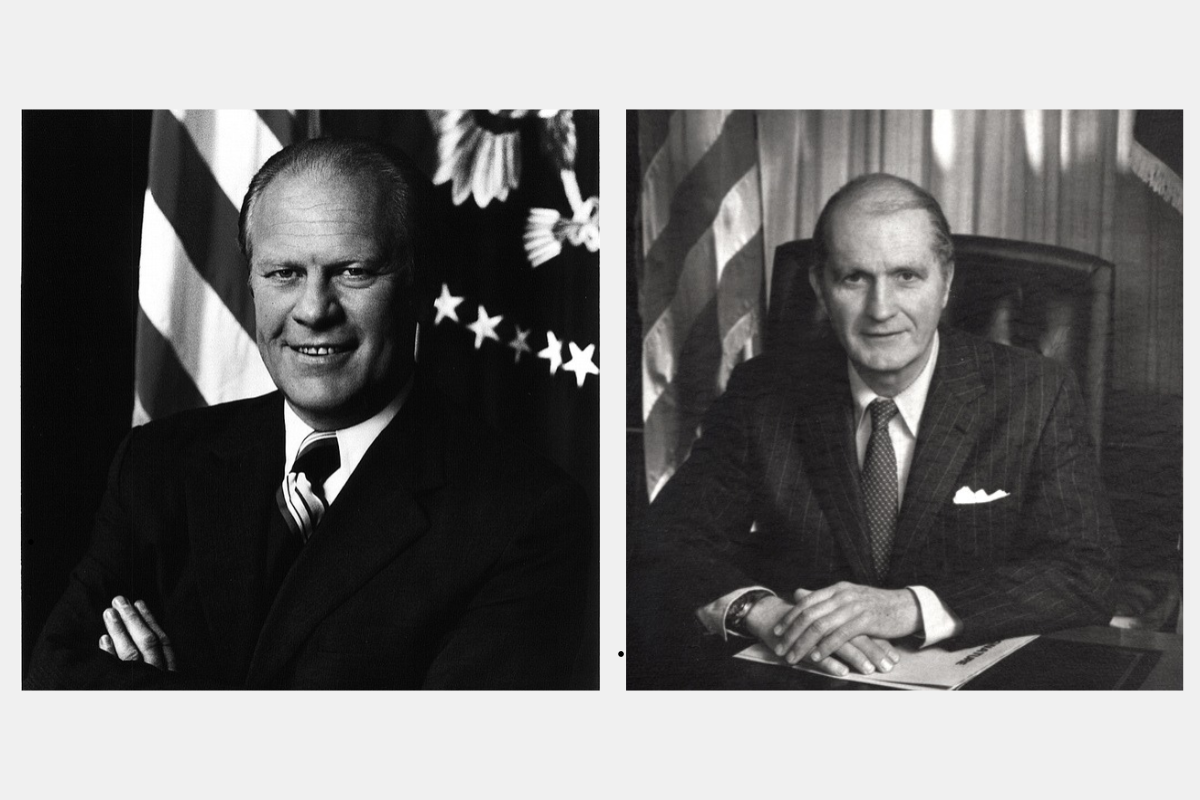
President Gerald R. Ford (left) looks on as Supreme Court Justice Thurgood Marshall administers the oath of office to his friend and colleague, William T. Coleman, Jr., as Secretary of Transportation.
Parade Magazine published the article “How Well Do Lawyers Serve the Cause of Justice?” on August 11, 1974. The article described William T. Coleman, Jr. as “one of the most successful corporate lawyers in the United States.”
Coleman’s legal thinking, as expressed in the article, no doubt impressed his long-time friend President Ford. Coleman told Parade, “I think a good lawyer ought to be able to represent a corporation one day, a labor union the next day, and some poor people on the day after that.”
In 1975, President Ford’s second chief of staff, Donald Rumsfeld, made a quick and historic cabinet suggestion to the President about an opening for Secretary of Transportation. When Claude Brinegar, the nation’s third person to fill the cabinet position, told President Ford he wanted to leave government, Rumsfeld suggested Ford consider William T. Coleman, Jr., to lead the Department of Transportation. Ford liked the idea.
In his autobiography “A Time to Heal,” President Ford wrote that he had known Coleman, a Harvard Law School graduate, for years. They had worked together on the President's Commission on the Assassination of President Kennedy, known as the Warren Commission. Chief Justice Earl Warren chaired the Commission.
In 1948, Coleman, an Army veteran of World War II, clerked for U.S. Supreme Court Justice Felix Frankfurter, as did Ford’s Secretary of Commerce, Elliott Richardson. In 1954, Coleman co-authored a legal brief in Brown v. Board of Education, the case that led the Supreme Court to ban racial discrimination in public schools.
Coleman defended young civil rights activists, known as Freedom Riders, in Mississippi. He successfully argued a U.S. Supreme Court case that helped eliminate Florida’s prohibition on interracial marriage.
During the Eisenhower administration, Coleman served on the President’s Commission on Employment Policy. In the Kennedy, Johnson, and Nixon administrations, Coleman served as a consultant to the U.S. Arms Control and Disarmament Agency. During the Warren Commission's investigation, Coleman interviewed Cuban President Fidel Castro, who denied any involvement in President Kennedy’s assassination.
In addition to his military, government, and legal credentials, Coleman specialized in transportation law in private practice. In his memoir, Ford wrote that he was “delighted” when Coleman agreed to take the job at the Department of Transportation. Secretary Coleman was the second African American to hold a cabinet-level position. A progressive Republican and a fiscal conservative, Secretary Coleman worked to reduce transportation subsidies and favored higher user fees.
Secretary Coleman successfully argued against Ford’s Budget Director, James Lynn, to secure the $1 billion in federal funding needed to complete the Washington, D.C. Metrorail subway. Coleman’s tenure at Transportation marked a period of major federal infrastructure investment, driven by the aftermath of the oil embargo, rising gasoline prices, and the growth of the environmentalist movement, among other factors. The Ford-Coleman position was to support federal aid for developing mass transit systems to communities whose plans “do not involve … the prospect of substantial continued operating subsidies.”
Secretary Coleman told Congress that the federal investment in mass transit would “simultaneously and well serve to enhance redevelopment of our central cities, control air pollution, save energy, transport the disadvantaged, facilitate employment, and promote a more sensible use of our land.” Despite Ford and Coleman's objections, Congress continued to subsidize mass transit systems. As a result, federal subsidies did not significantly decline during the Ford administration.
In “A Time to Heal,” Ford wrote about working with Coleman on the Railroad Revitalization and Regulatory Reform Act of 1976. Although it was difficult to work with a Democratic-controlled Congress, President Ford and Secretary Coleman succeeded. Congress passed the bill with the deregulatory provisions the administration felt would increase competition and lower costs for consumers. The President signed the bill into law.
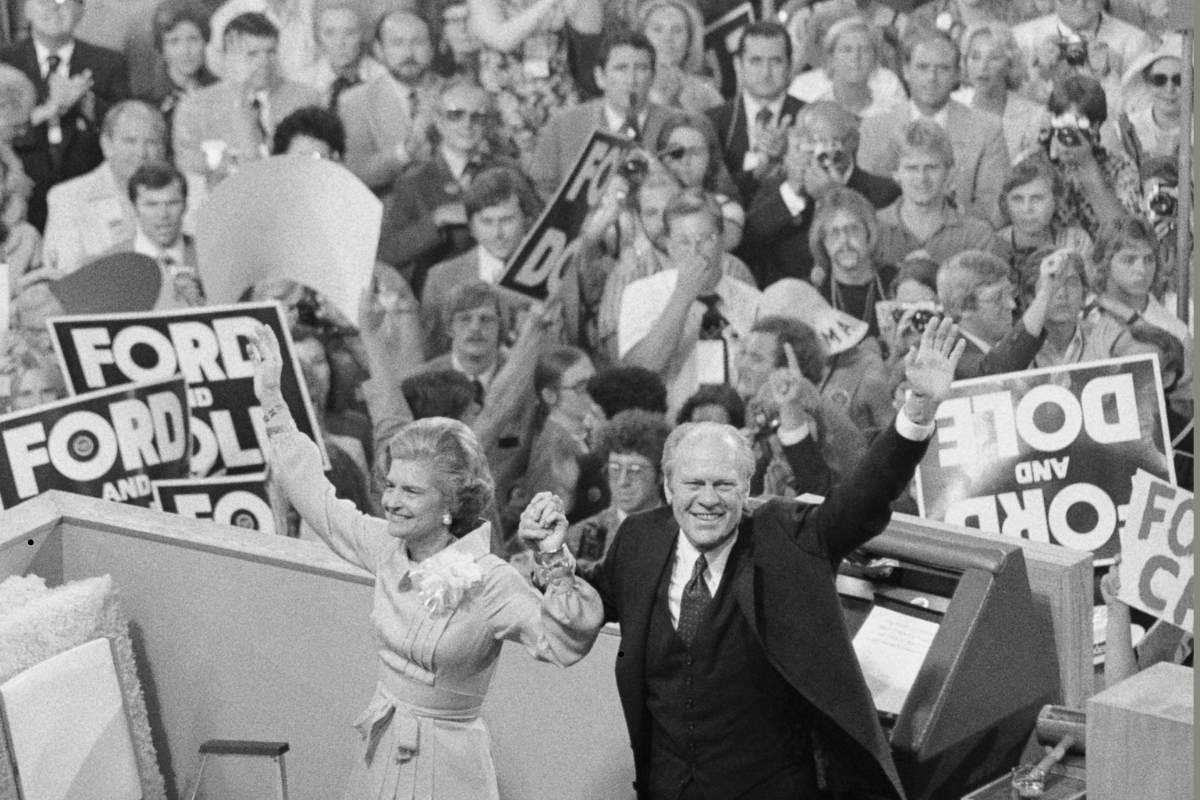
In 1976, Coleman was enthusiastic about Ford’s election for the presidency. Ford wrote that Coleman, among other cabinet officials, “traveled all over the country and did everything they could to achieve victory.”
After his service in the Ford administration, Coleman returned to private practice. He occasionally advised other administrations. In 1995, President Bill Clinton awarded Coleman the Presidential Medal of Freedom for his contributions to the legal profession and to society.
When Coleman died in 2017, the Philadelphia Inquirer said he was “often at the forefront of major public events, legal battles, and significant social advances.” U.S. Supreme Court Justice Stephen Brier, speaking at Coleman’s memorial service at Washington National Cathedral, said Coleman had “opened many, many doors and, by example, showed how absurd discrimination really is.”
President Ford and Secretary Coleman maintained, as much as possible, a fiscally conservative transportation agenda. Their policy began the necessary work of investing in modernizing our transportation infrastructure.

James Patterson is a former U.S. diplomat, life member of the American Foreign Service Association.
Related Essays