The Danger Abroad – and the Greater Danger Within
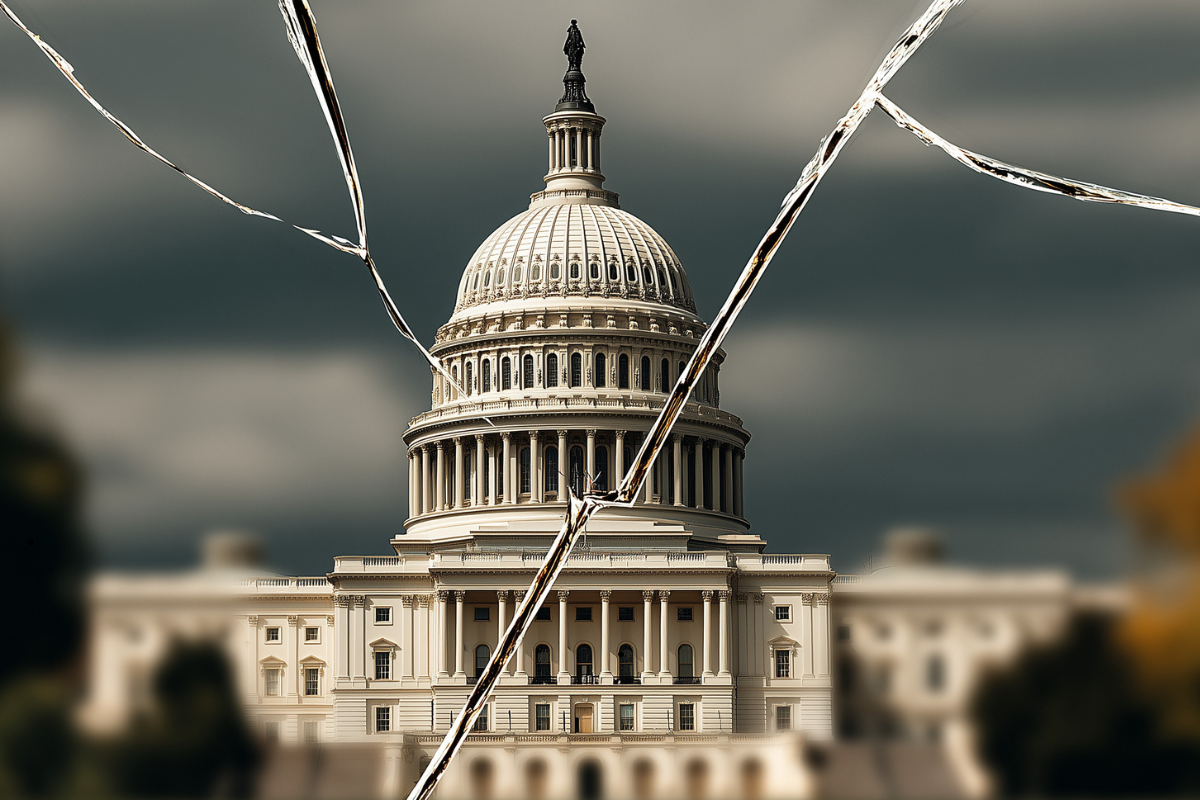
In 1838, a young Abraham Lincoln delivered a speech that still reads with startling relevance today. Reflecting on threats to the American republic, he dismissed the fear that foreign armies might destroy the United States. Even if the combined forces of Europe, Asia, and Africa marched against the country, Lincoln insisted, they could not conquer it. The real danger, he argued, lay elsewhere. “If destruction be our lot,” Lincoln warned, “we must ourselves be its author and finisher.” Lincoln’s insight was simple but profound: the greatest threats to a free republic rarely arrive from abroad. They emerge from within – through division, overreach, or a loss of constitutional restraint.
John Quincy Adams made much the same point in 1821, warning that America “goes not abroad, in search of monsters to destroy.” He insisted that the United States should remain “the well-wisher to the freedom and independence of all,” but “the champion and vindicator only of her own.” Adams understood that the gravest danger in foreign crusades was not simply what they might provoke overseas, but what they might change at home.
These warnings are worth remembering as the United States confronts another crisis in the Middle East. In late February 2026, U.S. and Israeli strikes against Iran ignited a widening conflict that has already disrupted global energy markets and triggered retaliatory missile and drone attacks across the region. The confrontation has even threatened the Strait of Hormuz, a maritime chokepoint through which a significant portion of the world’s oil supply passes.
Like many foreign crises before it, the Iran conflict raises questions not only about international strategy but also about the long-standing debate in American political thought over the dangers of foreign entanglements. John C. Calhoun wrestled with that problem too. Though remembered primarily today for his role in the sectional politics of slavery, he also developed a distinctive philosophy of foreign policy. Early in his career he supported aggressive nationalism, even promising that the United States could conquer Canada within weeks. But experience changed his view. By the 1840s, Calhoun warned that conquest and intervention abroad could ultimately undermine the republic at home.
His preferred approach was a policy of restraint, what he described as “wise and masterly inactivity.” The idea was not isolationism in the modern sense. Rather, Calhoun believed the United States possessed such geographic security and economic potential that time itself worked in its favor. Instead of risking political instability through unnecessary wars, Americans could simply allow their population, commerce, and institutions to grow. Over time, the nation’s influence would expand naturally.
In this respect, Calhoun arrived at a conclusion similar to that expressed by Lincoln and Adams. All three men understood that the structural advantages of the United States – its distance from rival great powers, its continental scale, and its immense resources – made foreign conquest unlikely. The greater danger was that Americans themselves might undermine the republic through political conflict generated by foreign crises.
That danger has appeared repeatedly in American history. The War of 1812 intensified partisan hostility at home. The Mexican War inflamed sectional divisions over slavery. The Vietnam War shattered political consensus and public trust in government.
The question raised by the Iran conflict, therefore, is not simply whether American forces can defeat an adversary abroad. Historically speaking, the United States has rarely struggled to win conventional military victories. The deeper question is what such conflicts do to the country internally.
Already the war’s economic consequences are being felt. Disruptions in Gulf shipping have driven oil prices sharply upward and pushed gasoline prices higher, while economists warn of broader inflationary pressures. Such economic shocks have historically produced political tension at home, especially when wars appear open-ended or strategically ambiguous.
There is also the perennial danger of escalation. Analysts have warned that the conflict could expand into a wider regional crisis or even produce state collapse inside Iran, with unpredictable consequences for global stability.
Lincoln’s point was not that foreign threats do not exist. Clearly, they do. But his deeper claim was that the strength of the American republic ultimately depends less on defeating enemies abroad than on preserving constitutional order and civic unity at home.
That insight remains relevant today. The United States possesses overwhelming military capabilities and geographic security that few nations in history have enjoyed. No foreign army is likely to march through the Ohio Valley or cross the Blue Ridge Mountains. But the pressures created by foreign wars – economic strain, political polarization, and expanding executive power – have often tested the country from within.
In that sense, the lesson Lincoln offered nearly two centuries ago still applies. The ultimate question facing the United States in moments of international crisis is not whether it can defeat an enemy abroad. It is whether, in doing so, it can preserve the constitutional and political balance that makes the republic worth defending in the first place. As Lincoln suggested, the survival of a free nation rarely turns on the strength of its armies alone. It depends on whether its citizens can avoid becoming the authors of their own undoing.